Tag: luciacossu
What is cossumethod
En vrac un peu de mon travail/ In disorder some of my work
Artists I follow or have followed

https://www.facebook.com/galil3omusic/videos/2056730891258459/ 
https://www.youtube.com/playlist?list=OLAK5uy_lZQEsksDDkeqKykTOPwoLsh4WR42_shoc 
https://youtu.be/uaBTPXWBF4o 
https://youtu.be/olxgANCG6B4 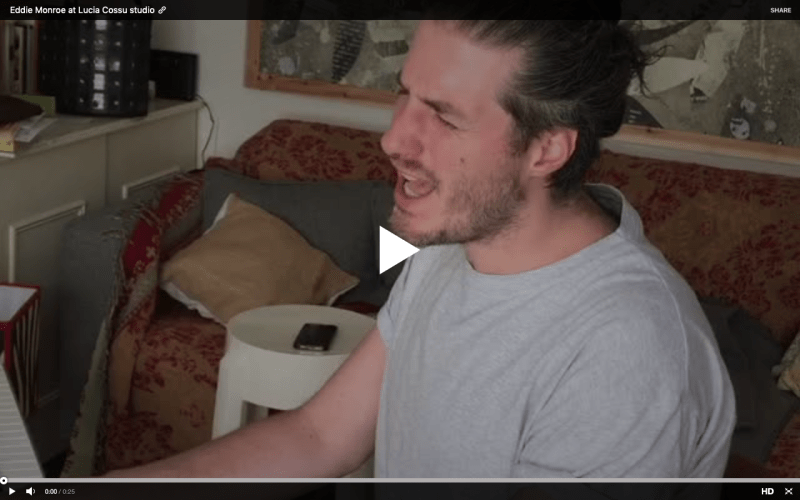
https://luciacossu.com/wp-content/uploads/2018/07/img_3998.mp4 
http://www.eleonorabianchini.com 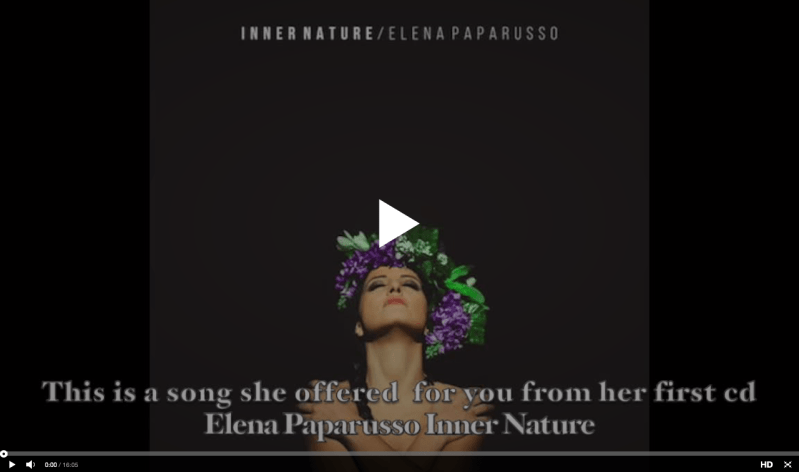
https://luciacossu.com/wp-content/uploads/2018/04/elena-paparusso-inner-nature-01-alone.wav
Not professional/ étudiants pas professionels
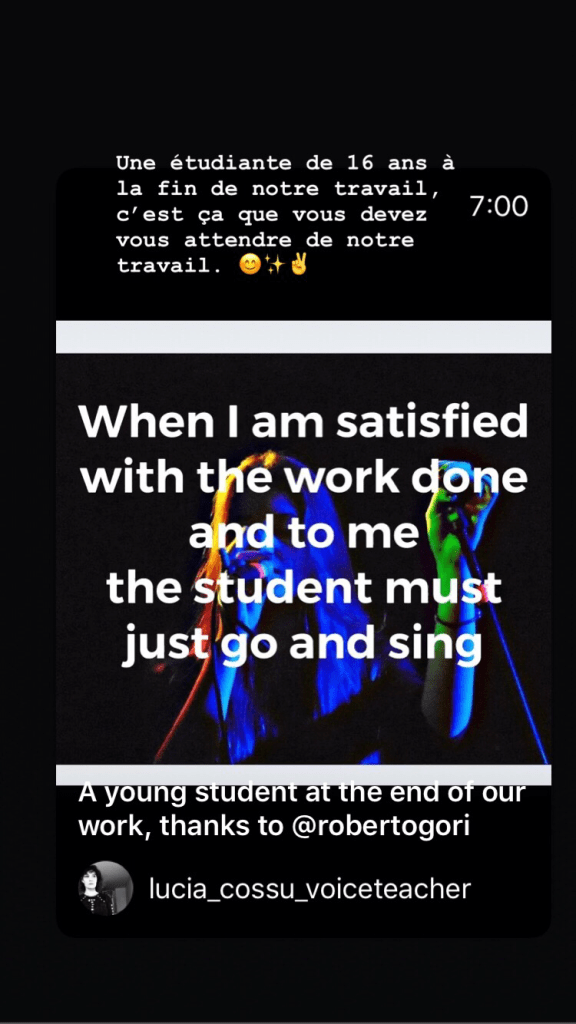
https://luciacossu.com/wp-content/uploads/2019/05/videoleap-e0d5c126-6ba0-43a9-ae99-7acbfd154dec.mov 
https://soundcloud.com/lucia-cossu/the-greatest-20161018-mix?in=lucia-cossu/sets/my-students-agnese-piola 
https://www.instagram.com/tv/Bx40zlWhd_D/?utm_source=ig_web_copy_link 
https://soundcloud.com/lucia-cossu/fading-lost-learn-to-fly 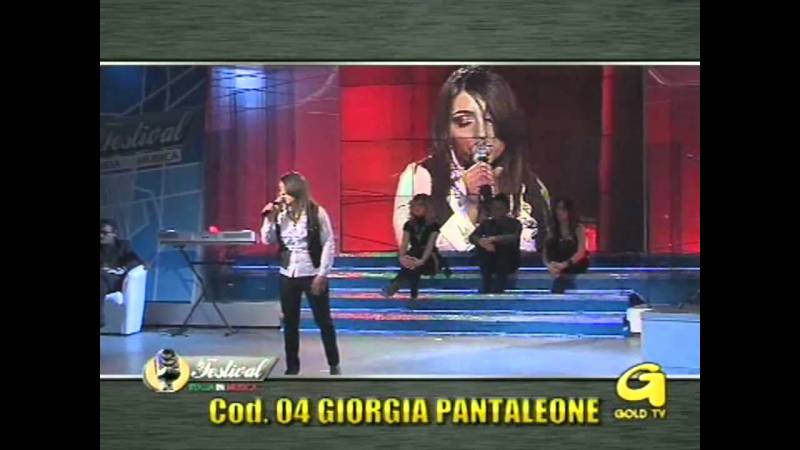
https://soundcloud.com/lucia-cossu/giorgia-pantaleone-bareilles 
https://www.instagram.com/tv/BxhVsBuBBld/?utm_source=ig_web_copy_link 
https://luciacossu.com/wp-content/uploads/2019/02/img_9995.mp4 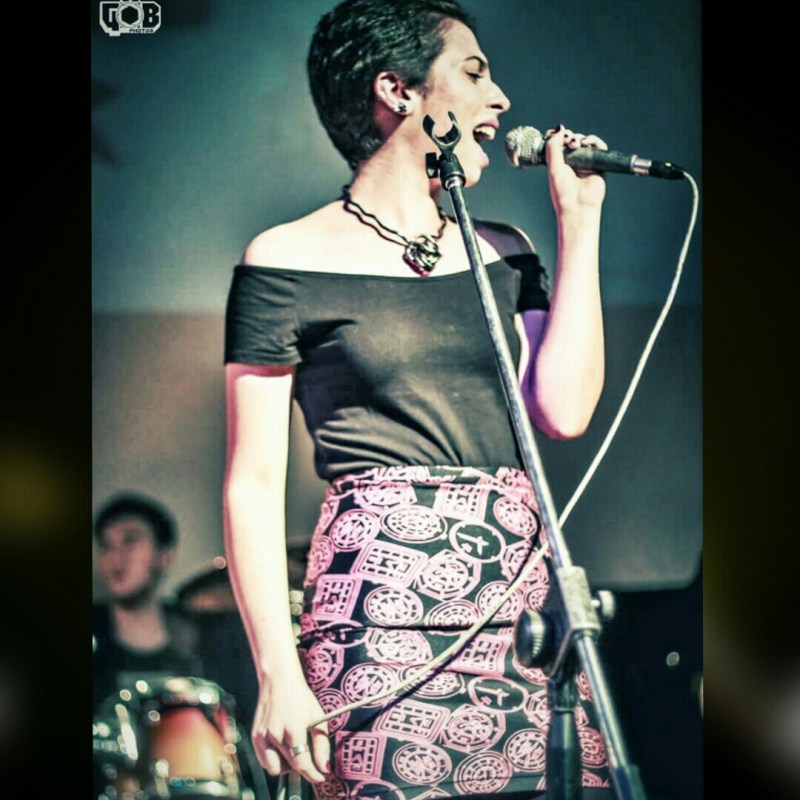
https://soundcloud.com/lucia-cossu/sets/my-students-rita-negrini
In italian /en italien professionals and not professional students
https://www.facebook.com/galil3omusic/videos/2056730891258459/ 
https://youtu.be/hJ5DaPKGxrc 
https://youtu.be/PR6K-QBbB4E
https://soundcloud.com/lucia-cossu/sets/e-one-of-my-students-16-years-old 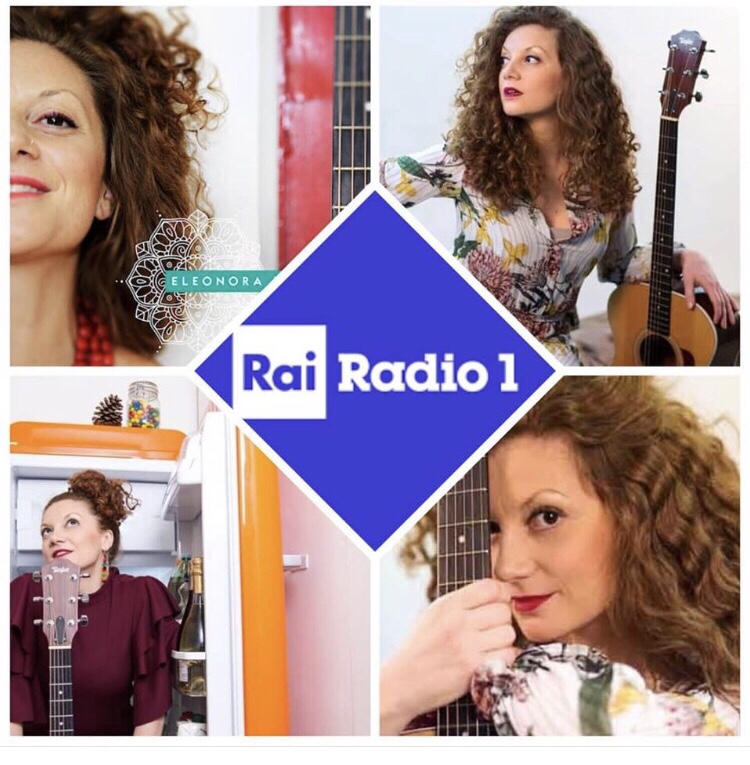
https://youtu.be/tnK3sS2Lt1I 
https://youtu.be/vFzLhyLI4Qg
#cossumethod and #cossuprogram for issues/pour problèmes vocaux
https://luciacossu.com/wp-content/uploads/2019/05/cossumethodprogram-first-case.mp4 
https://luciacossu.com/wp-content/uploads/2019/05/videoleap-3ae765e9-ec52-412e-a5af-34248762c22d.mov 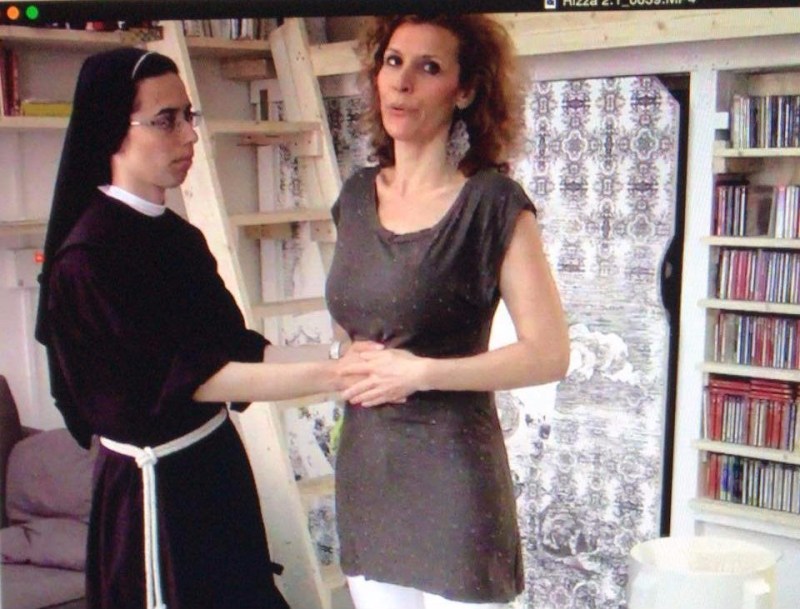
https://luciacossu.com/2016/09/13/cossu-method-sister-i-organic-damage-solved/ 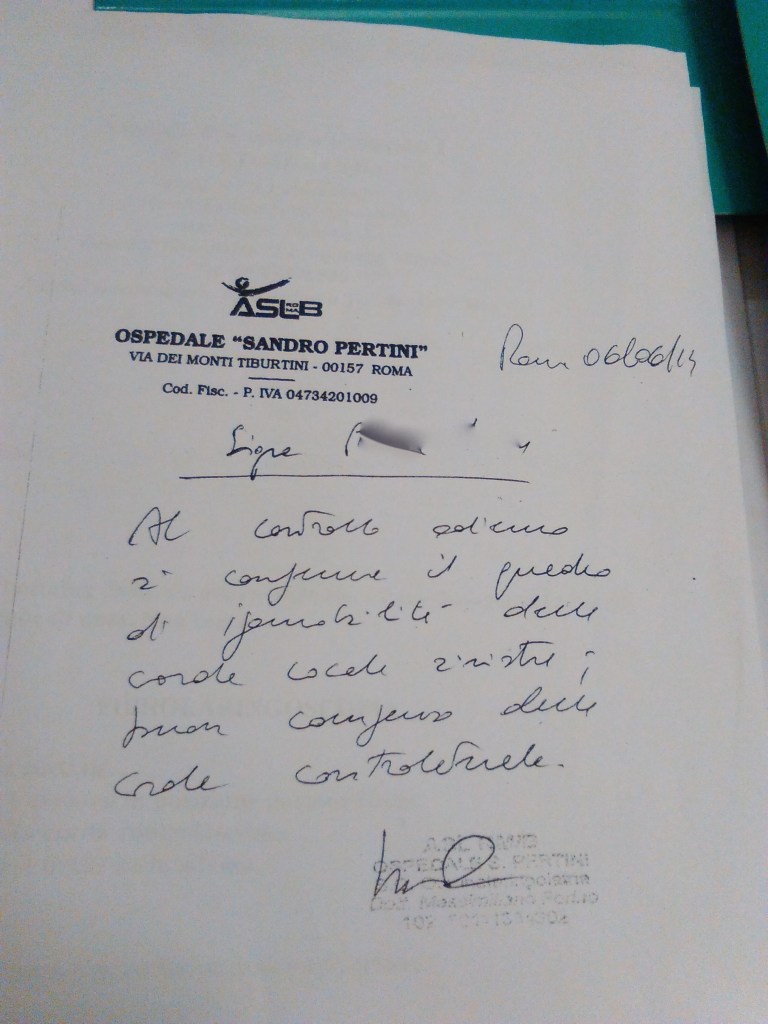
https://luciacossu.com/cossu-method-program/ 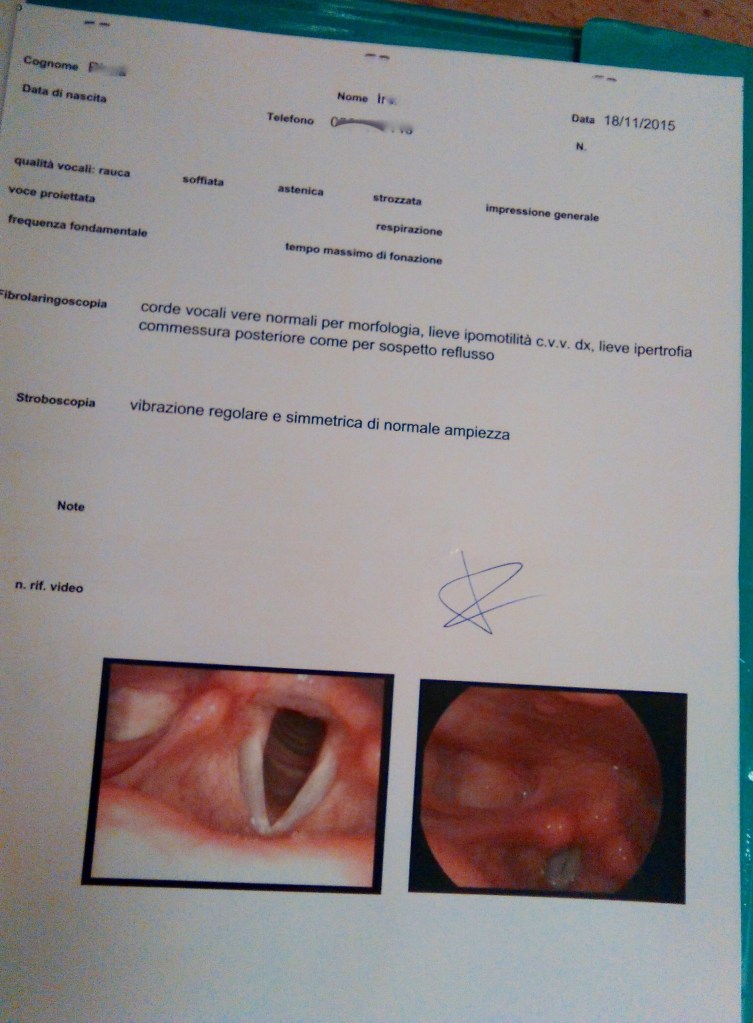
https://luciacossu.com/cossu-method-program/ 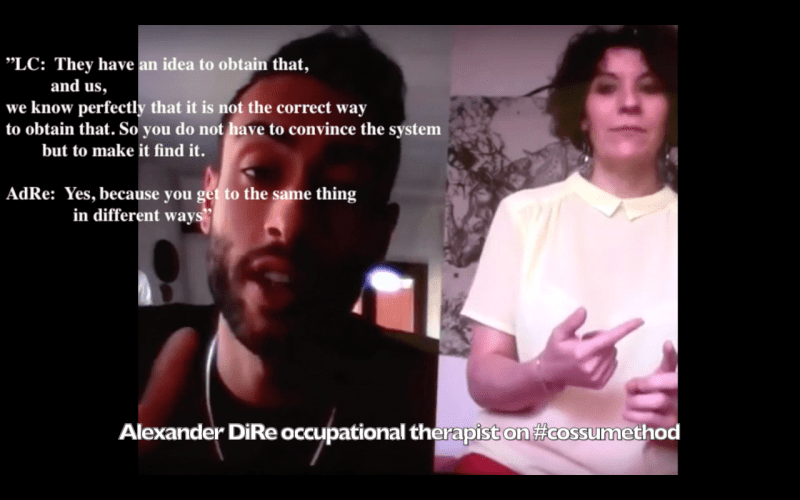
https://youtu.be/CAgK-wxVzVg https://luciacossu.com/wp-content/uploads/2019/02/img_9995.mp4
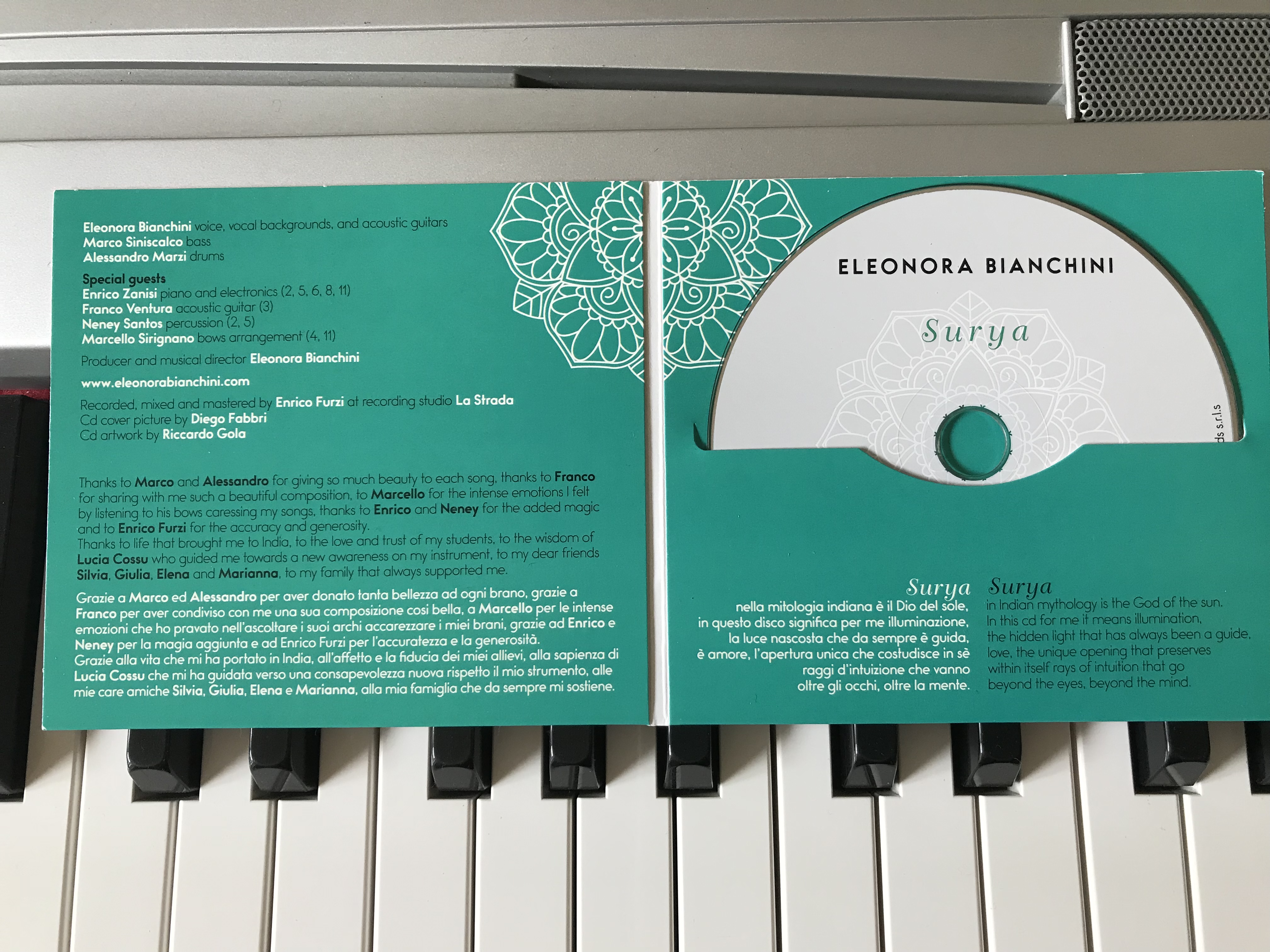
“Thanks to the wisdom of Lucia Cossu
who guided me towards
a new awareness of my instrument.”
Eleonora Bianchini
in the cover of her cd Surya
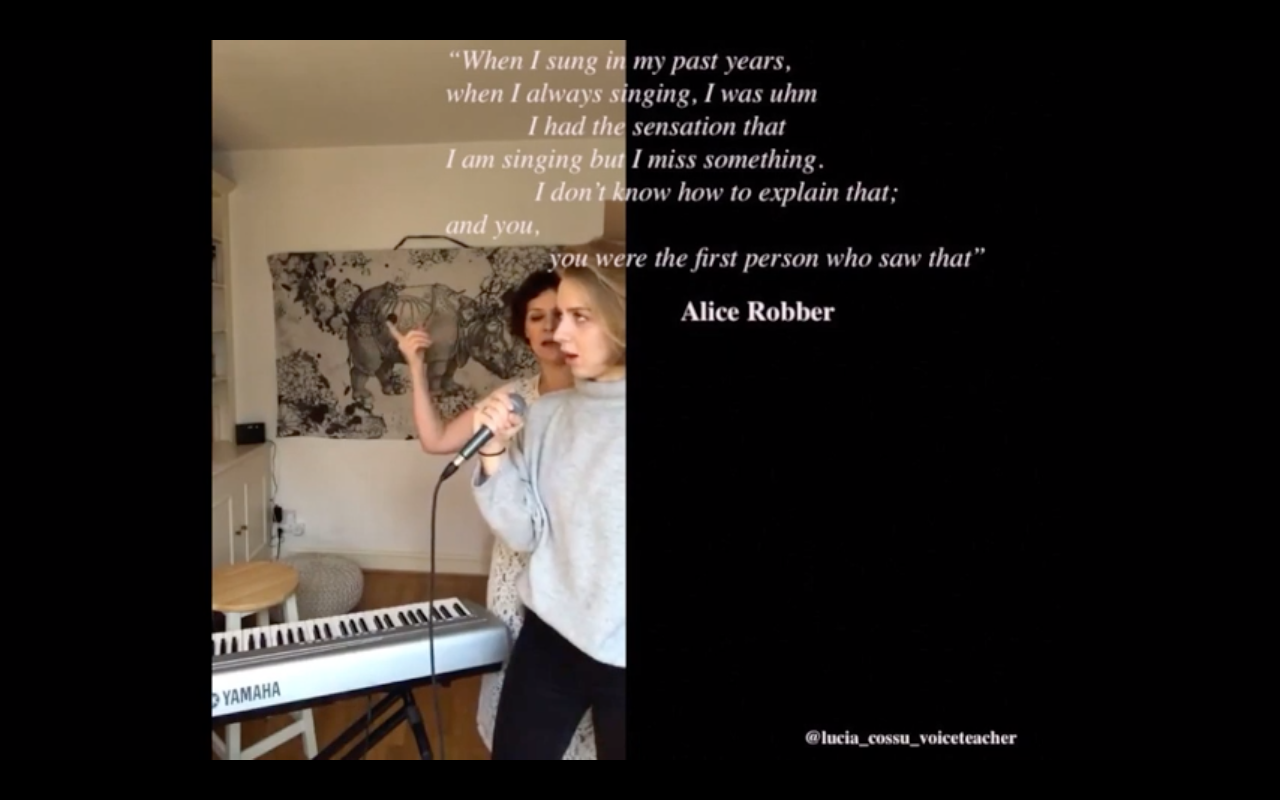
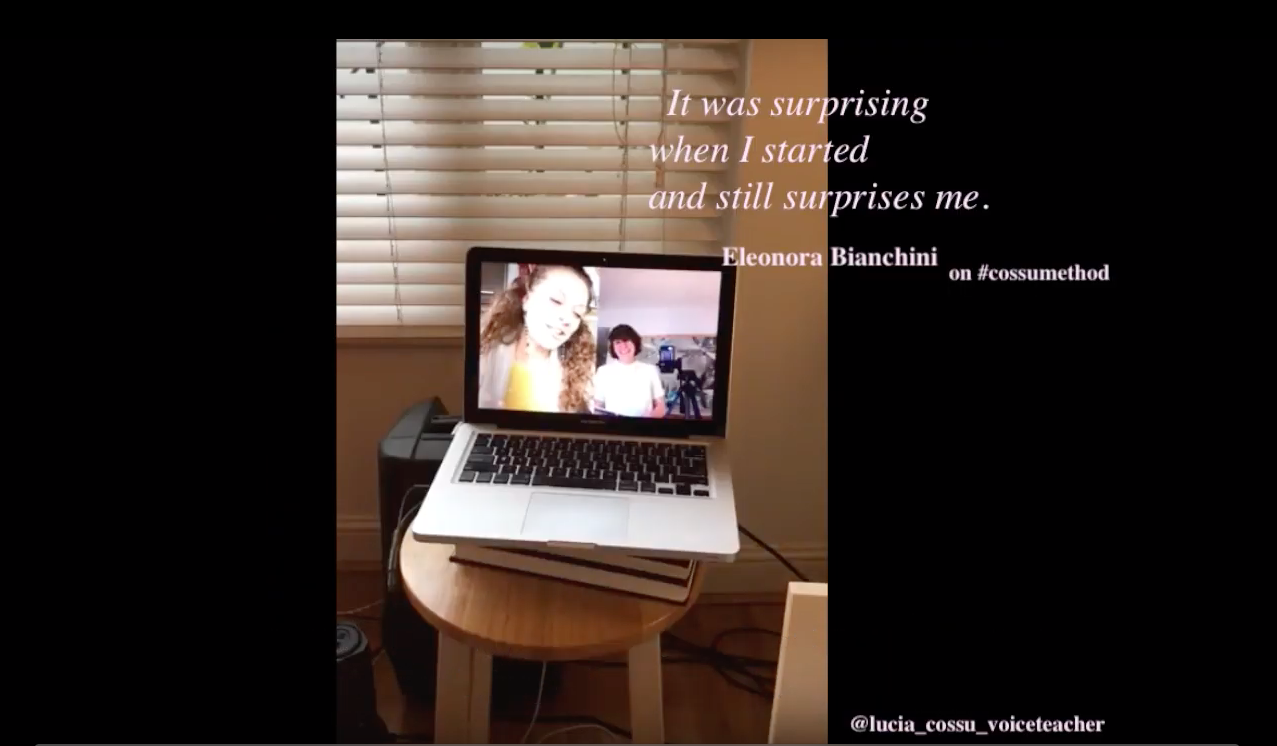
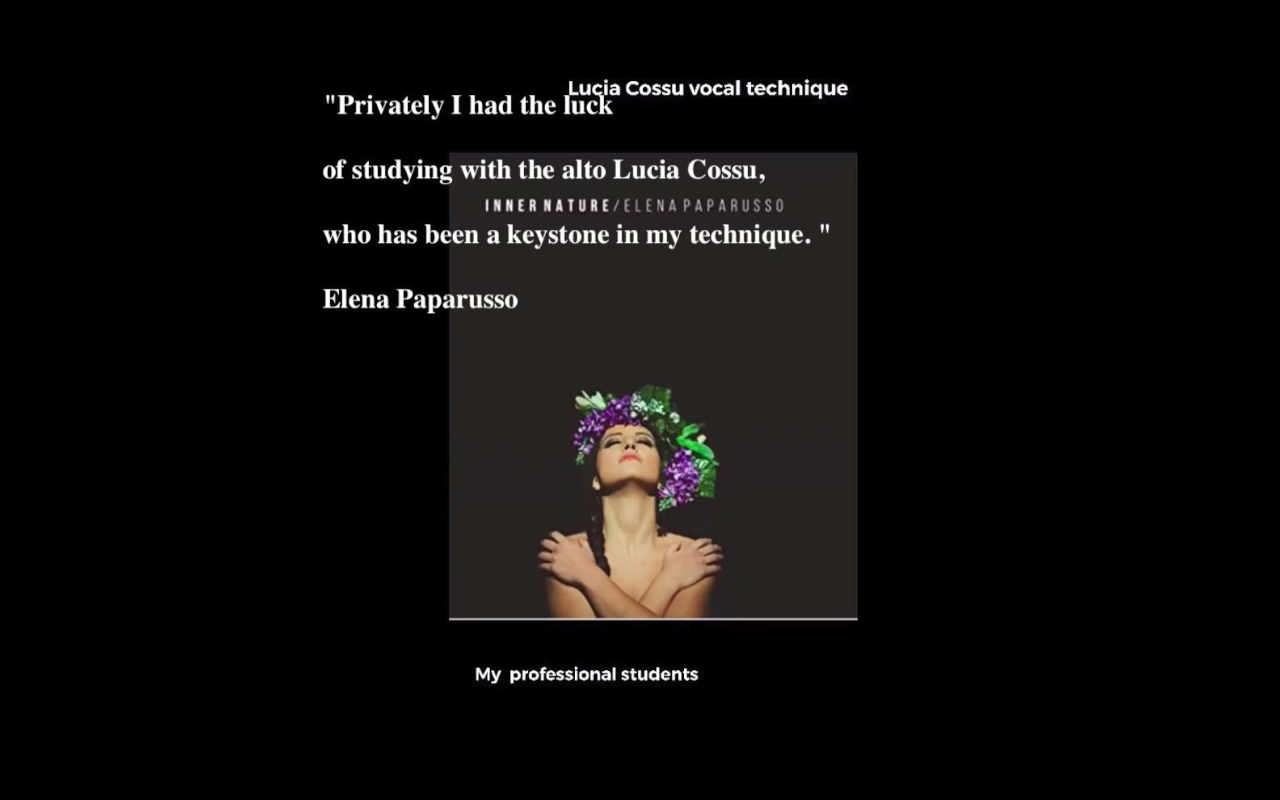
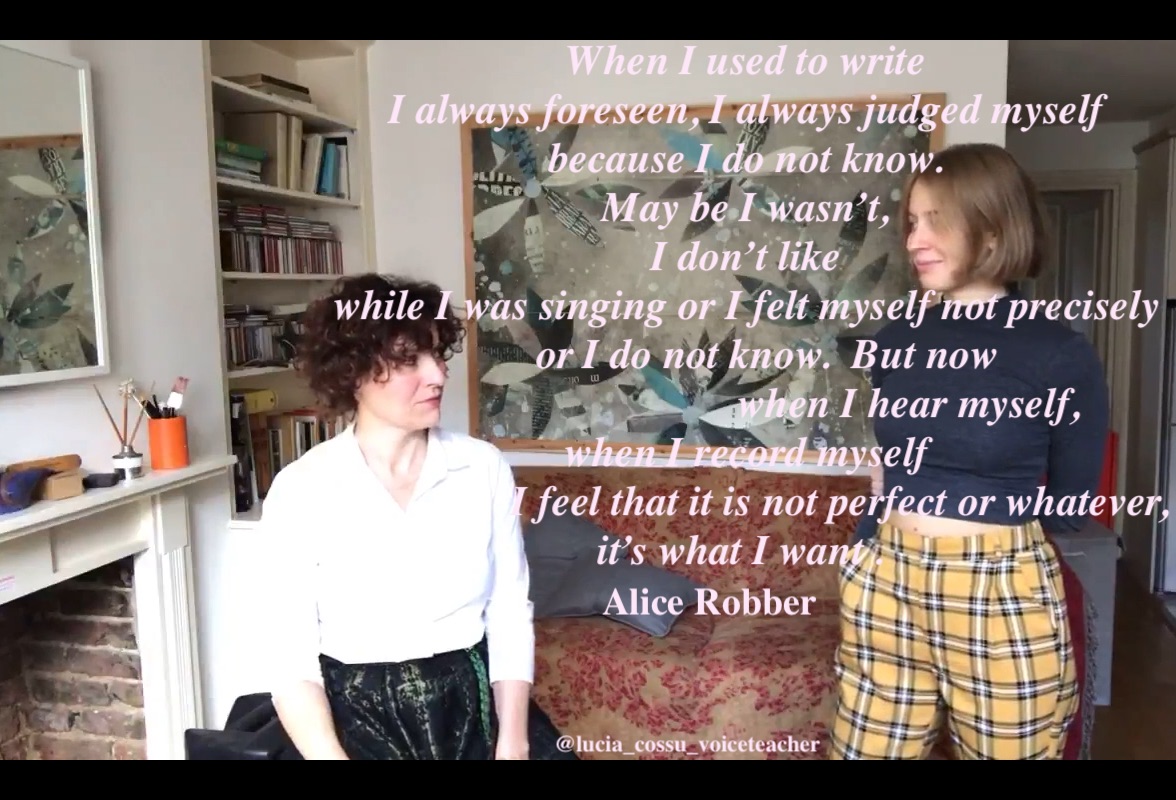
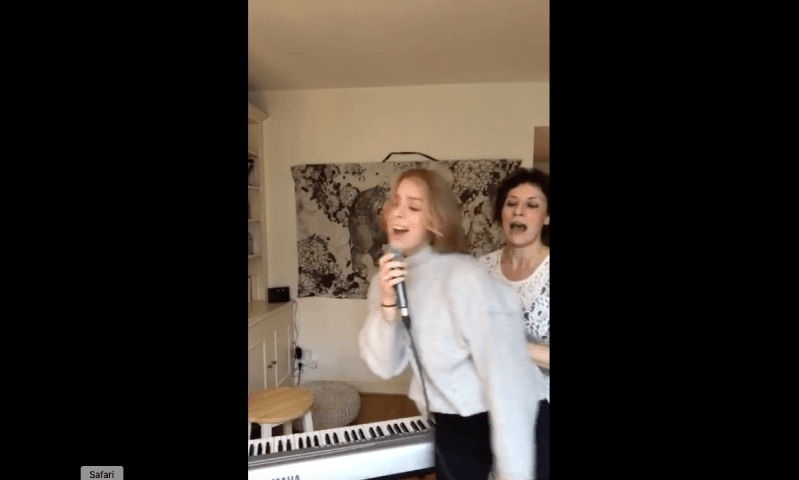
How it can be a work with a professional/ Ce qui peut ressembler le travail avec un professionel #aliceandmetheseries
https://www.instagram.com/p/BpfW2gHBGWZ/?utm_source=ig_web_copy_link 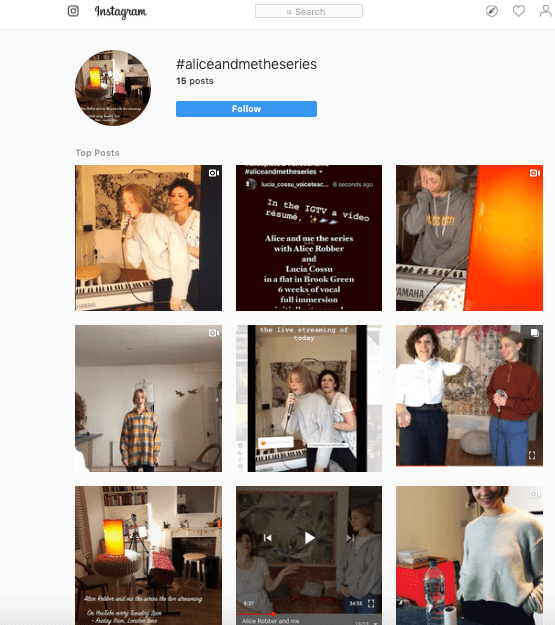
https://www.youtube.com/playlist?list=PL6Sl5FJI8HrGten7AYarll-n9FGhzAaGq
Alice and me the series the end
*the series was streamed on YouTube where it remained available for some months (then it was time to let it go and look at the future). Now some clips and a resume in the page dedicated here and some on Instagram @lucia_cossu_voiceteacher #aliceandme #aliceandmetheseries
We are at the end of these 6 weeks, Alice performs again. She decides to stream it on her Instagram while we stream on Youtube. She decides to sing 5 songs. She risks more, enjoy.
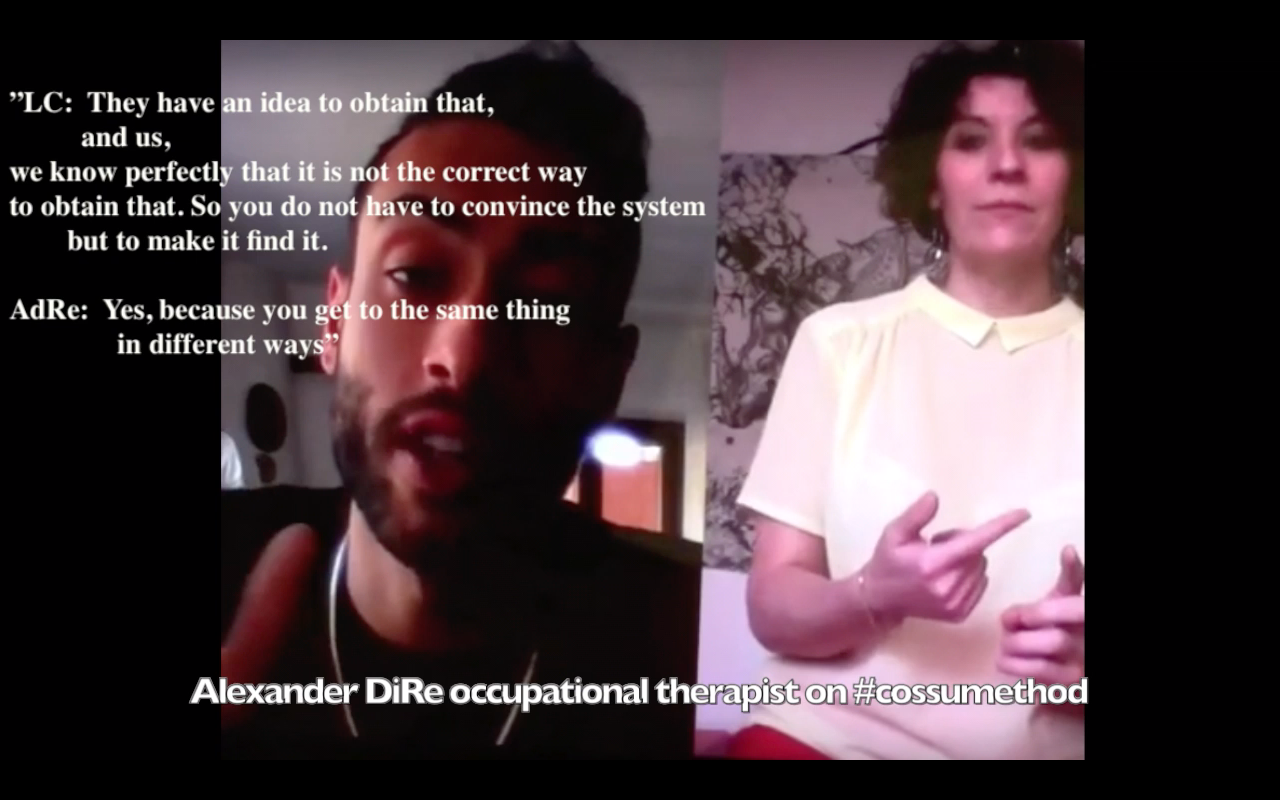
Talks on Cossu method
What nice to talk with a former student who has an interesting view on our work and my method from his medical job; and so nice that not only he is smart as he was but his band will get back rehearsing. Thank you Alex, still pleased of having had you between my students.
What means in sound the proper diaphragm connection in yet good singer.
Singer since very young, it is twelve months she studies with me. You will hear that she is quite in order but there is a huge difference in bewteen the Dianne Reeves and Alicia Keys’s songs and Withney Houston’s one: this is the diaphragm connection that I long looked for her, not perfect yet in all the passages but connected and so it will be possible to train it and have those passages perfects just by using it and remaining connected. Enjoy!
Vocal technique: some talks on fundamental questions.
My first two talks on some fundamental questions of vocale technique, often not so clear in students and singers and not clearly explained through their effects and consequencies so that they remain scary and refused in the first step. Often they are related as the fact that when you cover the sounds you will have in your sound not the effect of copertura but the disclosure of the state of your sustain and appoggio. I mean that not covered sounds have a different kind of pressure from the effective and true sustain (a true sustain always have a copertura effect), so you cover and the vocal folds do not respond anymore to the excess of pressure not correct. You will immediately hear how much the correct and true sustain is developed and the really good news is that with copertura it is safe and not tricky to develop the effective and true sustain. So if you refuse covering you will probably never develop a real and effective sustain, and this just because you were scared by the sound after copertura that was just the first step of the process and not the arriving point of the process. Many things in vocal technique present this two step process, I will try to clarify some of those for you on Istagram in my IGTV.
And the first is on copertura. 🙂
Talks with students on Cossu method: Eleonora Bianchini
A little talk with the great italian singer Eleonora Bianchini and why a professional like her, ranked 4th italian jazz singer, a stable duo with Enzo Pietropaoli, great career, winner of a merit scholarship at Berklee College, came having lessons with me. What did she found in our work, why it was important to her. Enjoy!
Songs the interpreter do not want to sing
She did not want to record this. We discussed a lot, her saying it did not represent her and that she wanted to to be represented by other songs, without yet realising that if she was pursuing a professional career it would be normal to sing some things not choosen by her. This scare of some interpreter is valid when they cannot choose nothing, but to have to sing a part of repertoire not choosen refine the interpreter personality and skills to be himself going more in the comprehension and depth of what he is, and also discover sides and shades not suspected. The result is pretty good and lol it is the song more played in her playlist. Enjoy!
A new born
Today the postman did bring a new born in which I have some responsibility. ❤
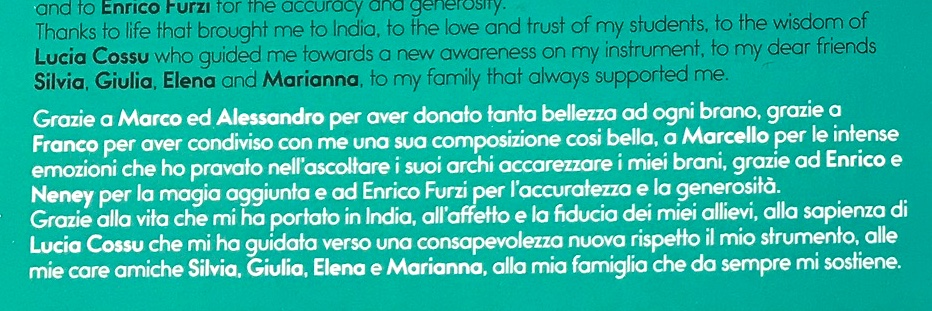 Dear Eleonora Bianchini, you thank me for my instrumental wisdom. ✨ I thank you for your music and the great joy of this technical path made together, and the total trust you had in letting me shape your muscles and coordination bringing your voice in an unknown land that now is home.
Good luck Surya, Eleonora Bianchini made some songs I would not forget.
Who am I
I am someone who can solve the reason why some people can’t be effective in a vocal technique or style, or when a professional can’t have the full or correct use of its instrument even with excellent teachers or coaches. I was a soloist and being trained in Italian Belcanto technique. A chronic disease that affects my inflammation level in the body related to a medical malpractice made my career last just three years during which I achieved goals I even had not dreamt about (further details https://luciacossu.com/about/).
I started then teaching, vocal technique. Being frustrated by seeing some structural issues that made some singers think about them and never relax into a deeper dialog with music I tried to found ways to solve them forever with the same approach to sound I had when I was a soloist. So I invented some physical exercises and discovered in what they were useful to a wider range of persons, even if invented on someone specific. This became a corpus of exercises, some totally invented by me, some are yoga or dance exercises modified to be useful for voice muscular chains. I have so found some principles to work on the reason why some can’t have a proper vocal technique even with good teachers. I found the relation voice-muscular chains in a way not imagined by professionals and now also the way some Manuel Garcia vocalises were intended and why even my excellent belcanto teachers couldn’t use them correctly. . It is a very specific work, nothing to do with others body practises for singers, useful but less precise for a vocal purpose. To be sure that the results with my students were really appropriate I put some people with and without vocal problems under medical control before and after our work together and it was confirmed the solution of their vocal problems in very short time, while a medical prevision of no improvement possible (https://luciacossu.com/cossu-method-program/ ) and those with no issues had confirmed an improvement in voice and posture.
When I say it is new I don’t mean that my work comes from nothing and goes to a new land, no. I mean that it is a step forward in what is the italian belcanto technique. I mean that it brings to the vocal land many that couldn’t previously reach it. And those who are yet there have a way to refine and obtain more.
That it is: a way to bring to voice (and voice styles and technique or even just natural voice) those who couldn’t before and to refine and find tools and expression for the advanced and the professionals.
It is a sort of way to put everybody to the zero point.
#cossuprogram second case Sister I., an organic damage solved
Sister I. entered my study program in june 2014. Sister I. had an important surgery to save her life, a thyroidectomy in october 2013. After she had problems with the voice, she could not easily speak, singing impossible. She used to sing in her convent, many times every day and also as a soloist. She had a beautiful clear and natural voice, not trained and had some stuttering when child. She had calcium levels very low and they remained low durign the program and after. Now she sings again and as soloist as if she had never had any voice problem.
Here the certificates with the diagnosis of hypomotility of the left vocal fold before logopedic treatment and still the same hypomotility after but but a good compensation gained, singing still impossible for her.
*01/28/2014 Tyrodectomy on october the 3rd 2013, since dysphonia, and slight dysphagia for liquids. Negate having other noteworthy patologies.
Fibrolaringoscopie: Normal cordal morfology. Hypomotility of left vocal fold. Inadequate compensation of the contralateral fold. Normal respiratory spaces. No smoking. Require a tenseabductive phoniatric treatment.
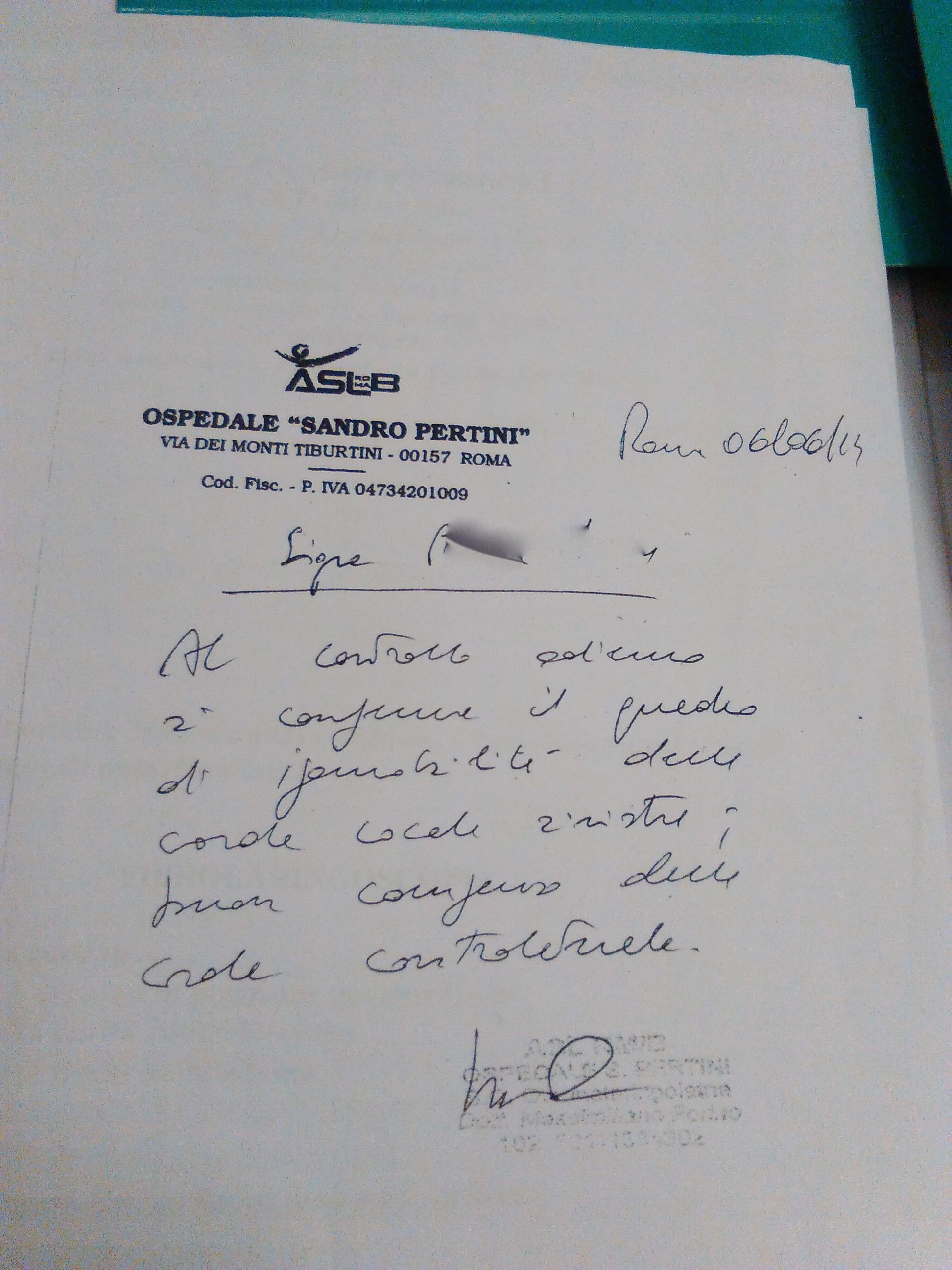
After logopedy * 06/06/2014 At current control it is confirmed the situation of hypomotility of the left vocal fold, good compensation of contralateral fold
It confirms the hypomotility of the left vocal folds but now a good compensation of the other side. She had very low calcium level from the operation till several months after the last certificate you found at the end.

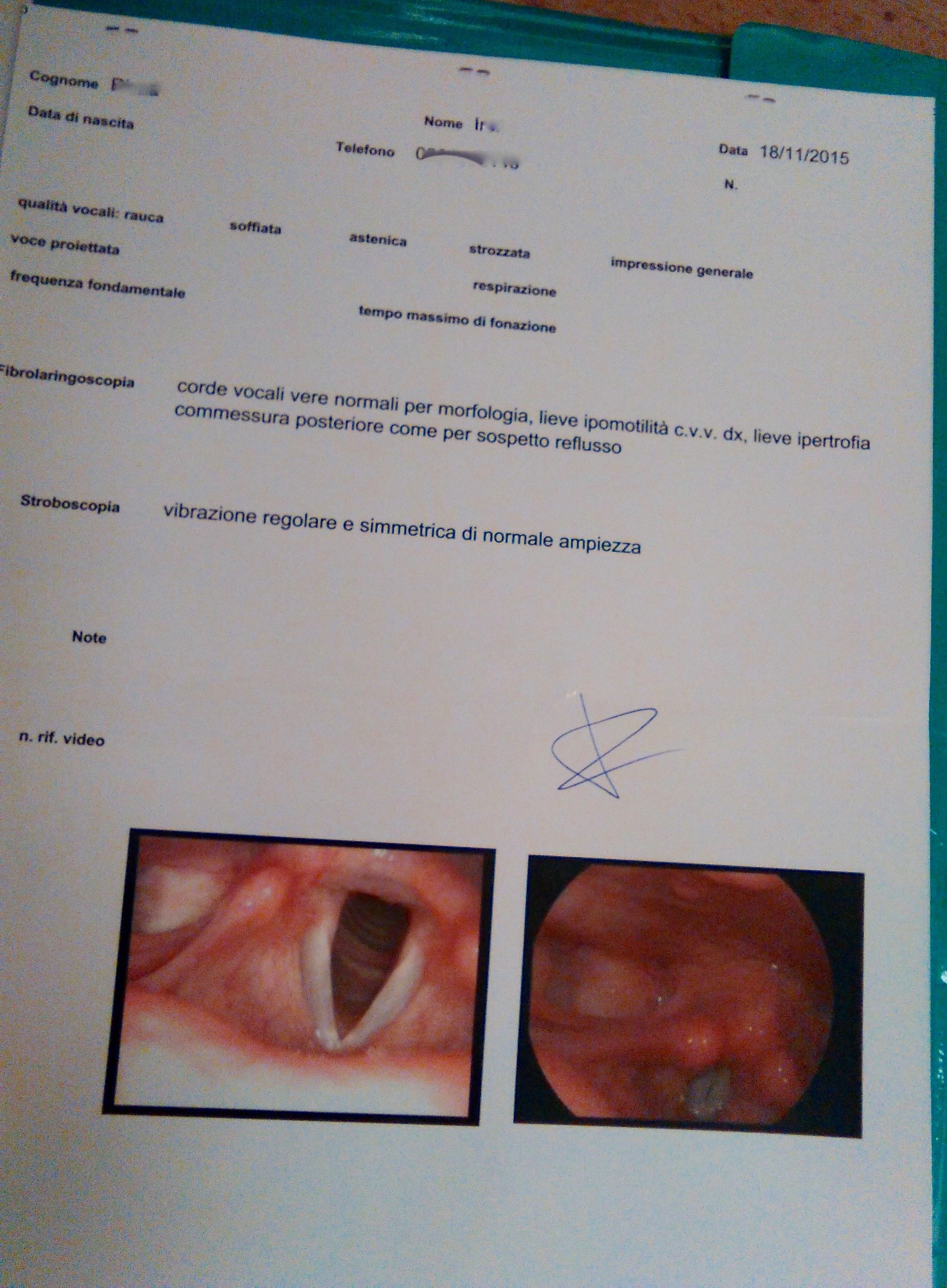
After #cossuprogram. During she could get back singing every day and in some Those are her vocal folds in photo and stroboscopy after nine months since we stopped our work. No maintainance exercises, no further therapies. As nothing has never happened to the left fold. The certificate confirms that
* Fiber optic laryngoscopy: True vocal folds normal in morphology, slight hypomotility of the right vocal folds, slight hypertrophy in the posterior closure as for suspected reflux. Stroboscopy: regular vibration, simmetrical and of normal amplitude.
And since our work Sister I. sings every day and again as a soloist as before the surgery. In may 2017 Sister I. wrote me that she had been the soloist of the Litany of the Saints during a Solemn Profession in the Basilique of Santa Maria degli Angeli in Porziuncola (Assisi). As nothing never happened to her left vocal fold, joy.
We could make the left fold work again after three weeks and in the video is her voice the first meeting and after 5 weeks. Professionals will hear that there is a substantial difference, even if in a subtle way since it has to get some training back after one year and a half of hypomotility. You can hear the gain in the ring, a little glow on the sound, a more clear timbre that starts appearing. This to me is a truly important sign and telling me that the vocal folds start having a correct activity, I know it is the start of having after just to make the chord being trained. She could sing in a little celebration of Sandro Pertini Hospital one month after the end of the program.
#cossuprogram first case
She is a singer who entered my study program in may 2014 with nodules, a pre-contact, an emathoma and a whiplash injury on the vocal folds. She had several years of voice lessons without gaining enough extension or intonation or the personal style she desired for a proficuous career. All the attempts to have a good technique (even with good and experienced teachers) were a failure, gaining something at the depens of other things and her vocal folds getting worse. This were her vocal folds when she started the program.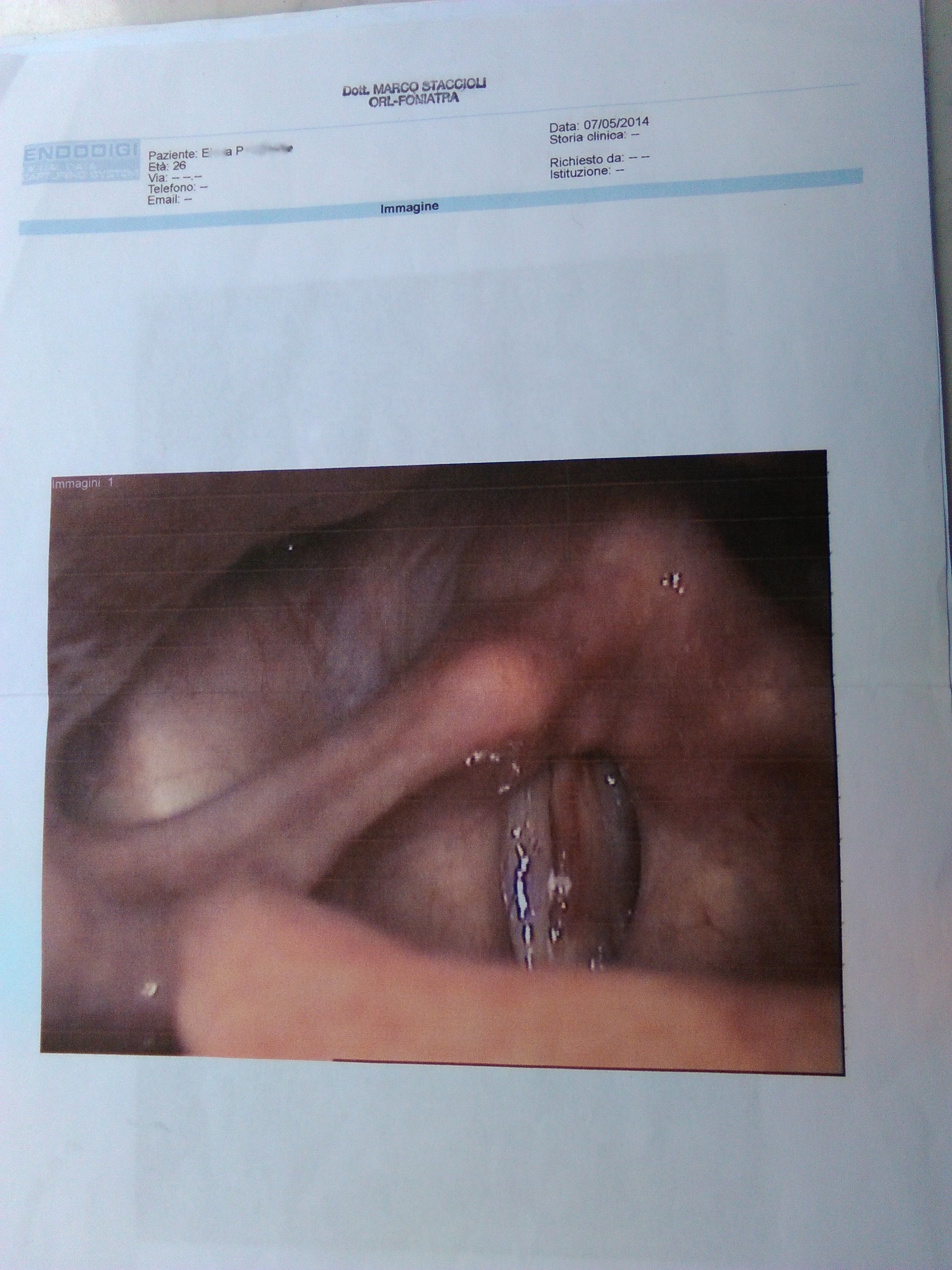
I found in her something in the muscular chains (that are the center of my method) without the sufficient elasticity and the proper work to give freedom and movement to tongue and larynx. The first weeks I used the physical exercises I have invented to start solving that muscular problem. As the connection was possible and more correct I worked on changing habits in authomatic gesture, imagined gesture and the feedbacks with vocalises on two octaves and songs out of her repertoire useful for my purposes. Those are her vocal folds after two months, quiet a huge difference.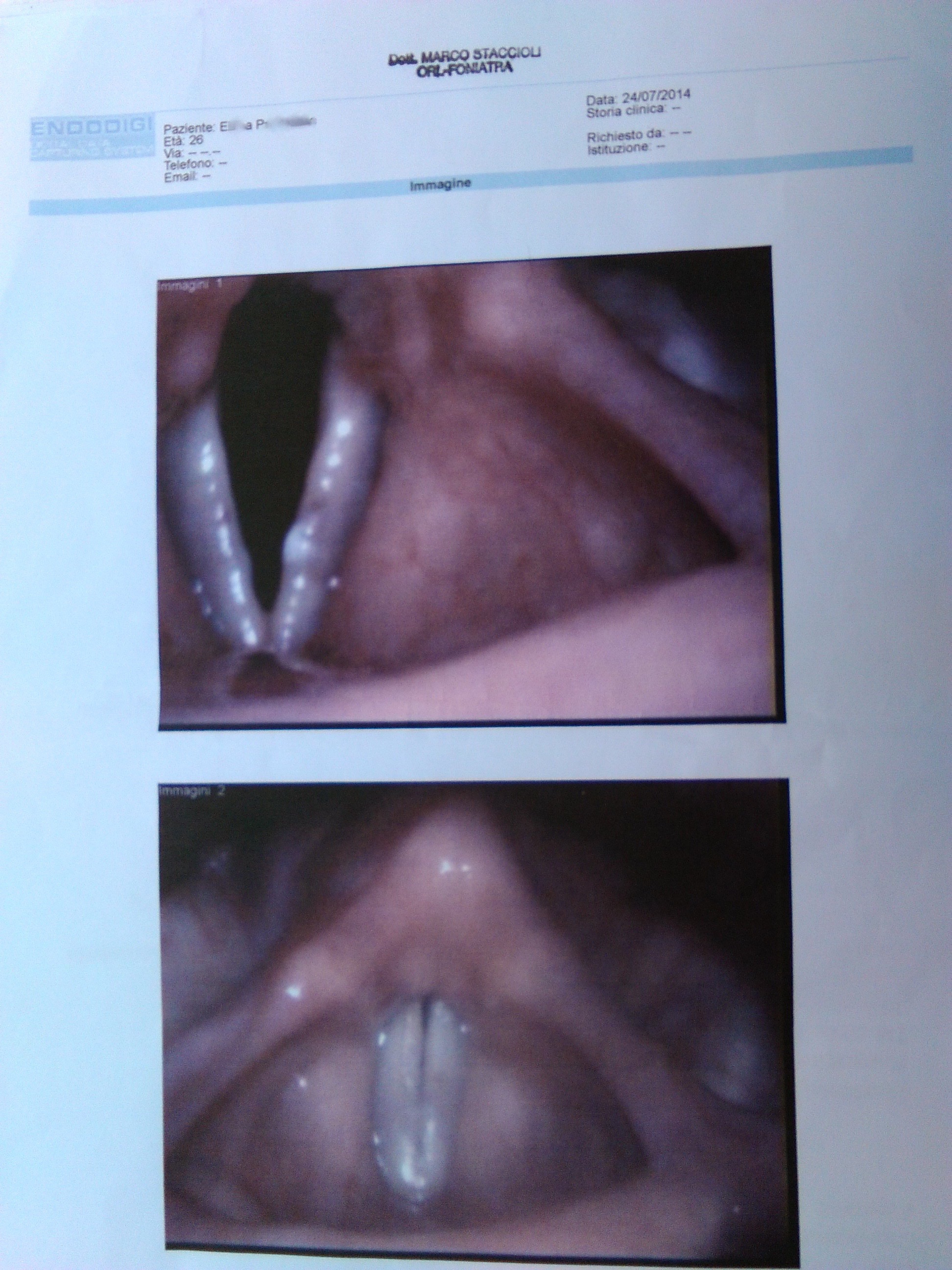
Here her vocal chords after one year (you find them also at the half in the video above).
Un nuovo allievo
Arriva un possibile nuovo allievo. Può essere un professionista o un principiante. Prima cosa trovare il modo di metterlo a proprio agio per ottenere di ascoltarlo cantare come fa abitualmente. Seconda cosa è trattenersi dal pensare e capire e analizzare tutto subito, delle volte può essere corretta e completa la prima analisi ma in genere son le proprie cornici e categorie mentali, di gusto e tecniche a posizionarlo velocemente all’interno di esse tagliando, tralasciando e subendo anche l’ovvia reazione affascinata o infastidita di cose proposte e ottenute e fatte con un diverso settaggio e utilizzo nel sistema complesso canto. Terzo: se delle cose funzionano anche se non si capisce come e perché avere molta cura che l’insegnamento delle altre non le vanifichi. Quarto: chiedersi come essere un utile strumento per il cantante che abbiamo di fronte e non farlo rientrare in un’ideologia accademica, per quanto buona annullerebbe le differenze e uniformerebbe appiattendo verso il basso la vera tecnica che è sempre leggermente diversa su persone e anime diverse. Quinto: chiedersi regolarmente se si sta sbagliando tutto e far mente locale a dei test che facciano capire se si ha ancora un’idea fresca e vispamente utile invece che solo una strada che va in un punto deciso tempo prima e che va ricorretta o almeno ricontrollata come se fosse nuova man mano che ci si sposta dal punto del controllo precedente. Il canto si giudica dal canto e non da idee di come si fa, altrimenti Gould e Richter e Backhaus avrebbero dovuto avere la stessa proporzionale altezza del panchetto e Hari Hoenig non dovrebbe esistere. Sesto: ricordarsi che la tecnica vocale serve per ottenere musica e risultati musicali efficaci senza danneggiarsi e questo è possibile farlo con infinite varianti di cose simili e che il nostro è uno strumento complessissimo e nessuno di noi lo capisce tutto e fino in fondo.
Cercasi persone per studio scientifico
A.A.A.: reclutamento di persone per uno studio scientifico sul lavoro tecnico che svolgo su certe muscolature nelle mie lezioni di canto e i risultati che ritrovo costantemente. Lo studio è condotto in collaborazione con un foniatra e un osteopata.
Consiste nel fare un paio di lezioni a settimana di canto per tre mesi, riprese video delle stesse, controllo foniatrico e osteopatico regolare, accettazione della liberatoria al loro utilizzo per fini pedagogici e scientifici, impegno a non saltare le lezioni e a svolgere gli eventuali esercizi richiesti (per un massimo di 15 minuti al giorno).
Tipologie richieste: età compresa tra i 10 e i 55 anni, problemi vocali non di origine neurologica non risolti; cantanti professionisti con problemi da sforzo o di intonazione o non soddisfatti del tutto di quello che fanno; attori preparati vocalmente; stonati.
Lo studio si svolgerà a Roma, sarà completamente gratuito (ovviamente) e avrà una sede a Roma nord, una a Roma centro e una a Roma sud e dovrebbe svolgersi a breve, secondo caledari concordati con i partecipanti. Il numero non sarà altissimo e cerco tre categorie precise, per cui dovrò fare una selezione.
Per contattarmi
mail: luciacossu@rocketmail.com
skype: lucia…cossu
Tone-deaf voices
If you find in a guitar dismantled, some piece unglued, some screw too tightly fastened, the strings not properly fixed do you expect it to sound well? do you think to play it? Are you surprised if it doesn’t sound properly? And if you have never played a violin do you find correct to judge your ear and musical capacity by playing it? Voices are like those two examples. Even when you don’t see anybody walking with his head in his hand or a leg round his neck, this doesn’t mean that his body is properly assembled to sing, or according to the second example he does naturally good and proper things to play his instrument. Some very lucky are yet properly settled and do some very right things just naturally, others not, sometimes due to simple injuries or bad habits.The worse is the judgement deaf-tone voices; I have experimented people who have submitted to, and the consequent shyness that render them more shy and uneasy in the regard of such a joyous instrument as voice is, and the consequent lack of the necessary energy and body attitude added to the problems that renders those voices out of pitch. Sometimes they also think having a bad ear and a bad musical brain. It is always possible but in my experience it had no relationship with a tone deaf voice. Tone deaf voices I have worked with, were mostly a bad shaping body, as the first example and when we properly set up they were no more tone-deaf voices, but only voices who had to learn how to sing. Some, very few in the second. To start with the ones of the first example I usually put them in a possible shape for singing (I explain that hereinafter) and I don’t ask them to match a pitch, but just to imitate me. If I put them in the condition of vibrating and I produce a good sound for them by passive attitude they will start vibrate according to one of the overtones in my sound, if possible to their body the easiest one, the correct pitch I wanted, if yet impossible something normally not that far in very little time. To make it possible there are many simple and less simple exercises to give the minimal elasticity and shape of a possible correct sound. I have to play them for the first period as the second range strings of a viola d’amore. The Viola d’amore was an ancient viola with a double range of strings, one under the other. The player played the upper range and the other vibrated according to the superior “per simpatia” was said, by sympathy. What is nice in that passive way is that the lack of tension to match a pitch will live the body smooth enough to simply let itself being changed and shaped by the teacher and vibrate. In that way they have the experience in the body of a sound less incorrect, a feeling to remember, a feeling to relate to look for sounds and pitches, a feeling and an experience that will feed body and brain and give a quiet and easy sense of comfort while producing sounds. The body and the brain will remember those feelings and will reproduce the same patterns while you will play less and less for what is acquired and as before to obtain more difficult and complex things. The teacher has the necessity to understand well the inside shaping of the student. What renders so difficult to understand what and how is badly set up is the fact that we don’t see the elements of our instrument, they are for the most part inside and very rarely we can feel it before having made a work on them, so how can a teacher know what to do? And how to do if the person doesn’t even feel the existence of he has to move and change? A good teacher and a good singer should be able to feel in himself what is happening in the student, but I think that on that subject the teaching world should think about developing proper methodic to deal with, and that’s why I talk about voice luthiery, a field to explore and develop. I can usually feel how they are shaping themselves, because I let my body being guided by their shape and opening the same communicative channel of musicians I can make them take the shape I am assuming. This shape I assume and want them to imitate must be not that far from the shape they have and at the same time they must have the elasticity to assume it. I mean that I have to assume me their shape and then to ameliorate it in a suitable way. To give them the elasticity I make them do some simple and less simple physical exercises. To maintain that elasticity and not make an intellectual control that will use movement pattern yet existing and not useful I ask them to lay together as children: I do they do, I do they imitate without thinking or analyzing my voice or sound or movement. When we think I experienced that some part of the body will get stiff and than it will be impossible to sing correctly without being yet nearly a singer. We can think before and after, not during.The exercises I give to the student will give the correct shape and strength or the necessary soft to all the body’s parties, and work on the coordination of the single parts. Singing is a complexe activity and we just have to render the brain and body in the possibility to execute that complex coordination.
Tone-deaf voices
If you find in a guitar dismantled, some piece unglued, some screw too tightly fastened, the strings not properly fixed do you expect it to sound well? do you think to play it? Are you surprised if it doesn’t sound properly? And if you have never played a violin do you find correct to judge your ear and musical capacity by playing it? Voices are like those two examples. Even when you don’t see anybody walking with his head in his hand or a leg round his neck, this doesn’t mean that his body is properly assembled to sing, or according to the second example he does naturally good and proper things to play his instrument. Some very lucky are yet properly settled and do some very right things just naturally, others not, sometimes due to simple injuries or bad habits.The worse is the judgement deaf-tone voices; I have experimented people who have submitted to, and the consequent shyness that render them more shy and uneasy in the regard of such a joyous instrument as voice is, and the consequent lack of the necessary energy and body attitude added to the problems that renders those voices out of pitch. Sometimes they also think having a bad ear and a bad musical brain. It is always possible but in my experience it had no relationship with a tone deaf voice. Tone deaf voices I have worked with, were mostly a bad shaping body, as the first example and when we properly set up they were no more tone-deaf voices, but only voices who had to learn how to sing. Some, very few in the second. To start with the ones of the first example I usually put them in a possible shape for singing (I explain that hereinafter) and I don’t ask them to match a pitch, but just to imitate me. If I put them in the condition of vibrating and I produce a good sound for them by passive attitude they will start vibrate according to one of the overtones in my sound, if possible to their body the easiest one, the correct pitch I wanted, if yet impossible something normally not that far in very little time. To make it possible there are many simple and less simple exercises to give the minimal elasticity and shape of a possible correct sound. I have to play them for the first period as the second range strings of a viola d’amore. The Viola d’amore was an ancient viola with a double range of strings, one under the other. The player played the upper range and the other vibrated according to the superior “per simpatia” was said, by sympathy. What is nice in that passive way is that the lack of tension to match a pitch will live the body smooth enough to simply let itself being changed and shaped by the teacher and vibrate. In that way they have the experience in the body of a sound less incorrect, a feeling to remember, a feeling to relate to look for sounds and pitches, a feeling and an experience that will feed body and brain and give a quiet and easy sense of comfort while producing sounds. The body and the brain will remember those feelings and will reproduce the same patterns while you will play less and less for what is acquired and as before to obtain more difficult and complex things. The teacher has the necessity to understand well the inside shaping of the student. What renders so difficult to understand what and how is badly set up is the fact that we don’t see the elements of our instrument, they are for the most part inside and very rarely we can feel it before having made a work on them, so how can a teacher know what to do? And how to do if the person doesn’t even feel the existence of he has to move and change? A good teacher and a good singer should be able to feel in himself what is happening in the student, but I think that on that subject the teaching world should think about developing proper methodic to deal with, and that’s why I talk about voice luthiery, a field to explore and develop. I can usually feel how they are shaping themselves, because I let my body being guided by their shape and opening the same communicative channel of musicians I can make them take the shape I am assuming. This shape I assume and want them to imitate must be not that far from the shape they have and at the same time they must have the elasticity to assume it. I mean that I have to assume me their shape and then to ameliorate it in a suitable way. To give them the elasticity I make them do some simple and less simple physical exercises. To maintain that elasticity and not make an intellectual control that will use movement pattern yet existing and not useful I ask them to lay together as children: I do they do, I do they imitate without thinking or analyzing my voice or sound or movement. When we think I experienced that some part of the body will get stiff and than it will be impossible to sing correctly without being yet nearly a singer. We can think before and after, not during.The exercises I give to the student will give the correct shape and strength or the necessary soft to all the body’s parties, and work on the coordination of the single parts. Singing is a complexe activity and we just have to render the brain and body in the possibility to execute that complexe coordination.
On breath and appoggio
What is breathing for singing? What is correct breathing? Is it different from normal correct breathing? What are the muscles related? Which muscles have we to work to obtain a good singing breath?
The ancient methods talk about an appoggio (a sort of stand, of pillar) the voice find in a correct breath and of floating on the breath, of singing on the soffio (a gentle, very gentle blow) of the breathing. When we do sing well we lose the exact perception of the air going out and we just perceive a sound around us and a sort of lightness mixed to a sense of solidity and that’s what we call appoggio. How we can find appoggio? This is one of the most important questions of singing. It is normally the result of a good technique work, and it is essential to have the pressure without effort to make the vocal folds work properly. It is in some sort the way to make air become sound and energy, and not a rough blowing air. I tell my students to imagine that with appoggio air becomes water, a living water on which we surf. A sea or a lake or an ocean, it depends on the music we are singing, but not a geyser going out but something that become elastic on which we can float and jump and play surfing on the waves. It is a sort of pressure the air will have under the larynx that you will not feel as a pressure in a water gun for garden ready to be open, but just a freedom and a consistence in the body. This because we can augment the pressure by breathing out the air or by making in opposition the muscles of expiration and those which provoke inspiration. In the first case we will have not a good air for singing while in the second case all our air will become ready to become just sound and not to be rough to our larynx or vocal folds. I found very useful the osteopathic conception of breathing which is not that far from yoga conception (the true things relate all to the same, just the use or the path to join those is different). To osteopathy we have three horizontal structures involved in breathing: one under clavicular, the proper diaphragm and the pelvic diaphragm. Those horizontal structures in a good respiration move accorded one to the other. The clavicular for the voice is involved in the throat opening (also Jerzy Grotowski found that evidence in his acting technique), the proper diaphragm goes up and down in exhalation and inhalation, and it is just involuntary as the hearth. The pelvic one is composed by muscles that make lateral a backward and forward movement. A great part of singing technique is related to the possibility in controlling the diaphragm by the structures to which is anchored, and many are absolutely useful and good for many purposes. The new step I found in my experience is to control the effort and the wrong attack of sound by the training or retraining of pelvic diaphragm, which is directly related to the proper diaphragm. We can have easy pressure by opposing voluntarily the inspiratory muscles of pelvic diaphragm during phonation. I found very healthy of coordinate sound attack to a muscular inspiration through some studied movements that will have the result of an opposition of inspiratory and expiratory forces and a phonation with no effort. When this opposition is present the voice has the appoggio. With this simple appoggio and without a voluntary use of all the sustain muscles normally used in vocal technique in my experience I find an easy elastic voice that permits to work on faulty coordination of others part of the instrument voice. For a performing voice it will lack of some support sometimes, but it will be easy to add it when the fundamental defaults are extinguished and the gain in term of capacity of shaping new coordination is quite relevant. In a not so faulty voice I will add the necessary support by appropriate vocalisation and by appropriate repertoire. I usually wait the moment in which the attack of the sound has joined a good automatic coordination so to seem totally natural to teach the voluntary supports to obtain sound effects. The pelvic diaphragm often is not properly working and I have developed many exercises to work it and relate it to the voice, exercise anybody of any age can do.
On breath and appoggio
What is breathing for singing? What is correct breathing? Is it different from normal correct breathing? What are the muscles related? Which muscles have we to work to obtain a good singing breath?
The ancient methods talk about an appoggio (a sort of stand, of pillar) the voice find in a correct breath and of floating on the breath, of singing on the soffio (a gentle, very gentle blow) of the breathing. When we do sing well we lose the exact perception of the air going out and we just perceive a sound around us and a sort of lightness mixed to a sense of solidity and that’s what we call appoggio. How can we find appoggio? This is one of the most important questions of singing. It is normally the result of a good technique work, and it is essential to have the pressure without effort to make the vocal folds work properly. It is in some sort the way to make air become sound and energy, and not a rough blowing air. I tell my students to imagine that with appoggio air becomes water, a living water on which we surf. A sea or a lake or an ocean, it depends on the music we are singing, but not a geyser going out but something that become elastic on which we can float and jump and play surfing on the waves. It is a sort of pressure the air will have under the larynx that you will not feel as a pressure in a water gun for garden ready to be open, but just a freedom and a consistence in the body. This because we can augment the pressure by breathing out the air or by creating an opposition between the muscles of expiration and those which provoke inspiration. In the first case we will have not a good air for singing while in the second case all our air will become ready to become just sound and not to be rough to our larynx or vocal folds. I found very useful the osteopathic conception of breathing which is not that far from yoga conception (the true things relate all to the same, just the use or the path to join those is different). To osteopathy we have three horizontal structures involved in breathing: one under clavicular, the proper diaphragm and the pelvic diaphragm. Those horizontal structures in a good respiration move accorded one to the other. The clavicular for the voice is involved in the throat opening (also Jerzy Grotowski found that evidence in his acting technique), the proper diaphragm goes up and down in exhalation and inhalation, and it is just involuntary as the hearth. The pelvic one is composed by muscles that make lateral and backward-forward movement. A great part of singing technique is related to the possibility in controlling the diaphragm by the structures to which is anchored, and many are absolutely useful and good for many purposes. The new step I found in my experience is to control the effort and the wrong attack of sound by the training or retraining of pelvic diaphragm, which is directly related to the proper diaphragm. We can have easy pressure by opposing voluntarily the inspiratory muscles of pelvic diaphragm during phonation. I found very healthy to coordinate sound attack to a muscular inspiration through some studied movements that will have the result of an opposition of inspiratory and expiratory forces and a phonation with no effort. When this opposition is present the voice has the appoggio. With this simple appoggio and without a voluntary use of all the sustain muscles normally used in vocal technique in my experience I find an easy elastic voice that permits to work on faulty coordination of others part of the instrument voice. For a performing voice it will lack of some support sometimes, but it will be easy to add it when the fundamental defaults are extinguished and the gain in term of capacity of shaping new coordination is quite relevant. In a not so faulty voice I will add the necessary support by appropriate vocalisation and by appropriate repertoire. I usually wait the moment in which the attack of the sound has joined a good automatic coordination so to seem totally natural to teach the voluntary supports to obtain a voluntary work on sound more refined. The pelvic diaphragm often is not properly working and I have developed many exercises to work it and relate it to the voice, exercise anybody of any age can do. Results have been surprising also to me in profesional singers with or without problems, in some damaged vocal folds, in adolescents during the changing of the voice.
On performances of young singers
I often work with young and very young singers, some of them with genuine attitude and powerfully talented. I just teach singing and not music for young age, so the minimum I require is to verify in the first weeks the authentic desire of learning that only can make them be happy in short or less short vocal lessons, without wasting time and parent’s money. When they are very talented they desire to feed that talent with good music and after a little also to give that music to someone in the form of performance. I am not totally against young in performances, broadcastings and competitions, but there are some rules that I find important in all my teaching that should be followed and I see that often are not. All the talented persons I have met of young age showed a double in them: a young person and that talent that when real is out of age. The talent is adult and experimented, not the person who contains that talent. Talent has some necessities that can be very light to the talented and forced requests to the other. I think that nothing is bad if we just don’t hide young singers performances, if we let a space of existence to the characteristics of young persons. In my experience their performances are plenty of fluctuation in the level, in the technique control and in the musical depth. If we want to moderate that before their experienced technique make that fluctuation so little that you don’t really perceive it you will make of them little robot performers and that is what I really can’t bear. I can’t bear to see a little singer having the pressure of making a good performance for a tv public or to make happy people around him and not simply a gentle and respectful way to share and rejoice the music that this little singer desires to give us. Music is giving something to the others in a form correct and acceptable, since when this is possible by the technique level I agree and organize for my students to perform in private or less private or public situations, but always, and I mean always respecting the freedom of being just what they are at that moment, with their qualities and lacks. We are teachers in a path to help them become in the time musicians if they will desire that and if they have the talent to, or simply to enjoy and practice music with correct basis, not teachers who have to show their good teaching by the incredible performances of little robots performers. We have to help them to make and experiment and refine the music they have inside, not to use it for our pleasure or business, and the difference is clear and sometimes very subtle. You will never find before the correct time one of my student required to be “perfect”, they will always have from me the request to have the courage of having the pleasure of performing and the courage of trying what the inside is asking to have music, and after we will discuss and choose what was good, healthy, not too plenty of risk but in their sense of their imagination, of their musical universe, of their musical dream. The level is something that raise all together when it is well conducted, and can be so easy to make one perfect or two perfect songs during one year, but that will not raise the entire level in a balanced and grounded way. I teach to beginners and they have the right to be what they are during the time they get stronger and more solid and stable in their results, and no tv Show or Competition or parent or manger should put the pressure on them of not being enough or to have to do something far from their genuine talent just to make someone happy of them.
The same is to to be said on the vocal performance and the risk of abusing so young instruments: they are growing and they are elastic and not strongly structured instruments. We learn adults not to do everything is possible for our voice to do, we must be much more careful to teach what is healthy and what at a certain age never must be allowed. Sometimes they find by themselves some high tones and too heavy notes that make everybody around them being excited, but in that we have to teach them well what can be done without risking the future of their voice and what will make it age prematurely and ruin it. When they are young they are often less protective toward themselves as adult are and I prefer not to teach what can be dangerous to be sure they will not use when nobody controls or just to be appreciated and loved. But young voice is then another subject.

