My second the Voice Foundation Symposium as presenter

Those topics that I am presenting are tools used directly on fragile voices or for higher artistic purposes.

Last year I presented at the Symposium the rational underlying this pioneering of the general musculoskeletal system contributions to voice quality and voice production, it is yet into advanced biomechanics; in elite training practice it exists since I developed my practice and with identical procedures since 15/20 years. We got to the functionality of mobile segments and the stabiliser role of the neck and lumbar segment – containing the abs. So we changed from mobility/releasing of those two stable segments into anti rotary and movement regulators strategies while developing the three planes of motion of the mobile joints as to a model called joint by joint – Gray Cook and Michael Boyle. At PEVoC14 2022 I presented the sense, studies, dysfunctional biomechanics of these joints 👉🏻 consequences in voice yet established muscular contributions, so to show the at now proven interactions – you find it on YouTube or below in this page.
So last year here at the Voice Foundation Symposium 2023 I went deeper on the interactions – below in this page you have the link to the three abstracts presented.
This year I started showing the practical and outcomes of this work and interactions. It distance itself from usual body work practices for the mechanism based and specificity of the strategy and basis. It has since 15 years congruent and predictable adaptations and voice characteristics effects, the timings are the same as for physical therapies or training soft tissues adaptations. I will publish the two posters shortly, so come back to see them. For now you find the links to listen what you eventually saw in the posters or in the oral presentation on the unilateral training.
In the oral presentation The Unilateral Training in the Voice Studio – sorry- I had to be very technical and the short times did not permit me to better clarify in less specific terms the concept and how to of the proceeding. I am sorry, but not that much, it is for me a priority to show the not generic but absolutely kinesiologic basis of this, and how it is yet kinesiological and biomechanical a direction into the model that in the field we did not connect into its voice implications.

It was a pleasure and a honour to be at the Symposium again as a presenter and did my best to open this important discussion on very precise terms.


So here it is this 2024, as second time in a row, three abstracts presenter at the Voice Foundation Symposium 2024.
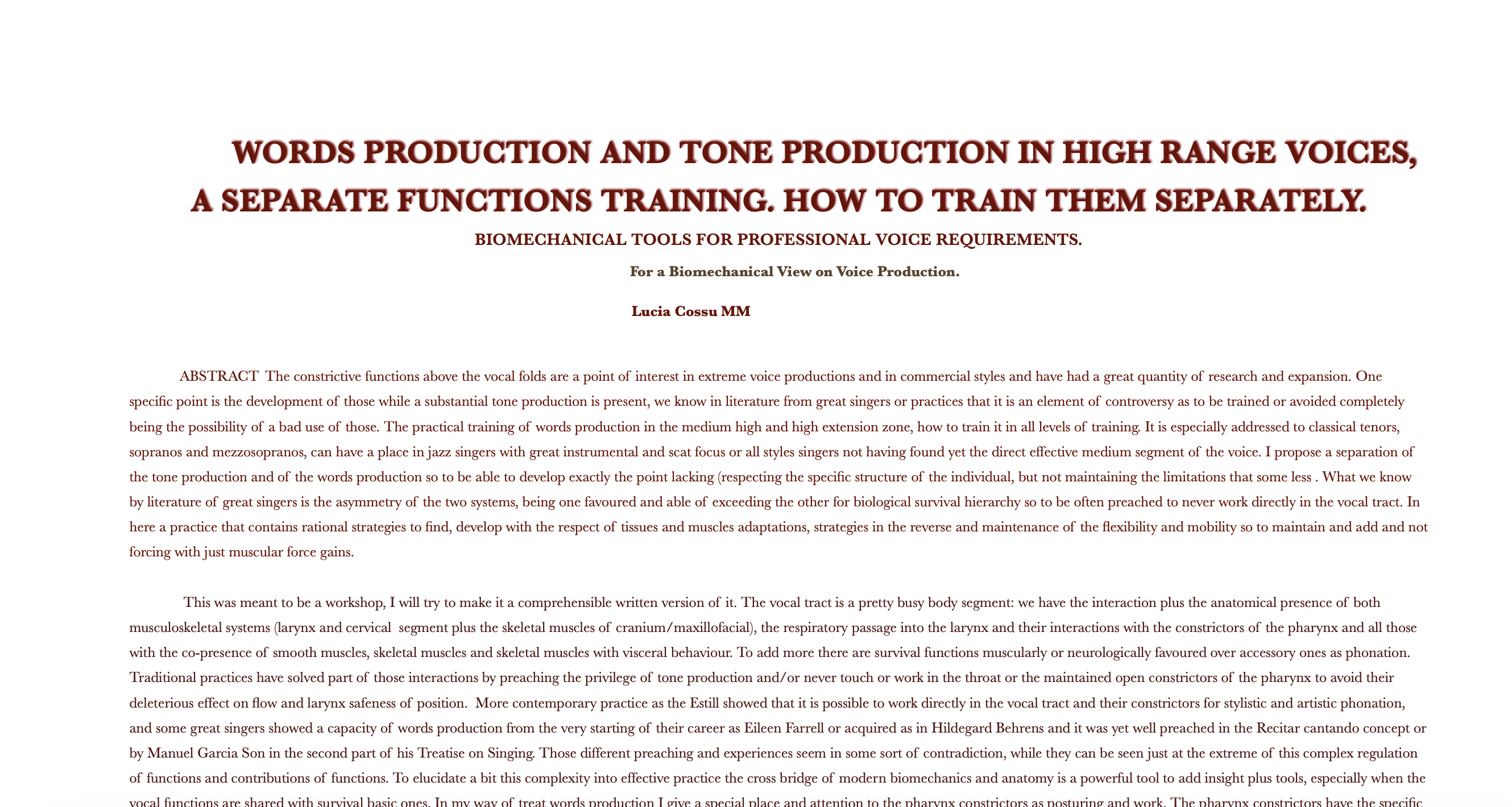
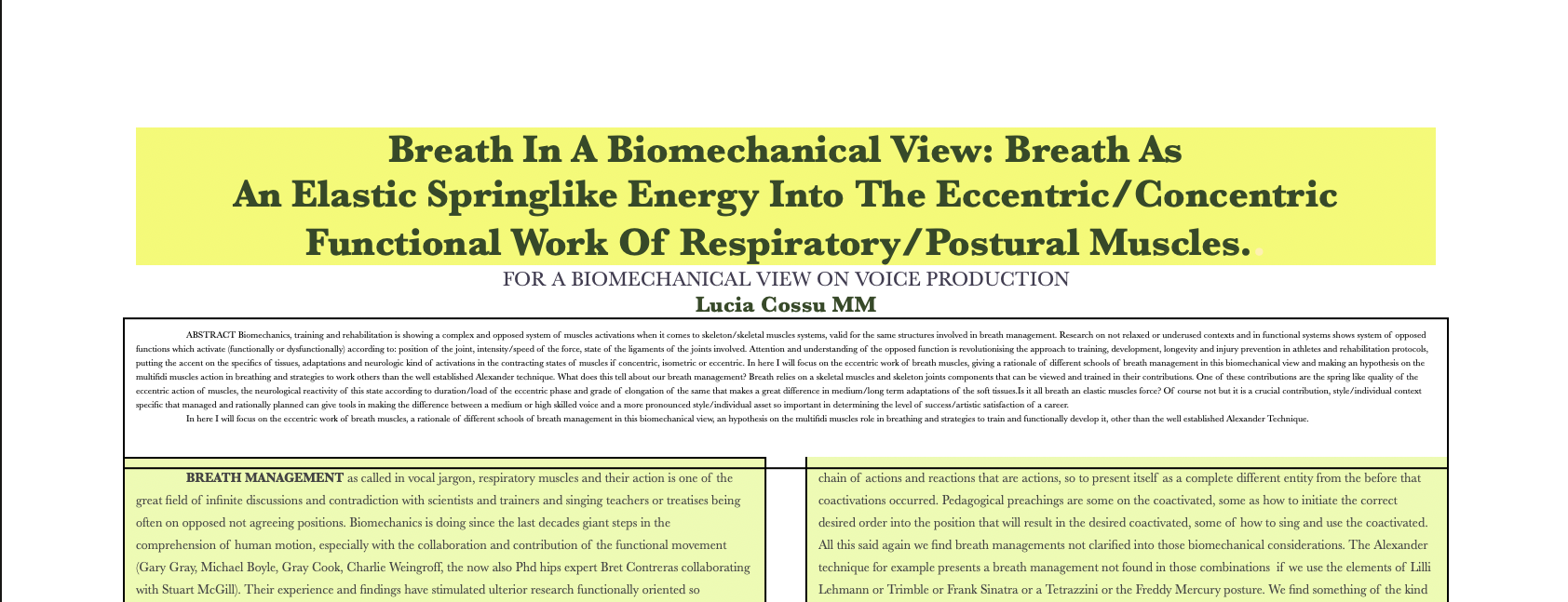
This year topics in the photos.
I am presenting on mechanism based/oriented way because it is how my practice is oriented since 15 years, still it is a practice and born to give options and healthy/effective career or voices to my clients. My work is the cross bridging of advanced functional biomechanics findings into the context of voice and their specific relevance to serve voice production and artistic voice, both spontaneous and technical.


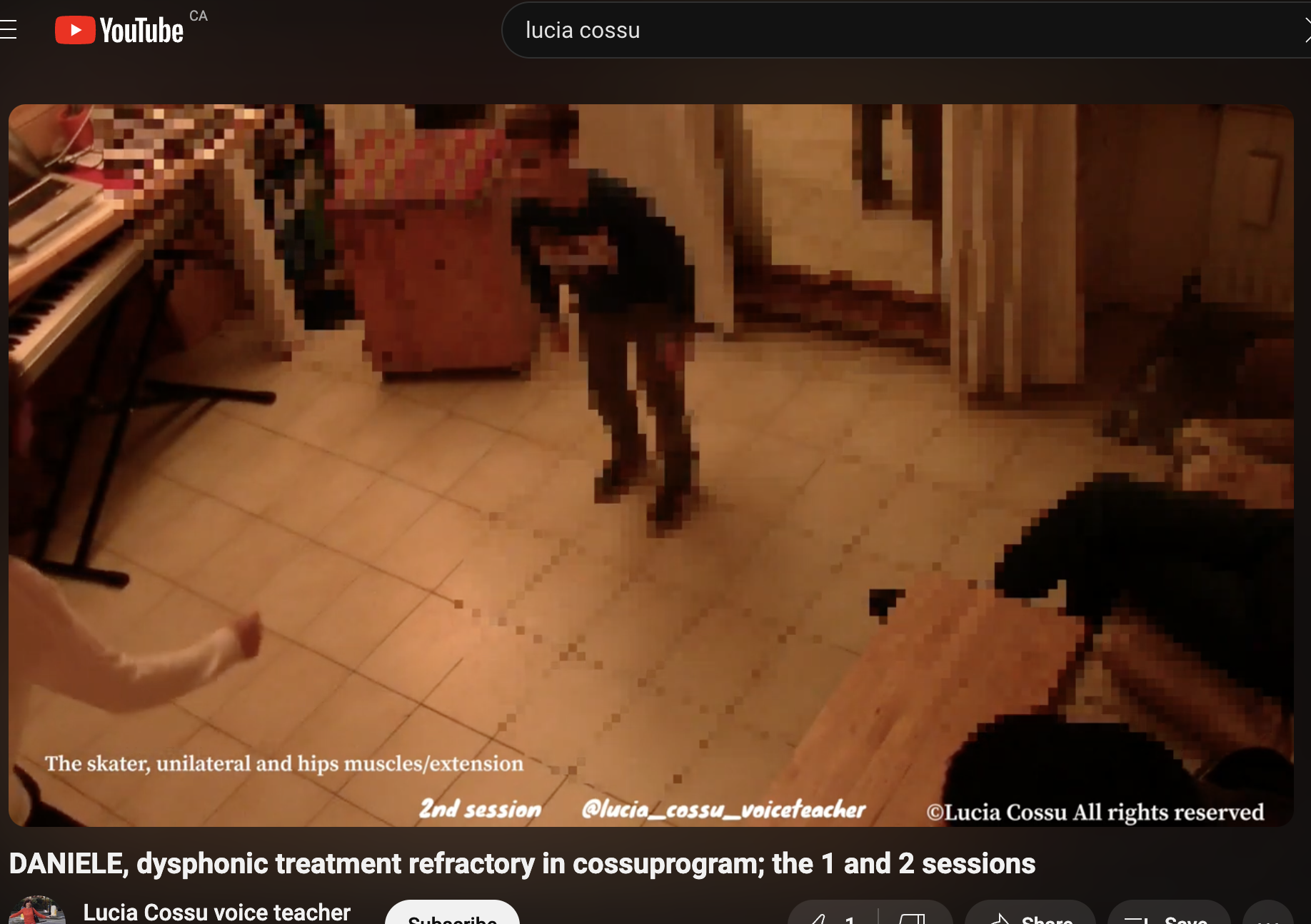
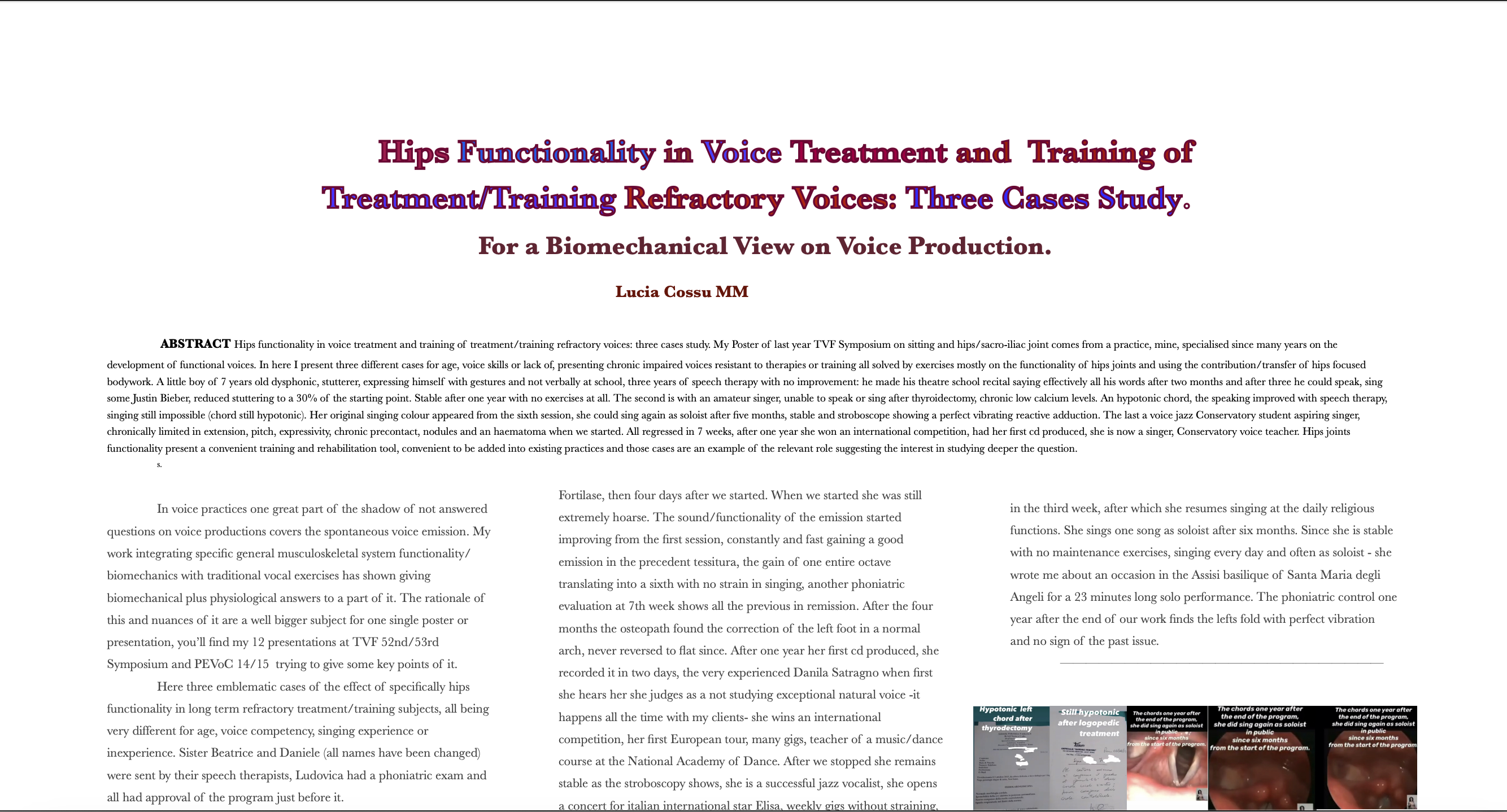
Here, in the first three link some emblematic cases on refractory treatments or refractory training voices. In the videos description you find the link to some entire sessions so to see a bit of the work done and strategies applied.
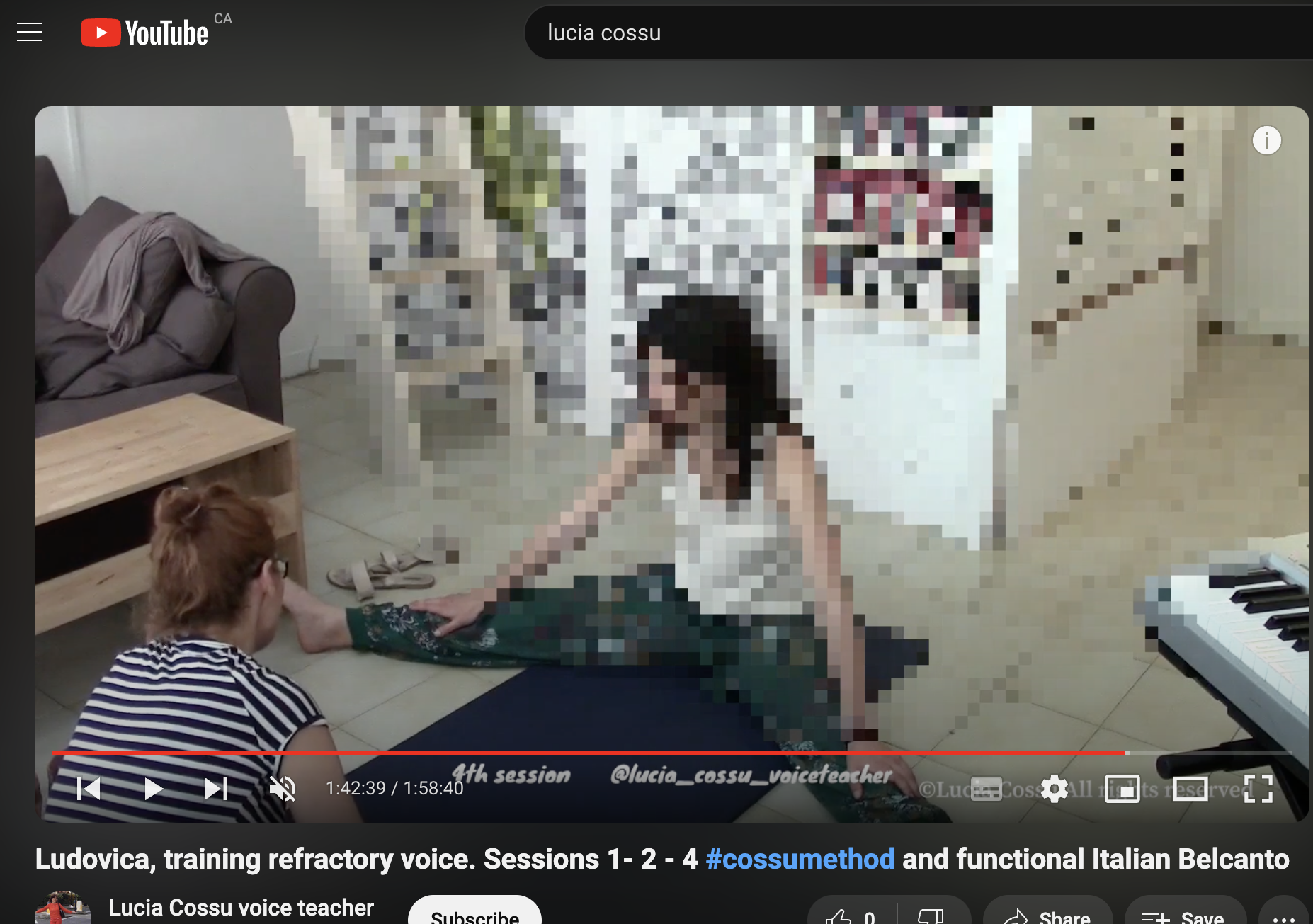
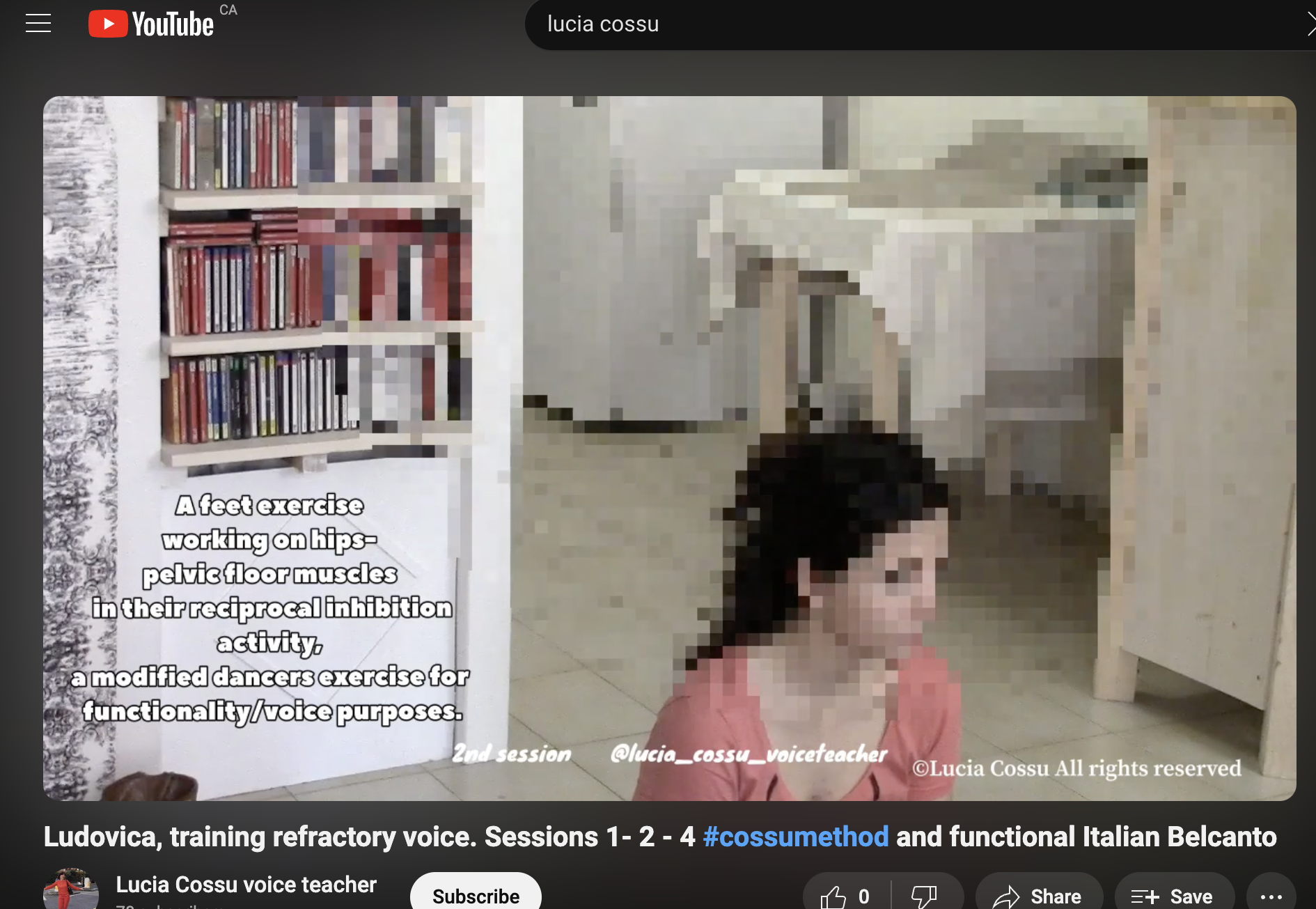
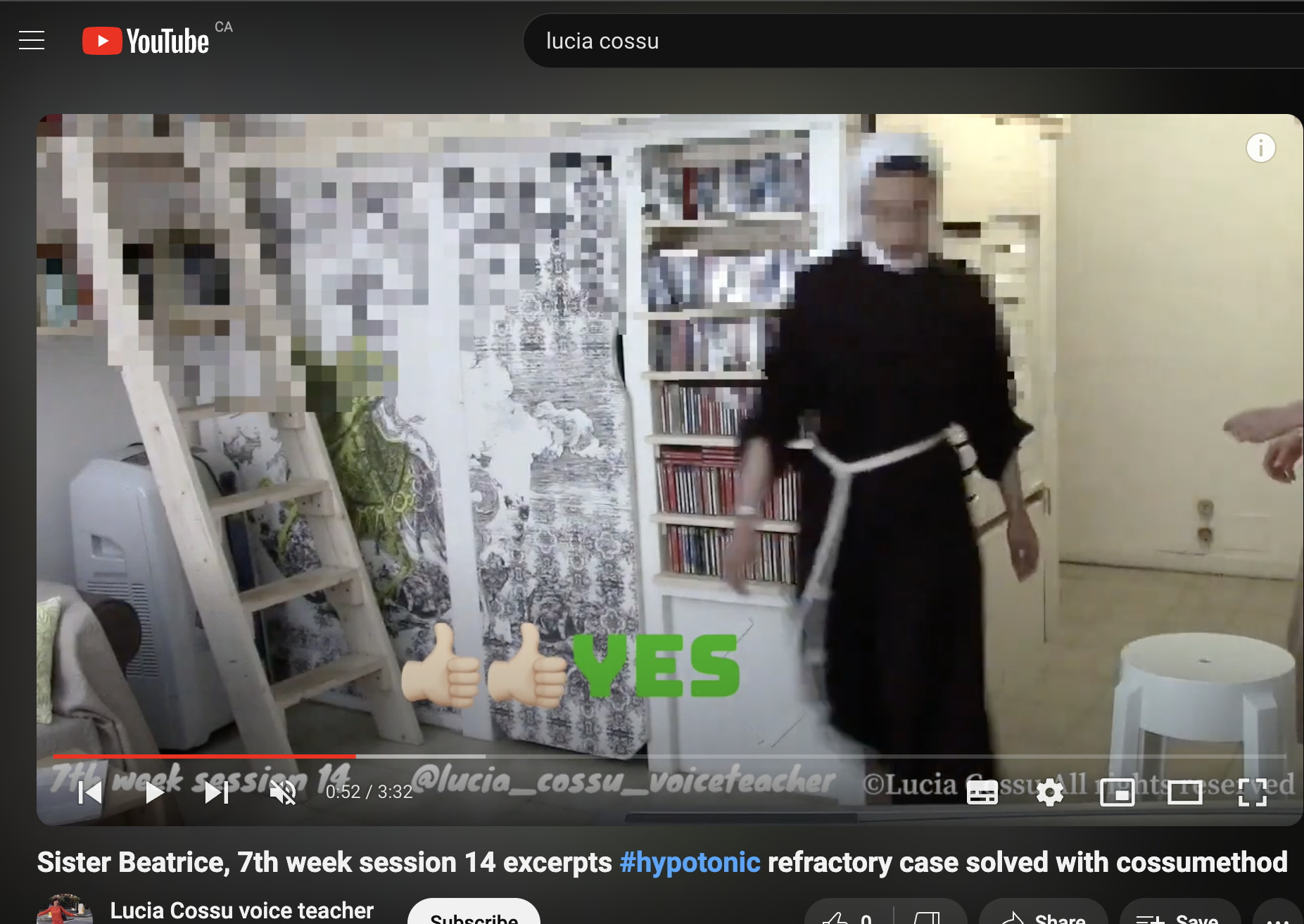
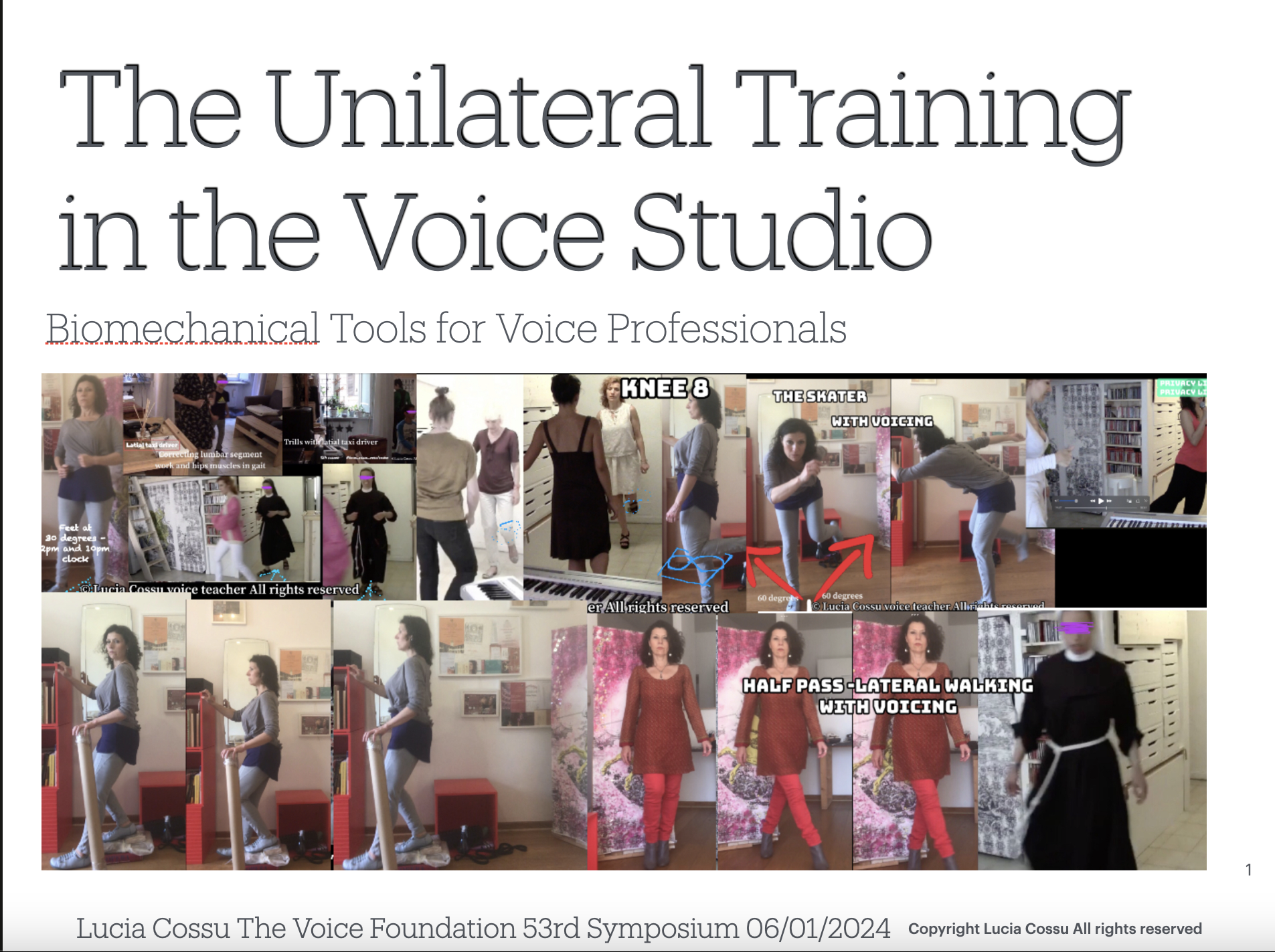
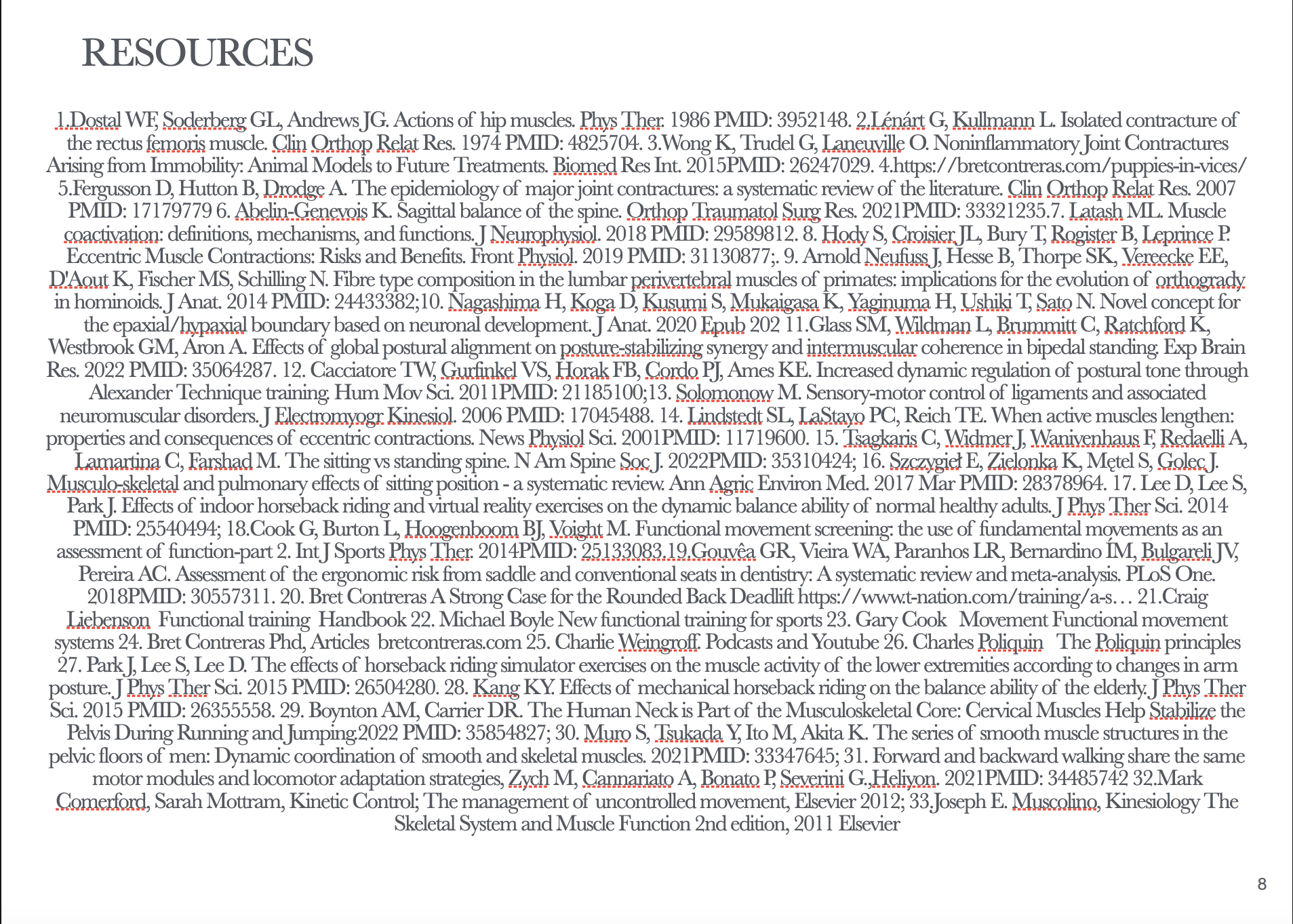
The Unilateral Training in the Voice Studio the last two slides from the oral presentation – Resources and contact; my inexperience made me missing – give me singers and voices to work with, or something to sing… am not a presenter at core
In the below link those tools in artistic training. Unilateral training and word production pharynx constrictors training in artistic opera voice. The not clear point in the field now is how adaptations occur, in what timing and way. As all musculoskeletal system trainings you find first the real state of the system and then the gains by the training: in vocal terms you find all the not trained parts appearing at the same time of some better qualities, then in some months – at least six and usually nine- you definitely have the evolution of all the system in its possibilities of dynamics, extension, colour, stability, easiness, quality of the tone, expressive capacity, feeling of true voice to the singer or individual. The complete adaptations take longer and we talk about 2-3 years. It is not a long time for a singers’s life and career, and it is in line with all the finding in the field of musculoskeletal disciplines/treatments. I respect the singer desire to not present with the sound she had before our lessons, but you will hear from the six months mark and the successive evolution.

Those tools in artistic training. Unilateral training and word production pharynx constrictors training in artistic opera voice.

The abstracts for the Voice Foundation 52nd 2023 Symposium 👇🏻👇🏻

https://atomic-temporary-42869468.wpcomstaging.com/2023/06/04/my-three-posters-for-the-voice-foundation-52nd-symposium-the-abstracts/: My second the Voice Foundation Symposium as presenter


I am very open and actively looking for team collaborations, testing the model I am thinking and hypothesis about the way of interactions, as said many times it is a field not existent at now proving to be ready the times to open it. Let’s cross bridge and add this part of vocal system into basic science of voice.

Vocal system is into the body and into specific segments of the body, it uses muscles and structures having multiple functions, you know better than me probably on those, today we focus on the respiratory and vocal and postural functions with a joint to joint approach, and the questions are HOW THEY correlate in PRECISE terms? In here I would open a path, I hope, to more sophisticated thoughts and directions of researching and getting specific in WHAT HOW WHY WHEN of those correlations, and IF as an effect on the vocal system or a direct contribution SO to be the vocal system thought in a less narrow way. (I anticipate that I look at posture and overall all body as the environment in which the vocal system can operate and develop, we know it happens also the other way around, but I remain focused on this direction in here).
Lucia Cossu at PEVoC14 – from JOINTS AND VOICE: DOES VOICE PRODUCTION REACTS TO JOINTS DYSFUNCTIONALITY FAR FROM VOCAL TRACT? SOME CASES AND AN HYPOTHESIS on YouTube 👉🏻👉🏻 link
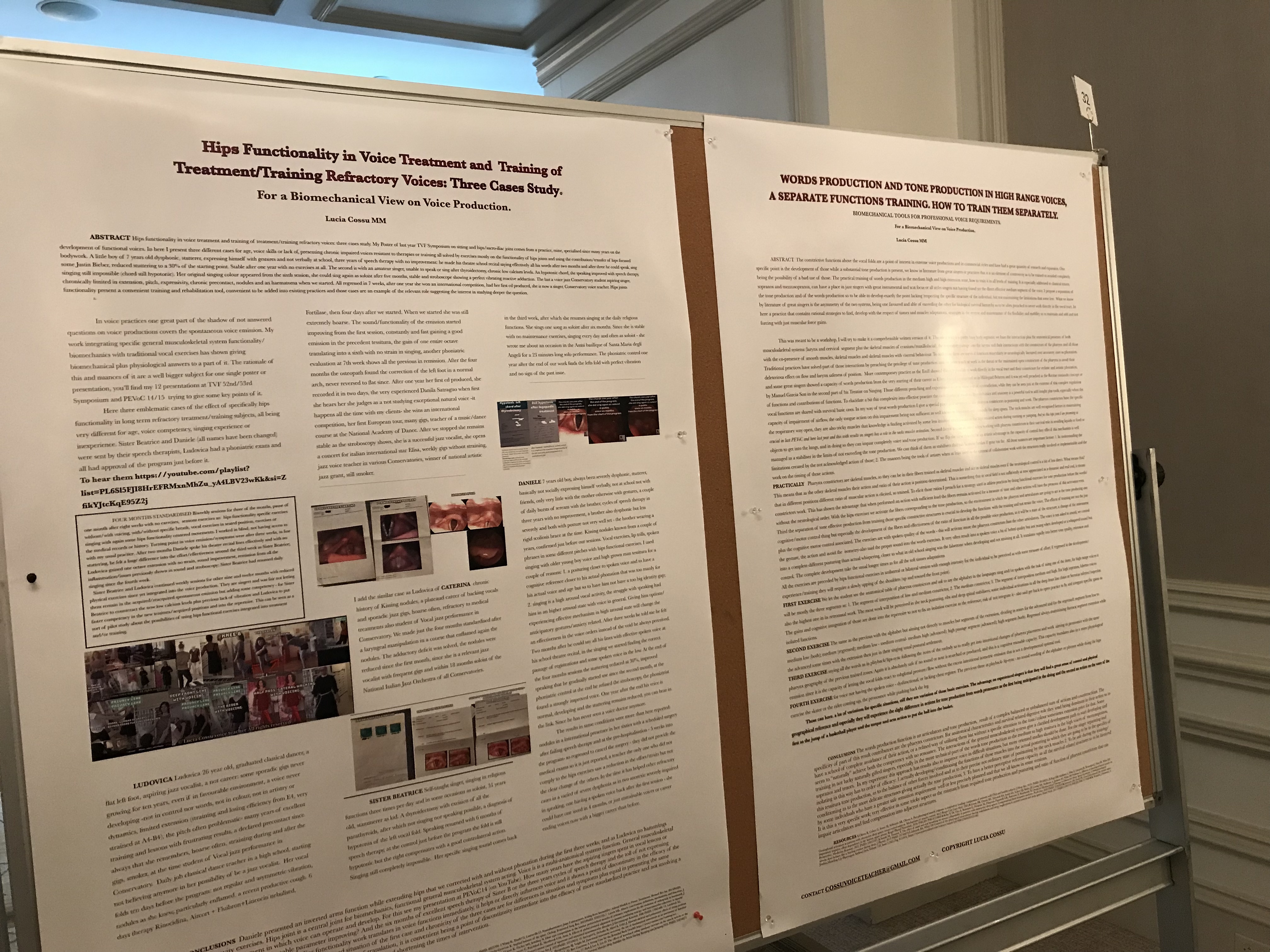
Cheers to all, see you next year or in other voice occasions. Good voice to all!
My Three Posters for The Voice Foundation 52nd Symposium, the Abstracts

Here the three abstracts of the Posters I presented at the Voice Foundation 52nd Symposium. Very happy to see that this innovative vision I apply and preach and research about is coming out of the controversial shadow and be in its first steps in the sun.

To have future development and collaborations between voice technical and training specialists as I am and biomechanists and kinesiologist so to build knowledge on the common mechanisms well studied in other fields and voice production and nuances for artistic use. The first steps are here, feel honoured and happy being the pioneering of that and opening at such high science/pedagogy places as The Voice Foundation.

1.

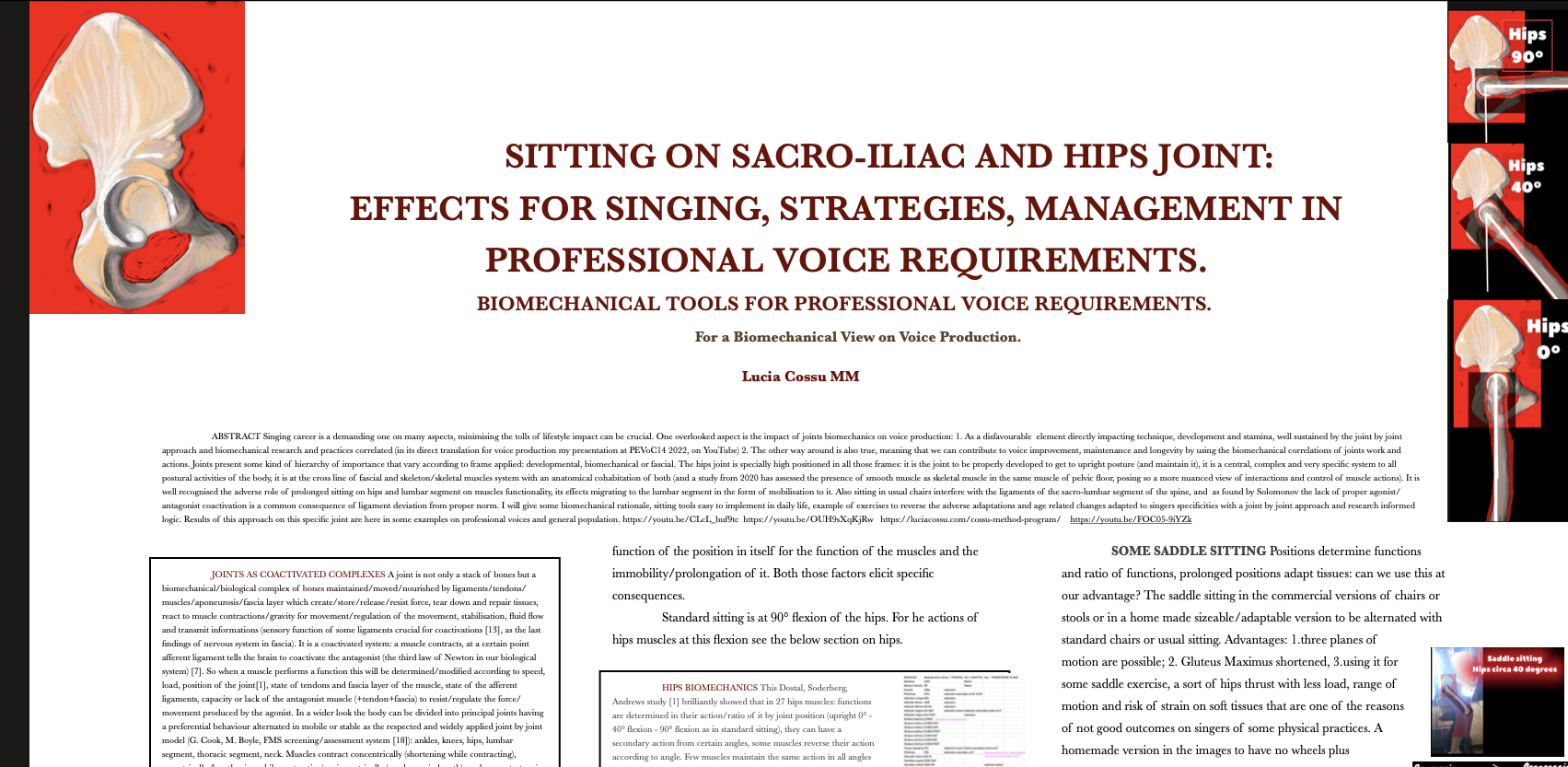
Sitting on Sacro-Iliac and Hips Joint: Effects for Singing, Strategies, Management in Professional Voice Requirements. Biomechanical Tools for Professional Voice Requirements.

For a Biomechanical View on Voice Production.

Lucia Cossu MM

ABSTRACT Singing career is a demanding one on many aspects, minimising the tolls of lifestyle impact can be crucial. One overlooked aspect is the impact of joints biomechanics on voice production: 1. As a disfavourable  element directly impacting technique, development and stamina, well sustained by the joint by joint approach and biomechanical research and practices correlated (in its direct translation for voice production my presentation at PEVoC14 2022, on YouTube) 2. The other way around is also true, meaning that we can contribute to voice improvement, maintenance and longevity by using the biomechanical correlations of joints work and actions. Joints present some kind of hierarchy of importance that vary according to frame applied: developmental, biomechanical or fascial. The hips joint is specially high positioned in all those frames: it is the joint to be properly developed to get to upright posture (and maintain it), it is a central, complex and very specific system to all postural activities of the body, it is at the crossline of fascial and skeleton/skeletal muscles system with an anatomical cohabitation of both (and a study from 2020 has assessed the presence of smooth muscle as skeletal muscle in the same muscle of pelvic floor, posing so a more nuanced view of interactions and control of muscle actions). It is well recognised the adverse role of prolonged sitting on hips and lumbar segment on muscles functionality, its effects migrating to the lumbar segment in the form of mobilisation to it. Also sitting in usual chairs interfere with the ligaments of the sacro-lumbar segment of the spine, and  as found by Solomonov the lack of proper agonist/antagonist coactivation is a common consequence of ligament deviation from proper norm. I will give some biomechanical rationale, sitting tools easy to implement in daily life, example of exercises to reverse the adverse adaptations and age related changes adapted to singers specificities with a joint by joint approach and research informed logic. Results of this approach on this specific joint are here in some examples on professional voices and general population. https://youtu.be/CLcL_buf9tc  https://youtu.be/OUH9sXqKjRw   https://atomic-temporary-42869468.wpcomstaging.com/cossu-method-program/    https://youtu.be/FOC05-9iYZk

2.

Breath in a Biomechanical View: Breath as an Elastic Springlike Energy into the Eccentric/Concentric Functional Work of Respiratory/Postural Muscles.

For a Biomechanical View on Voice Production.

Lucia Cossu MM

ABSTRACT Biomechanics, training and rehabilitation is showing a complex and opposed system of muscles activations when it comes to skeleton/skeletal muscles systems, valid for the same structures involved in breath management. Research on not relaxed or underused contexts and in functional systems shows system of opposed functions which activate (functionally or dysfunctionally) according to: position of the joint, intensity/speed of the force, state of the ligaments of the joints involved. Attention and understanding of the opposed function is revolutionising the approach to training, development, longevity and injury prevention in athletes and rehabilitation protocols, putting the accent on the specifics of tissues, adaptations and neurologic kind of activations in the contracting states of muscles if concentric, isometric or eccentric. In here I will focus on the eccentric work of breath muscles, giving a rationale of different schools of breath management in this biomechanical view and making an hypothesis on the multifidi muscles action in breathing and strategies to work others than the well established Alexander technique. What does this tell about our breath management? Breath relies on a skeletal muscles and skeleton joints components that can be viewed and trained in their contributions. One of these contributions are the spring like quality of the eccentric action of muscles, the neurological reactivity of this state according to duration/load of the eccentric phase and grade of elongation of the same that makes a great difference in medium/long term adaptations of the soft tissues.Is it all breath an elastic muscles force? Of course not but it is a crucial contribution, style/individual context specific that managed and rationally planned can give tools in making the difference between a medium or high skilled voice and a more pronounced style/individual asset so important in determining the level of success/artistic satisfaction of a career. 

In here I will focus on the eccentric work of breath muscles, a rationale of different schools of breath management in this biomechanical view, an hypothesis on the multifidi muscles role in breathing and strategies to train and functionally develop it, other than the well established Alexander Technique

3.

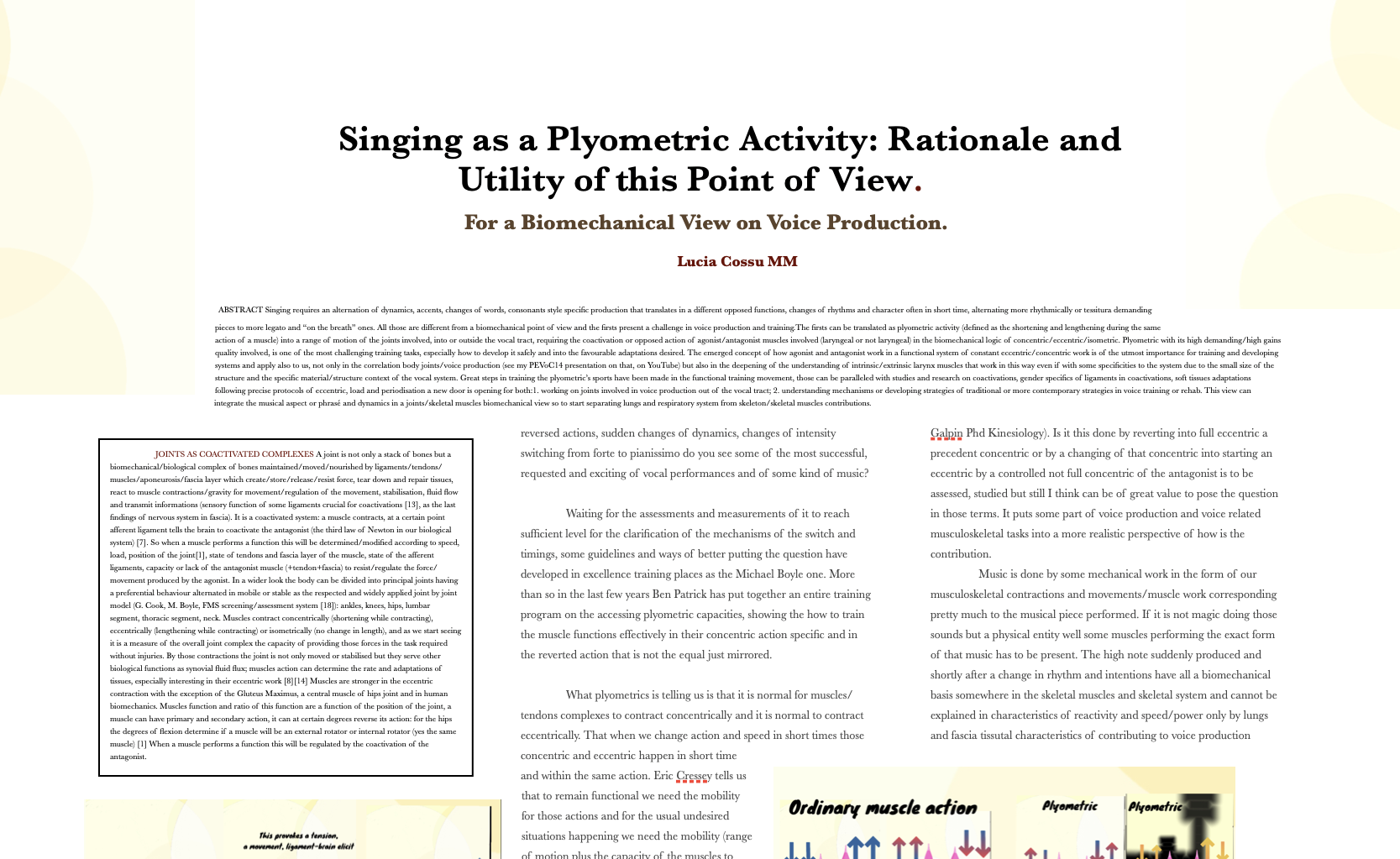
Singing as a Plyometric Activity: Rationale and Utility of this Point of View. For a Biomechanical View on Voice Production.

For a Biomechanical View on Voice Production.

Lucia Cossu MM

ABSTRACT Singing requires an alternation of dynamics, accents, changes of words, consonants style specific production that translates in a different opposed functions, changes of rhythms and character often in short time, alternating more rhythmically or tessitura demanding pieces to more legato and “on the breath” ones. All those are different from a biomechanical point of view and the firsts present a challenge in voice production and training.The firsts can be translated as plyometric activity (defined as the shortening and lengthening during the same action of a muscle) into a range of motion of the joints involved, into or outside the vocal tract, requiring the coactivation or opposed action of agonist/antagonist muscles involved (laryngeal or not laryngeal) in the biomechanical logic of concentric/eccentric/isometric. Plyometric with its high demanding/high gains quality involved, is one of the most challenging training tasks, especially how to develop it safely and into the favourable adaptations desired. The emerged concept of how agonist and antagonist work in a functional system of constant eccentric/concentric work is of the utmost importance for training and developing systems and apply also to us, not only in the correlation body joints/voice production (see my PEVoC14 presentation on that, on YouTube) but also in the deepening of the understanding of intrinsic/extrinsic larynx muscles that work in this way even if with some specificities to the system due to the small size of the structure and the specific material/structure context of the vocal system. Great steps in training the plyometric’s sports have been made in the functional training movement, those can be paralleled with studies and research on coactivations, gender specifics of ligaments in coactivations, soft tissues adaptations following precise protocols of eccentric, load and periodisation a new door is opening for both:1. working on joints involved in voice production out of the vocal tract; 2. understanding mechanisms or developing strategies of traditional or more contemporary strategies in voice training or rehab. This view can integrate the musical aspect or phrasé and dynamics in a joints/skeletal muscles biomechanical view so to start separating lungs and respiratory system from skeleton/skeletal muscles contributions.