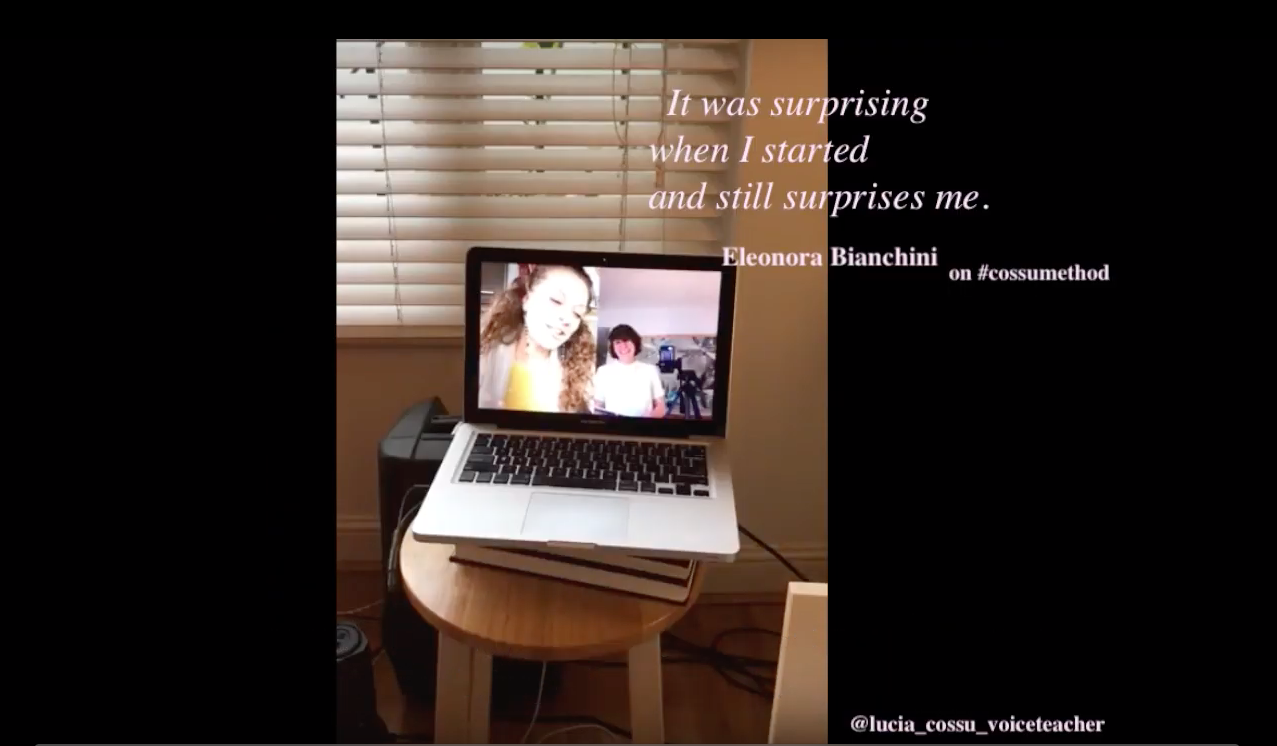
Working with young talent from Liège, being his technical reference for preparing the first Knabe in the Zauberflöte he has to perform at the Opéra Royal de Wallonie. #voiceteacher #belcanto #belcantoforyoung #youngsingers #talents #singinglessons #singingteacher #operaroyaldewallonie #liège #walloniemabelle #diezauberflöte #dreiknaben #mozartopera
Category: Cossu method
An old precious perspective on voice with new exercises to work through it in a contemporary way; the old instrumental italian belcanto technique and a corpus of new exercises to obtain that instrument the voice is. A perspective useful for professionals, beginners and in rehabilitative field.
FAQ
WHAT IS IT COSSUMETHOD?
It is an upgraded biomechanical based version of Belcanto and physiological high achievement techniques to improve, train and solve fundamentals of professional voice production requirements.
PRACTICALLY?
It has integrated the contributions and biomechanics of all body segments into the voice production, effectiveness and quality. It is a biomechanical way of getting to a good part of what usually called natural gifted voices. It works on functional body joints for what it is realistically their contribution in voice production.
SO IT IS AN HOLISTIC PRACTICE?
I do not think of it as holistic, it is just how voice is, using specifically some parts/forces of the body. Having a good agent or producer or band, as having a mind practice expert for performance: those are into an holistic vision. Here is just the instrument mechanistically in its basis.
ISN’T THE VOICE A RESPIRATORY/LARYNX COMPLEX FUNCTION?
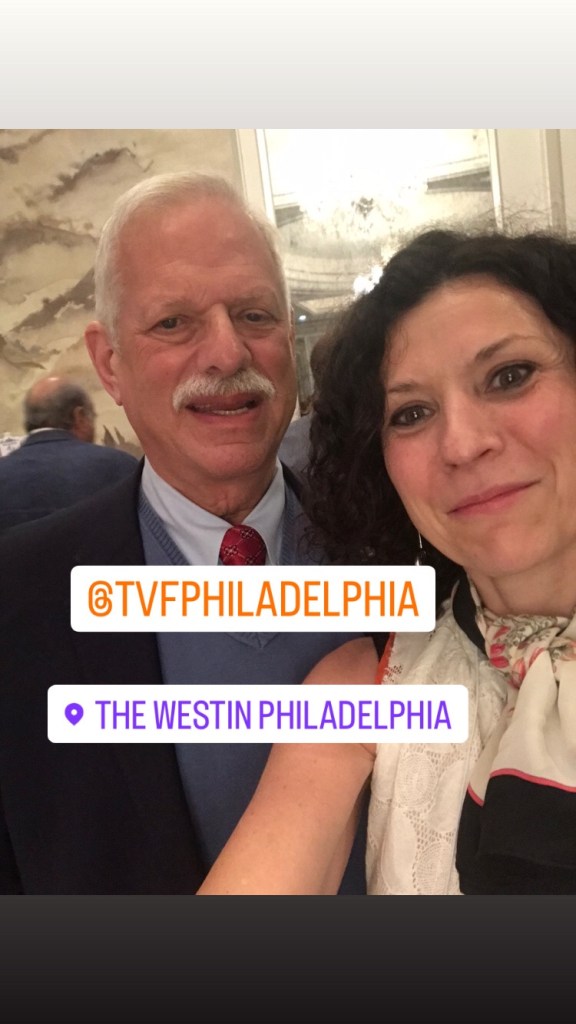
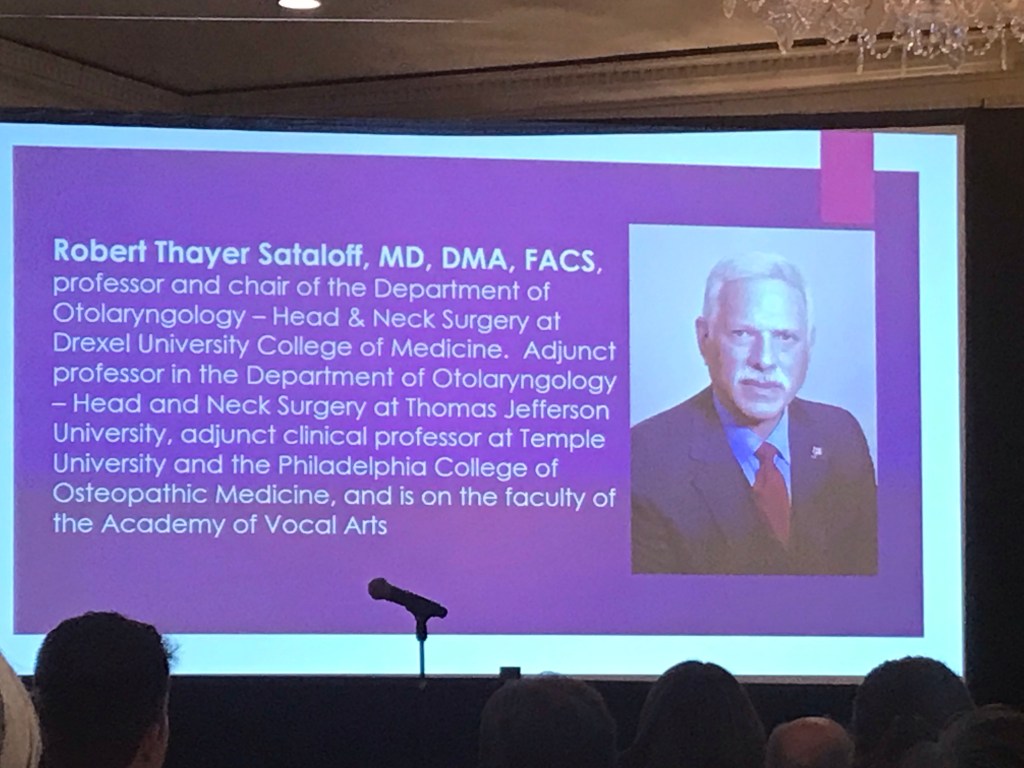
It is of course, but it is not just this. As also said clearly by Robert T. Sataloff – this year at Voice Foundation 52nd Symposium Philadelphia 2023 – voice is a whole body function.
SO COSSUMETHOD CONTAINS/SHOWS THE WHOLE?
It shows a part of biomechanical that lacked and still lacks into common practices and model. No innovations show all, just a more useful upgraded version.
YOU SAY IT IS A VOICE MODEL (R)EVOLUTION
It is a bit a teasing for my colleagues and voice scientific community. It is true but it means that this is a topic and needs its place in specific terms and for the exact contributions it gives (or take away). The phrase is true, it is a part that has to be added.
WHO CAN PROFIT FROM COSSUMETHOD?
Singers or beginners or voice professionals with limited and not completely developed voices, those with chronic refractory untrainable or chronically dysfunctional. Those being not effective in an artistic and commercial context, those not having the “natural voice”, feeling artistically and creatively a lack into voice expression of these.
WHY YOU SAY IT IS COMPLEMENTARY TOOL, FILLING A LACK OF USUAL TECHNIQUES?
The fast results on high level trained singers show exactly that: it changes the context where it needed to be upgraded or modified. If it was not complementary they should have to start back relearning everything, while they maintain and find improved all the patterns well learnt from teachers and experiences.
WHO DOES NOT PROFIT FROM IT?
I think it is not the best option when in the phase of consolidating: when effective and starting a career or gigs. In this case it can be useful for some, especially if they have to learn how to maintain and recover in tour or between the gigs or how to reduce the aging effect on singing, otherwise just stay the course and grow into stabilising what yet doing, it is enough to process for the time being.
HAS IT BEEN TESTED?
It has been tested in three ways: 1. by years of career and voice production massive improvements, constituting a point of discontinuity from the arrival state of the voice. Many were stuck into limited or clearly dysfunctional voices; the improvements have been maintained in the time; in voice specialists or voice professionals not knowing them previously all judged them being natural gifted voices of excellent quality; 2. a first cossuprogram on 12 week of biweekly sessions with chronic dysfunctional voices (more than one year, some from a decade of certified dysfunction, refractory to high level training and/or excellent medical treatment) with singers and general population, some control group with no dysfunction and weekly amateur or professional voice users. The medical results were of resolution of dysfunctions in 90% of the subjects and improvement major to speech therapy in the remaining 10%. The control group improved quality of emission and efficiency of emission, other parameters remained the same (so no harm or disbalance from the intervention); 3. the rationale underlying it and clearly stated finds the same findings in the most effective trainings and research, as the joint by joint model and Michael Boyle training systems, the Gary Gray concepts and functional hypothesis. It has been convincing enough to be presented as rationale and workshops at The Voice Foundation 52nd Symposium 2023 – Philadelphia US and Pan-European Voice Conference 2022 PEVoC14.
THE MOST COMMON MISUNDERSTANDING ABOUT COSSUMETHOD?
There are two majors in my experience as far. 1. since it is innovative and very effective on some questions -very commonly not answered questions- it is a solve it all. This happens commonly when a new tool is developed, I am all the time putting reality into this. It adds solutions and options and a path of research for some at now not understood mechanisms, it is a bridge to a new upgraded model. It changes the perspective, it is a bridge. And it is important to constantly repeat this.
THE MOST COMMON MISUNDERSTANDING ABOUT COSSUMETHOD?
There are two major misunderstandings 2. the transition phase, when we are actually developing towards the upgraded/physiological voice production. It does not sound as the upgraded one, I am making an effort to make it sound better, still the structure is not yet there. This gives to professionals of the voice the doubts about the work, and this is one of the reasons I put under biological control in the first cossuprogram: if physiological improvements are so clear in the exams doubts subside (datas are always better).
WHY DOES IT SOUNDS NOT GOOD IF IMPROVING?
Because it puts correct biomechanics into an instrument adapted into compensatory or partial movements. Correct biomechanics will show the actual real adaptation of the instrument. Corrected biomechanics will start the building phase of what lacked into tissues development, reversing some eccentric with concentric (or reciprocal) also will target desired tissues adaptations, getting to use proper muscles chain/function instead of the compensatory one will be perceived as a transitional loss of control. I post often different kind of clients into this phase since it is the one I see we need most to become literate about, learn what are the signs we look into the studio.
COSSUPROGRAM?
It is a 12 weeks program for voice improvement and solutions of some unresolved vocal question by usual voice consensus trainings or therapies. It can be a free of charges from my part as the first described above, and as the one I am organising now in the case it is for study/publication purposes. The only charges on the candidates in this case are the medical ones.
It is otherwise an accessible at a fair rate program for voices chronically dysfunctional (the raw expenses of rent, heat and electricity), the medical expenses are always at candidate’s charge.
WHAT HAVE BEEN THE OUTCOMES OF COSSUPROGRAM IN SINGERS?
Exactly the same I experience in my studio daily. It has been a complete transformation in their physiology and career: from chronic voice limitations with vocal issues, career limited to backing vocals or sporadic gigs (and daily other job) to resolved functional issues as stated by a relevant phoniatrist and confirmed again after one year after stopping the sessions. From the career it developed in relevant vocalists, frequent gigs, soloist for the Jazz National Orchestra of Conservatories, national and international competitions won, two albums produced, teacher of Jazz Voice performance in various Conservatories, opening the Italian popstar Elisa concert for Save the Children.
WHAT HAVE BEEN THE OUTCOMES OF COSSUPROGRAM IN GENERAL POPULATION?
The remission of nodules in a scientist often lecturer (at pre hospitalisation nothing in the chords, so surgery canceled), a not speaking and stammerer boy 7 yearsold had reduced the stammering to a 30%, started expressing himself daily with words, could make his theatre recital saying all his phrases with clear voice and no interruptions. After one year the gains in verbal expression are maintained as reduction of the stammering, voice quality still improving (this is usual since tissues take more time in improving when get back to functionality). An organic damage after a thyroidectomy in amateur singer completely solved, it was an hypotonic vocal fold refractory to speech therapy of excellent level, and remained without vibration for 18 months. It could be possible to sing again after few sessions, sing as soloist at the end of the program, stabilised into singing daily and as a soloist, confirmed the stable complete healing one year after the end of the sessions. Emission improved in a school teacher, the only one not completing the exercises during the program as required. As for the singers they are the usual changes I experience in my practice with the rare general population cases that come to me.
IS COSSUMETHOD A NEW TOOL?
I prefer say that it is innovative in the precision of interventions it shows, it is not new in itself but it is a more physiologically based way of looking at voice. The perspective looks new not the tools. It is a rational bridging the dots of styles, techniques, natural gifted voices so to give a better understanding of what they have in common on a physiological level.
TO WHOM COSSUMETHOD IS MOSTLY RECCOMENDED?
For voice with chronic limitations in: extension, dynamics, speed and drive, tone quality, artistic effectiveness. For classical/MT singers in the development of the octave G3-G4 for tenors and A4-A5 and subsequent high notes for mezzos, sopranos, falsettists.
DOES COSSUMETHOD SOLVES WHAT OTHER TECHNIQUES CANNOT?
It is exactly what it does. It does solve some unfavourable characteristics/situations, unfortunately pretty common, for which at now there were no reliable solutions.
WHAT IS IT THE INNOVATION OF COSSUMETHOD?
It is the view on the contribution and role of the segments of the general musculoskeletal system. I call it Big Box, versus Small Box that is the proper vocal system of larynx and lungs and air. You can imagine Small Box being contained into Big Box, they interact even just geometrically to start simple 👉🏻 Big Box- Small Box
HAS SOMEONE BOUGHT INTO THIS VIEW?
I have seen all the six abstracts I submitted as the first time I ever did submit something at two of the World’s Top Conferences on Voice in less than one year. I made one presentation, two workshops and three Posters which were widely read and photographed.
WHY TO PARTICIPATE AT COSSUPROGRAM 2023/24?
It could be a great point of discontinuity for voice production and successive development for the selected candidates. It is free from my part, and the medical the candidates have to provide, if they do not have yet recent ones as they should as pro or future pro, are a great starting point to check their characteristics and objectives of their instrument and skilfulness.
I DO NOT BELIEVE IN ONLINE LESSONS
Yes I can see your point. But as I said to a recent not singer but producer student when he told me -I trust you. , the point is what is objective. To the student I reminded the extension, tone quality, pitch quality we gained in the few lessons, the songs he could sing and that he could train while this was useless before the lessons. So it is not much what you believe but if they are effective, and yes they are. Of course in person are humanly warmer, still since they improve your voice, your singing, it can be warmer getting to those improvements .
WHAT DO OTHER TEACHERS, VOICE SPECIALISTS, SINGERS, MUSICIANS SAY OF YOUR STUDENTS?
They all the time say them being amazing natural gifted voices or amazing creatives, they do not suspect where they come from. Or on the contrary they hear when we are still in transition, they think nay they are nothing special and some time after do not recognise as the same ones and say the above.
IF YOU SHOULD SAY IN FEW WORDS WHAT IS COSSUMETHOD?
A door to the natural gifted voice. It is the knowledge opening to the mechanisms involved in what was a mystery of development.
IS COSSUMETHOD IN CONTRAST WITH GENERAL CONSENSUS PRACTICES?
Not the least, it is complementary to them. It brings a part that was in complete shadow, it adds and not substitutes.
WAS IT CONTROVERSIAL?
It has been for the time needed to start seeing the integrated model we are getting to from different parts of functional body practices.
HAVE YOU A PHD?
This was asked me also in Philadelphia last June at The Voice Foundation. I would really like, indeed it does not exist: I am the first pioneering the need of an integrated figure and voice model from a trainer and voice specialist as I am and the biomechnical and kinesiological field. I am the first bridging it and making the effort to go towards them to make more understandable in mechanistic terms what voice is and what we do and I do on tissues, muscles fibres etc. with some practices.
WHAT IS YOUR DREAM FOR COSSUMETHOD?
To start a mutispecialist team integrated into a Vocal institution, to test and for me to write my view on some old vocal practices and vocalisations.
IS COSSUMETHOD ADDRESSED TO CLASSICAL AND MT VOICES?
It can have a special value in the contemporary pedagogic classical and MT actual world for some of their technical specific requirements not completely met at now, but it was born and have results for all types of styles and voices. It is a “get to a great good voice” tool, and this is advantageous to all.
DOES COSSUMETHOD WORK ON ISSUES?
No, never, it is not my expertise, it is the place of medical practitioners to treat issues. Cossumethod works on functionality, meaning it targets what the body can do functionally in the other segments without getting to the issues, the effect of those being often the solution or remission of dysfunctions or dysfunctional symptoms in a singing career of more intense load than before.
WHY, IF IT IS A LONGER YEARS OF APPLICATION, ARE YOU PRESENTING IT JUST NOW?
For a couple of reasons: 1. It takes time if we do not want to rush, and for all knowledge steps it is crucial to control from many different points and find a rationale; 2. the health issue that stopped my career has been active until 2019, so it required emergency hospitalisations and taxing daily symptoms. I am happily in remission and can travel and work more finally.
DO YOU THINK COSSUMETHOD IS POINTING A NEW VOICE MODEL?
I think it is integrating the old into a more realistic one, being the actual a reductionist one.
DO YOU THINK IT WORKS ON TAKING AWAY THE TAXING OF DYSFUNCTIONS OR BEING A PART OF VOICE PRODUCTION?
I think it is both, depending on the segment we are taking into account. For the hips joint I definitely think it is also a direct part of voice production, but this is just me speculating (with some reasons and evidences as I showed at TVF 52nd Symposium). It has to be tested, both schemes.
THE ALEXANDER TECHNIQUE DOEs NOT GIVE ALL THE ANSWERS YET?
It would be nice it did, I would have just learnt and teached it instead of all the work I had to do to get to cossumethod. It gives some kind of answers, brilliant and amazing; you can think of cossumethod as a step forward on the shoulders on Alexander Technique.
ARE THE COSSUMETHOD EXERCISES INVENTED BY YOU?
A part I had to invent, mostly are postural, dancers, actors, yoga, training exercises readapted for voice purposes.
WHAT ARE YOUR FEELINGS ABOUT COSSUMETHOD?
I feel profoundly excited, often satisfied, mostly plentiness and grateful by the constant improvements happening in my voice studio. You know when a young singer comes with an idea of the voice and possibilities and career and in few lessons see the voice showing as having other possibilities the eyes get wide and enchanted and the horizon of career opens.
HOW DOES WORK A COURSE WITH YOU?
It is mostly a weekly one on one session, of different length if it must be only technical or technical plus repertoire. Can be done in cycles repeated two/three times a year. When beginners or having in schedule to upgrade the level of the career I advise a one year round uninterrupted.
IS IT EXPENSIVE?
Not at all. This has a reality reason: the singers who need cossumethod most are before having a well developed pro career, often not yet pro and without agency or representation. To be effective they must come for a number of lessons. I cannot ask for a lesson what they can pay in a month or two, it would be useless to have them really progress.
DO YOU DO VOCALISATIONS?
Can be strange but lessons look like the same as usual lessons, it is the how I ask within the vocalisations, what positions more or less specifics, how to search for sounds and notes that changes.
DOES COSSUMETHOD CHANGES THE STYLE OF SINGING?
If you intend if an Estill trained or an extreme vocalist singer will not be able to use those anymore I can confirm that no, they do not need to change. My work is usually to put order and sense in some overlooked parts that make the non effectiveness of the technique or emission used. It is a unifying functional work, it is the path towards the clarification of what is in common in all effective and healthy emissions.
WHO ARE THOSE SEEING THE FASTEST IMPROVEMENTS?
Its effects are immediate on trained voices and active singers as on dysfunctional voices.
WHO ARE THOSE SEEING THE SLOWEST IMPROVEMENTS?
The ones never singing, never performing. You cannot act rapidly if nothing of the awarenesses, gestures are there, not even just the adaptations and skills learnt by trying really to get to notes and colours and dynamics. No technique or training can be fast on no use.
WHY DID YOU DEVELOP COSSUMETHOD?
It was the obvious path to give solutions most needed by my students and clients; no technique I studied and searched could give those solutions, I had to try to find some.
WHY CHOOSE COSSUMETHOD IF BEGINNER?
When beginner to train with a method that opens the best outcomes possible in the longest terms can be a smart move. Low level initial training can stuck and plateau in the medium times, then requires changing what was incorrect or overlooked to unstuck. I preach for the highest quality at beginner level, on a medium level when you need to consolidate it can be of less importance.
IS COSSUMETHOD A MODEL/HYPOTHESIS BASED CONCEPT FROM WHICH YOU DEVELOP THE EXERCISES OR IS IT A PRACTICE THAT AN HYPOTHESIS SUPPORTS?
Its birth is as a training practice, results came much before I could explain the rationale as I do now. It is still a training tool and practice, the model is now inspiring my actual development and evolution of exercises; so now they are intertwined.
HOW HAD YOU THE COMPETENCES TO DEVELOP COSSUMETHOD?
I come from professional study of many movement techniques and practices, from my soloist lyric career and master in Conservatory – Classical Voice Soloist Performance, I had experience as a horse trainer in using biomechanics and dressage exercises to balance back dysfunctional horses with different levels of dysfunction, some frankly dangerous. Seeing the thing from a now point of view I was in the functional movement wave moving its first steps everywhere in the world, we developed in parallel a unifying vision mostly confirmed by data and that has opened the actual upgrade in kinesiology and physical therapies.
WHY THE VOICE SERIES ON YOUTUBE?
I did find the necessity of an upgrade of the context in which we think of voice. At now it is viewed and studied as an acoustic/physics phenomenon or a psychological one, the movement side of it is generic and accessory to it in the field and research. I see some psychological factors as just survival biological wires, so it changes the look on solutions searched and implemented. To put biology as the basis is to see how it is multifaceted, and how it implies different survival or function logics to be put together as they manifest and acts into the training or performing. And in this view it is easier to have less bias from aesthetics or of machine model based that I think have slowed the findings on some topics. It is not cossumethod oriented, just biologically. It crosses cossumethod in some episodes, but I am also learning on some subjects while I do the videos. It is a proposition to see also in this way at voice, showing the options and solutions we can have by this and how traditional practices were logic in some steps even if the rationale was not expressed or not correct. It serves to open the discussion on an upgraded awareness, more biological, to stimulate to cross bridge from medical or biology experts not seeing nuances and voice questions for us crucial with us. I am in the same position of many coming to listen to them as a voice competent that is studying.
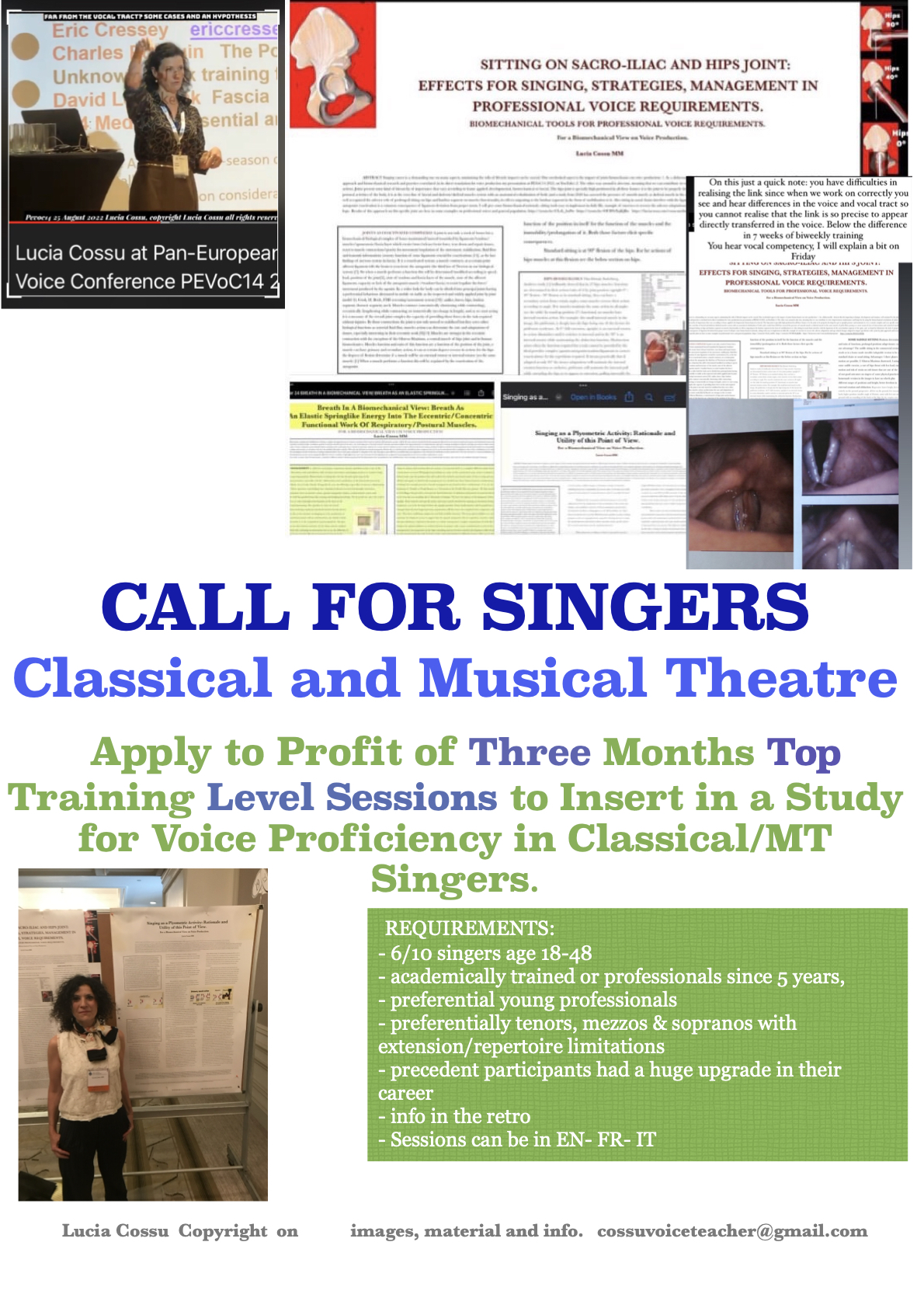
CALL FOR SINGERS
CALL FOR SINGERS
Classical and Musical Theatre
Apply to Profit of Three Months Top Training Level Sessions to Insert in a Study for Voice Proficiency in Classical/MT Singers.

FAQ on cossumethod and cossuprogram 👈🏻👈🏻👉🏻👉🏻

Twelve weeks biweekly 45’ sessions with a top level voice teacher and voice expert, using classical and old school technique plus functional approach to voice production. It will be requesteded from the candidate to provide two full phoniatric evaluations: one just before the sessions and one not exceeding ten days from the end of the program. Full means professional evaluation plus stroboscopy and acoustic evaluation including at least two different 45 seconds of singing difficult/demanding repertoire, copy of all medicals, evaluations, recording of the acoustics samples and of the stroboscopy. Those will be the only charges on the candidate, the sessions being completely free of charge. The sessions can be provided online or in person in Liège-Belgium, as preferred by the candidates. It will be provided the know how to implement 30 min/day of saddle chair sitting. Apply: write on the WhatsApp below or mail at cossuvoiceteacher@gmail.com.
This functional approach has yet proven relevant and unprecedented results in singers and general population in all styles; solved chronic and unsolvable limitations/issues also organic. It has recently been presented at world top Voice Conferences. This study has the goal to focus on the aesthetic and stylistic higher requests of specifically lyrics and Musical theatre voices, progress knowledge and practices in their very high skilled and high instrument requests. It is a cultural change, involving general ideas on voice and also for musical world. So to put under objectivity the usual singers results I daily obtain in my studio is a way of progress, not being just the results of my students but become common practice. It is the first practice pioneering the access direct, biomechanically mechanistically directed to get to find and develop the voice as not thought possible in those terms in medical and scientific field and artistic one, the difference with other practices is the precision and style respecting capacity of the training.
On the rationale the presentation at PEVoC14 , and here the The Voice Foundation abstracts https://atomic-temporary-42869468.wpcomstaging.com/2023/06/04/my-three-posters-for-the-voice-foundation-52nd-symposium-the-abstracts/
Improve your voice help knowledge
Be part of a win win
To apply use the WhatsApp below or mail at cossuvoiceteacher@gmail.com with object #cossuprogram

Italian/French voice teacher for professionals and future pro singers, innovator in vocal technique specialised in training and personalised solutions, voice development and voice preparation for touring/recording, young voices development without forcing the delicate and respectful balance of young talents. She has solved strain/issues and limitations of singers unsolvable by training or medical therapies. Those skills have 15 years of successful career and voice transformations in all styles; hospitals have sent her some desperate cases, all successfully.
Her innovative perspective has been recently presented at the prestigious Pan-European Voice Conference PEVoC14 in one paper and two workshops, she will present three abstracts at The Voice Foundation 52nd Annual Symposium May 31- June 4 2023 in Philadelphia.
She comes from an international soloist career in classical music that a malpractice during an abdominal surgery has interrupted (the surgeon has been convicted).
Courses and workshops are available online from everywhere and in person can be arranged.
Lucia Cossu, vocal technique for professionals- Italian belcanto technique, Cossu method- In person, Skype/FaceTime, Workshops – 4000 Liège Belgium TVA: BE0723776188
1 year ago
It was 1 year ago, it came as the central topic it is, the topic I am successfully pioneering in practice since 15 years.
https://youtu.be/Lg7sg1Q-cG8?si=86kvRZ5EQa6-pnYj
Pro Audition Program
https://www.facebook.com/reel/816446316614073?fs=e&s=TIeQ9V
Great intensive sessions with Cléo!
.
.
voicecoaching #voicedevelopment #voiceteacher #prosingers #voicelessons #singing #vocalsolutions #teacherforpro
A new paradigm of biomechanics for voice production
What change, big or small, would you like your blog to make in the world?
My ambition is to see the step into the paradigm of voice production as the sum and interrelations of proper vocal tract with basic biological musculoskeletal functions and actions.
My system with its constant relevant original outcome is integrating more advanced biomechanical findings with historical practices and more contemporary commercial styles and I succeeded in putting the question in the plate of peers discussion.
I would aim to see the general public thinking of voice and voice quality as a dynamic biological adaptation of tissues and muscles of the overall body, developable reachable trainable.
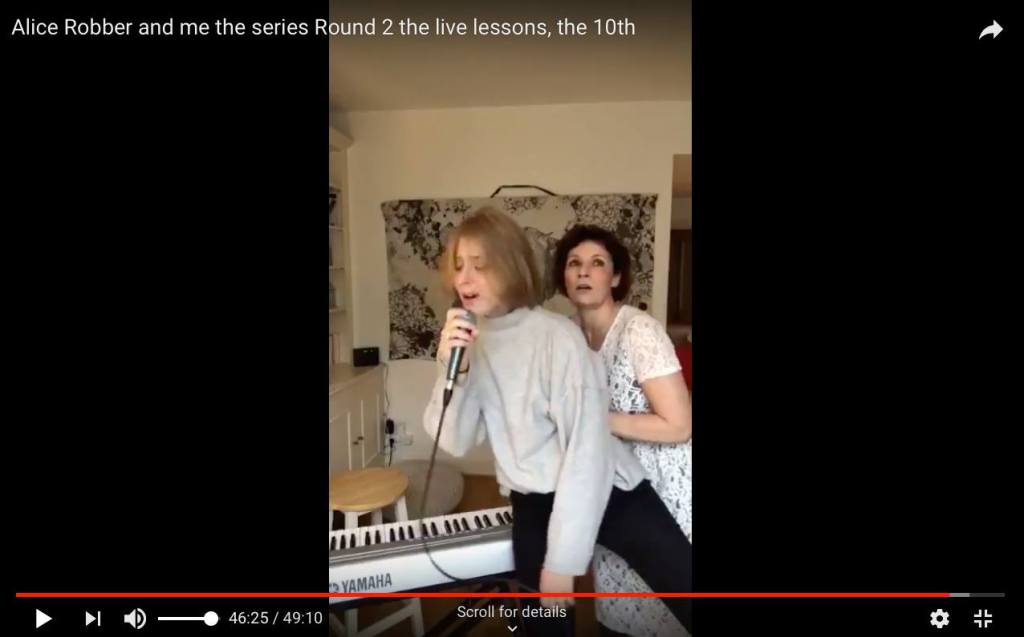
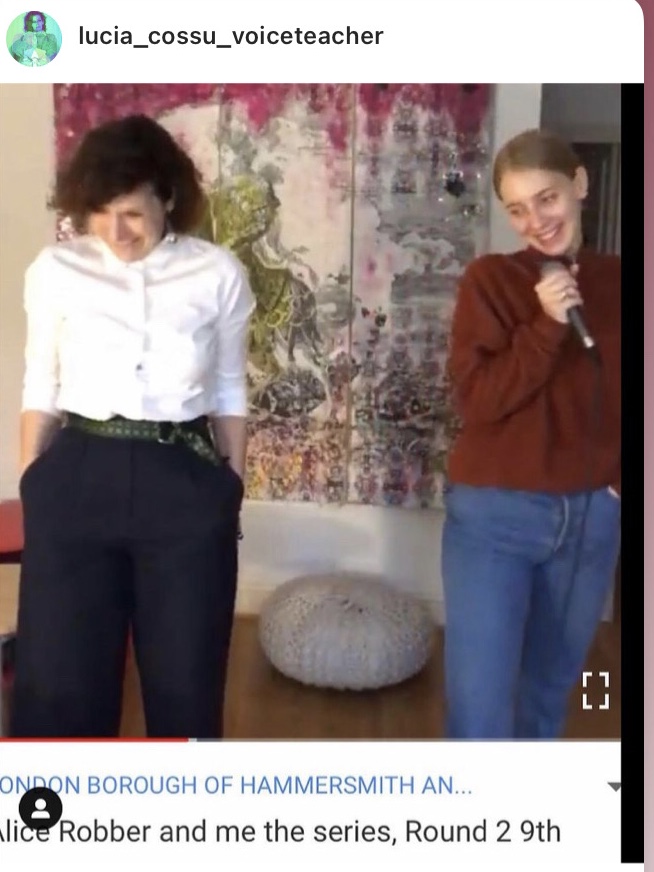
It happened in London, it happened partly streaming live on YouTube
She missed something and she started finding it in 6 weeks intensive work together.
.
It happened in London, it happened partly streaming live on YouTube, she happily recorded her first songs after.
The entire streamed and a little 7 minutes of what was.
#youtube #aliceandmetheseries #aliceandme #cossumethod #voiceteacher #contemporarysingers
My first The Voice Foundation Symposium
Thank you The Voice Foundation Symposium: you showed an immense unexpected quantity of interest in my work, some huge enthusiasm, some doubts and then interest, the interest from exceptional from the field who took my contact recognising the unusual and relevance and unprecedented of my practical results, not asked and precious advice for the next steps and last the -Sometimes you must be controversial to assess new knowledges, said by one of the most respected voice surgeons.
I come out reinforced, with an upgrown view of the weaknesses in communicating and expressing those controversial points I represent, being viewed and mostly feeling existing now the topic on the table, a better view on when and where my work is not the good option and the other options available to address my clients to and new knowledge and what and how they are doing in the field. Some dance was even refreshing and so fun. Thank you
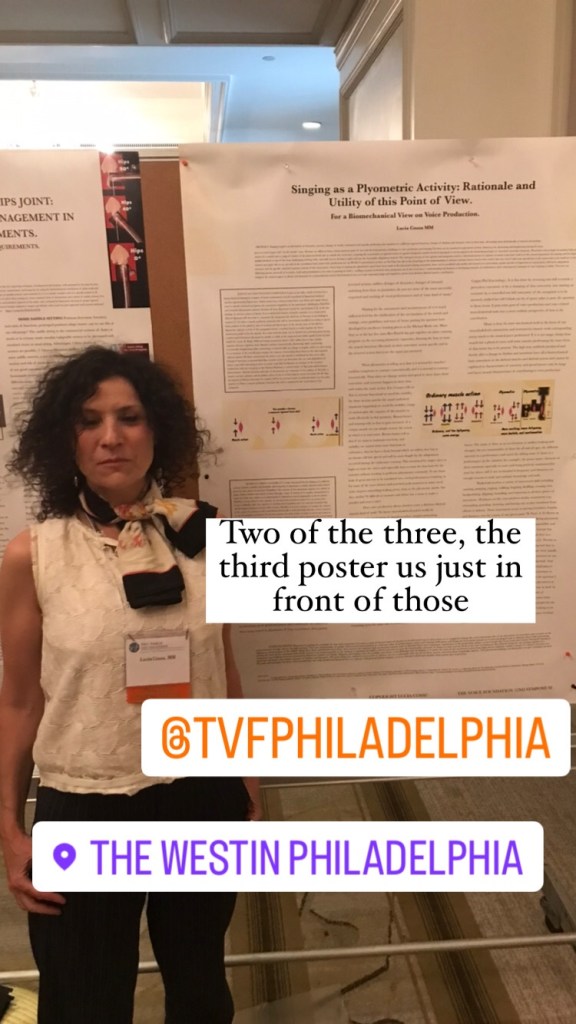
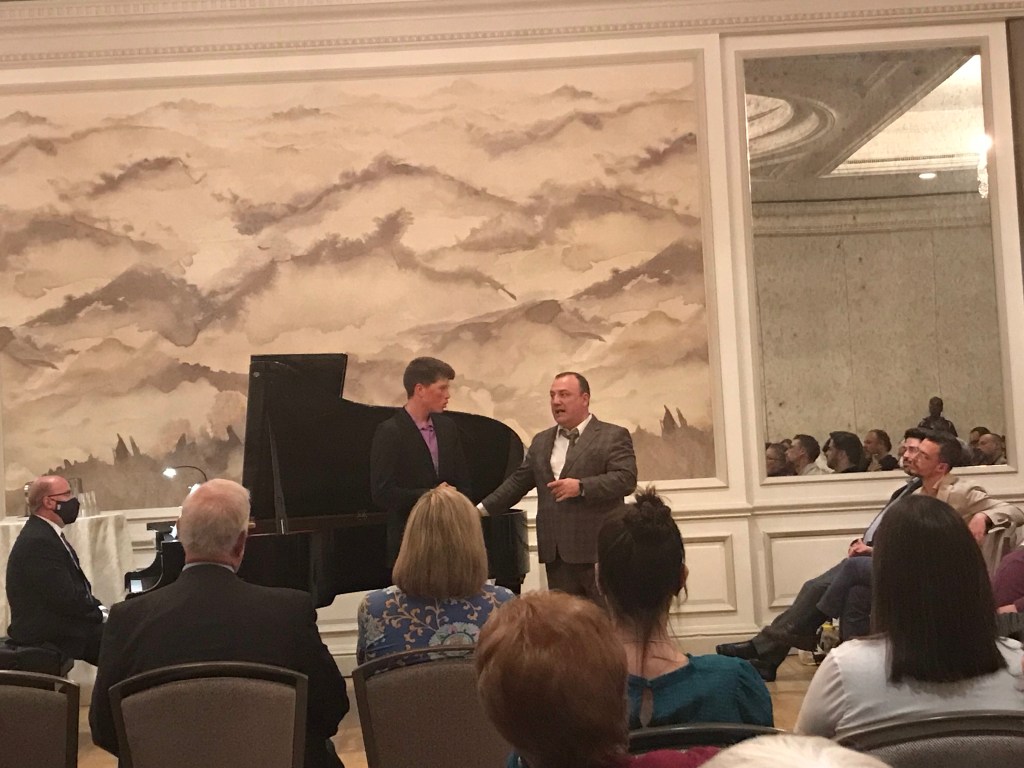
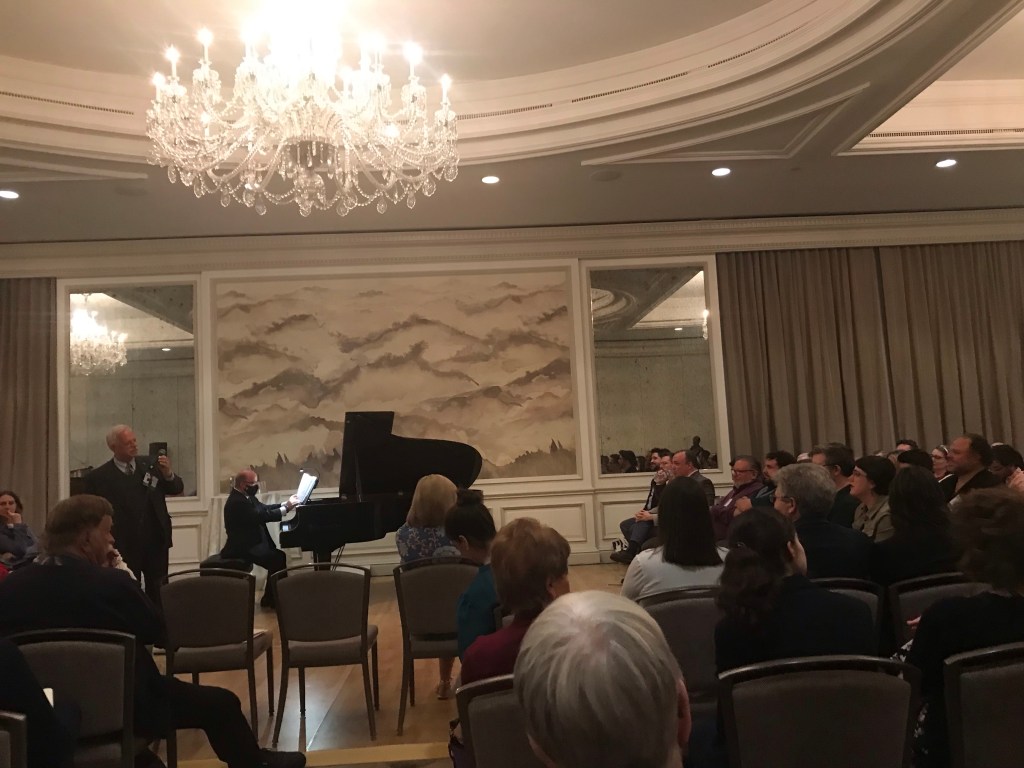
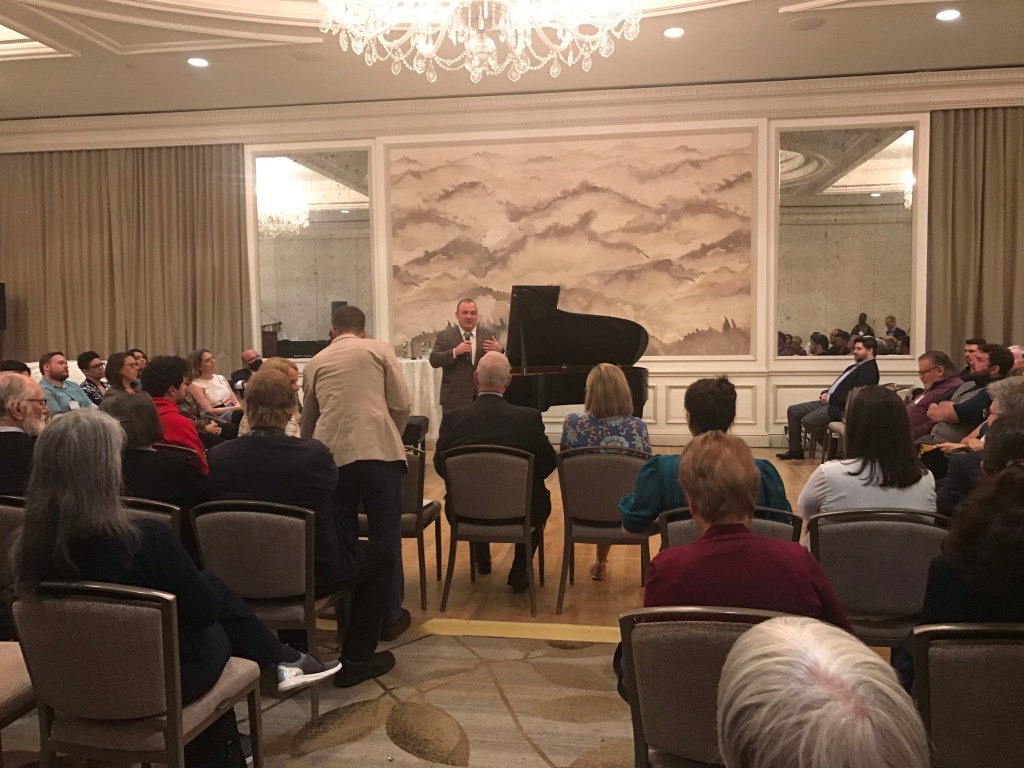
My Three Posters for The Voice Foundation 52nd Symposium, the Abstracts
Here the three abstracts of the Posters I presented at the Voice Foundation 52nd Symposium. Very happy to see that this innovative vision I apply and preach and research about is coming out of the controversial shadow and be in its first steps in the sun.
To have future development and collaborations between voice technical and training specialists as I am and biomechanists and kinesiologist so to build knowledge on the common mechanisms well studied in other fields and voice production and nuances for artistic use. The first steps are here, feel honoured and happy being the pioneering of that and opening at such high science/pedagogy places as The Voice Foundation.
1.
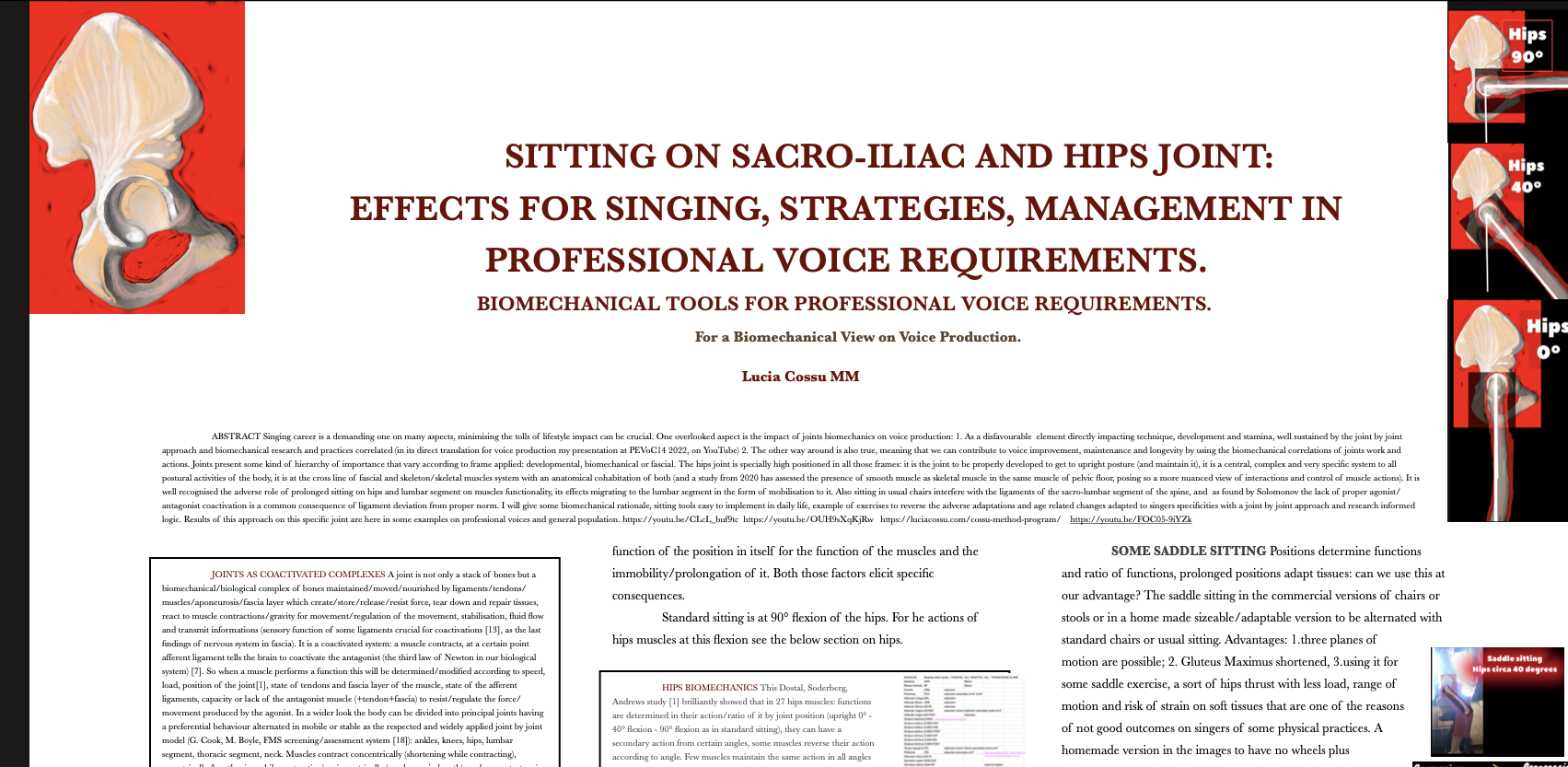
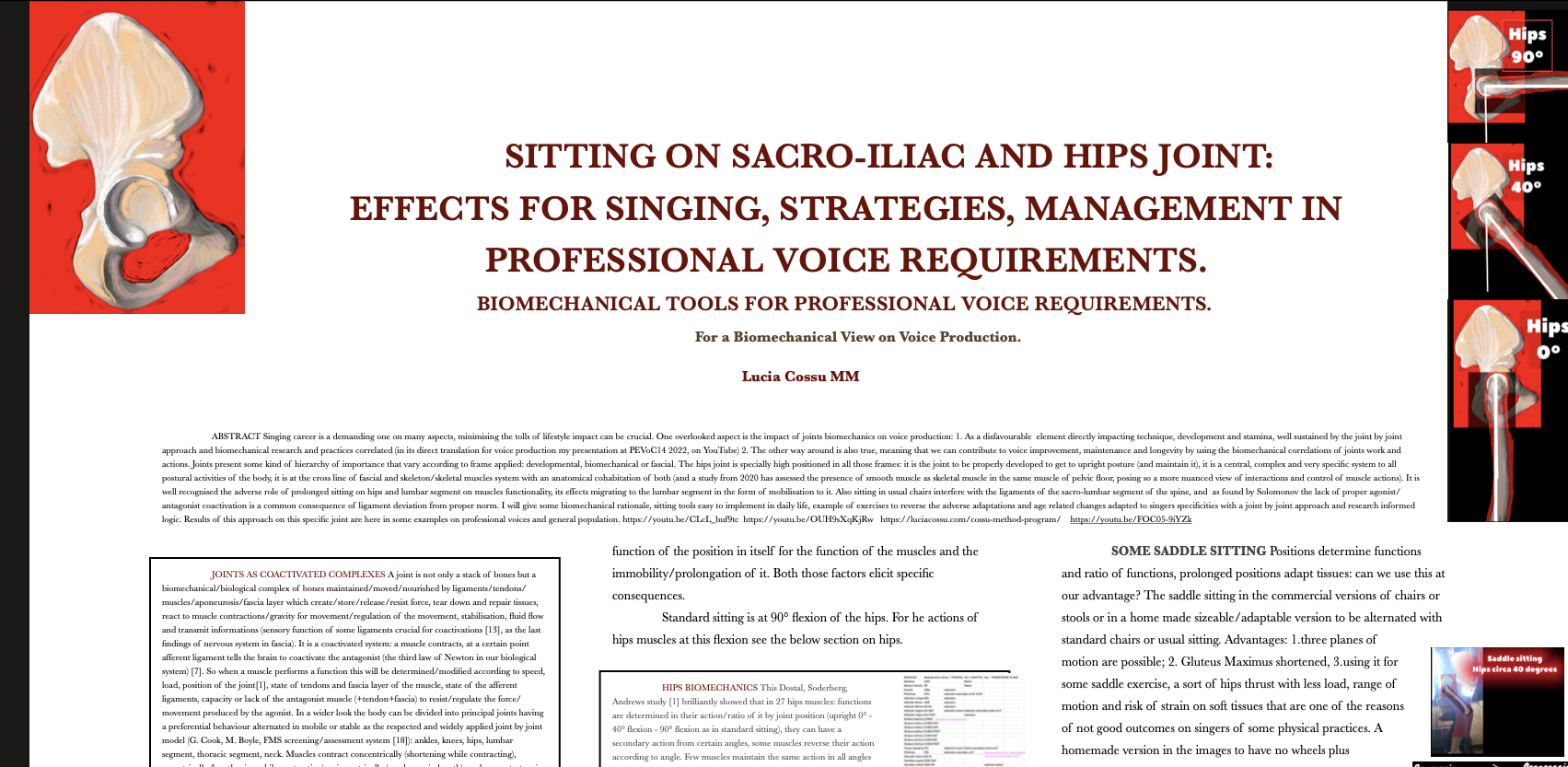
Sitting on Sacro-Iliac and Hips Joint: Effects for Singing, Strategies, Management in Professional Voice Requirements. Biomechanical Tools for Professional Voice Requirements.
For a Biomechanical View on Voice Production.
Lucia Cossu MM
ABSTRACT Singing career is a demanding one on many aspects, minimising the tolls of lifestyle impact can be crucial. One overlooked aspect is the impact of joints biomechanics on voice production: 1. As a disfavourable element directly impacting technique, development and stamina, well sustained by the joint by joint approach and biomechanical research and practices correlated (in its direct translation for voice production my presentation at PEVoC14 2022, on YouTube) 2. The other way around is also true, meaning that we can contribute to voice improvement, maintenance and longevity by using the biomechanical correlations of joints work and actions. Joints present some kind of hierarchy of importance that vary according to frame applied: developmental, biomechanical or fascial. The hips joint is specially high positioned in all those frames: it is the joint to be properly developed to get to upright posture (and maintain it), it is a central, complex and very specific system to all postural activities of the body, it is at the crossline of fascial and skeleton/skeletal muscles system with an anatomical cohabitation of both (and a study from 2020 has assessed the presence of smooth muscle as skeletal muscle in the same muscle of pelvic floor, posing so a more nuanced view of interactions and control of muscle actions). It is well recognised the adverse role of prolonged sitting on hips and lumbar segment on muscles functionality, its effects migrating to the lumbar segment in the form of mobilisation to it. Also sitting in usual chairs interfere with the ligaments of the sacro-lumbar segment of the spine, and as found by Solomonov the lack of proper agonist/antagonist coactivation is a common consequence of ligament deviation from proper norm. I will give some biomechanical rationale, sitting tools easy to implement in daily life, example of exercises to reverse the adverse adaptations and age related changes adapted to singers specificities with a joint by joint approach and research informed logic. Results of this approach on this specific joint are here in some examples on professional voices and general population. https://youtu.be/CLcL_buf9tc https://youtu.be/OUH9sXqKjRw https://atomic-temporary-42869468.wpcomstaging.com/cossu-method-program/ https://youtu.be/FOC05-9iYZk
2.
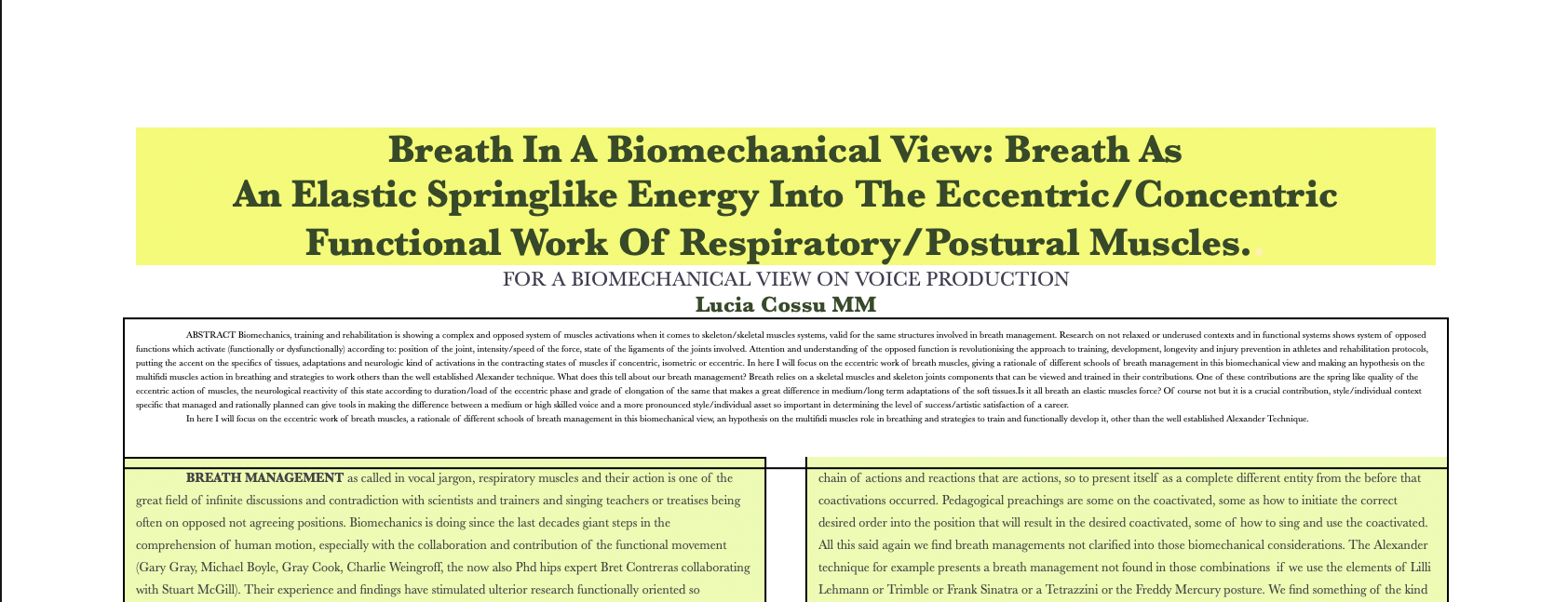
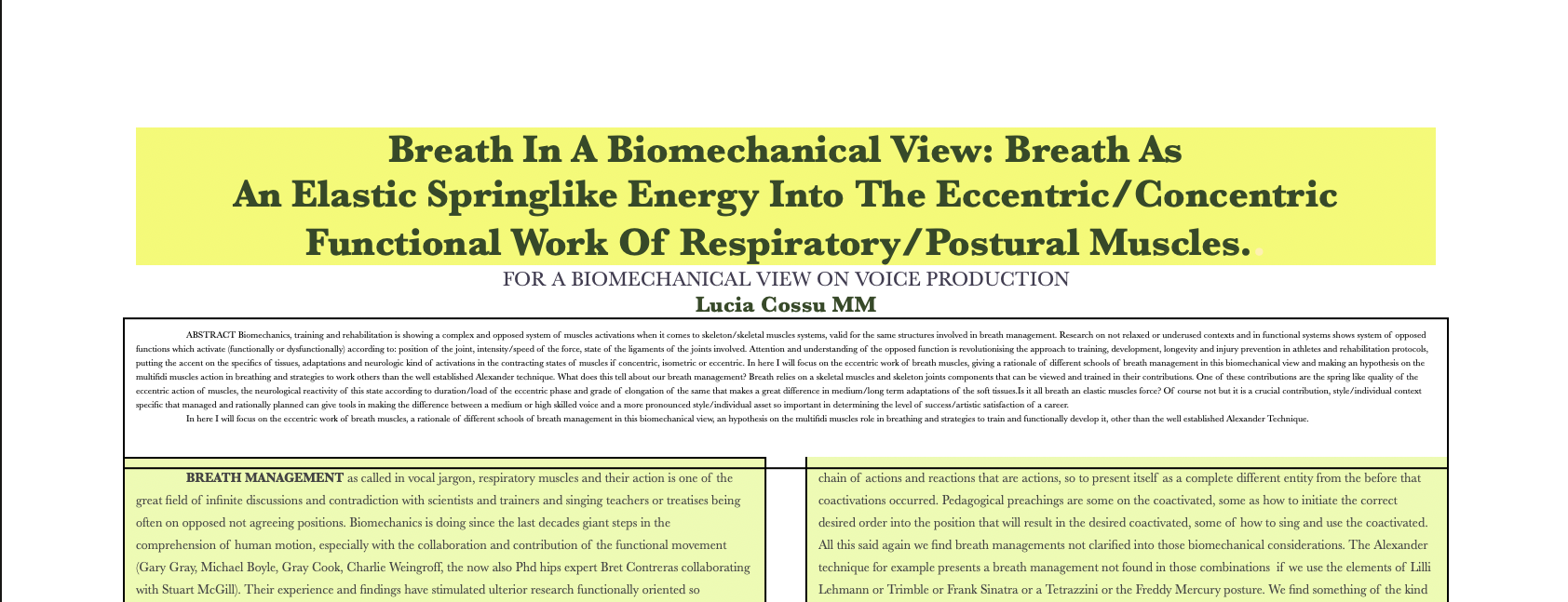
Breath in a Biomechanical View: Breath as an Elastic Springlike Energy into the Eccentric/Concentric Functional Work of Respiratory/Postural Muscles.
For a Biomechanical View on Voice Production.
Lucia Cossu MM
ABSTRACT Biomechanics, training and rehabilitation is showing a complex and opposed system of muscles activations when it comes to skeleton/skeletal muscles systems, valid for the same structures involved in breath management. Research on not relaxed or underused contexts and in functional systems shows system of opposed functions which activate (functionally or dysfunctionally) according to: position of the joint, intensity/speed of the force, state of the ligaments of the joints involved. Attention and understanding of the opposed function is revolutionising the approach to training, development, longevity and injury prevention in athletes and rehabilitation protocols, putting the accent on the specifics of tissues, adaptations and neurologic kind of activations in the contracting states of muscles if concentric, isometric or eccentric. In here I will focus on the eccentric work of breath muscles, giving a rationale of different schools of breath management in this biomechanical view and making an hypothesis on the multifidi muscles action in breathing and strategies to work others than the well established Alexander technique. What does this tell about our breath management? Breath relies on a skeletal muscles and skeleton joints components that can be viewed and trained in their contributions. One of these contributions are the spring like quality of the eccentric action of muscles, the neurological reactivity of this state according to duration/load of the eccentric phase and grade of elongation of the same that makes a great difference in medium/long term adaptations of the soft tissues.Is it all breath an elastic muscles force? Of course not but it is a crucial contribution, style/individual context specific that managed and rationally planned can give tools in making the difference between a medium or high skilled voice and a more pronounced style/individual asset so important in determining the level of success/artistic satisfaction of a career.
In here I will focus on the eccentric work of breath muscles, a rationale of different schools of breath management in this biomechanical view, an hypothesis on the multifidi muscles role in breathing and strategies to train and functionally develop it, other than the well established Alexander Technique
3.
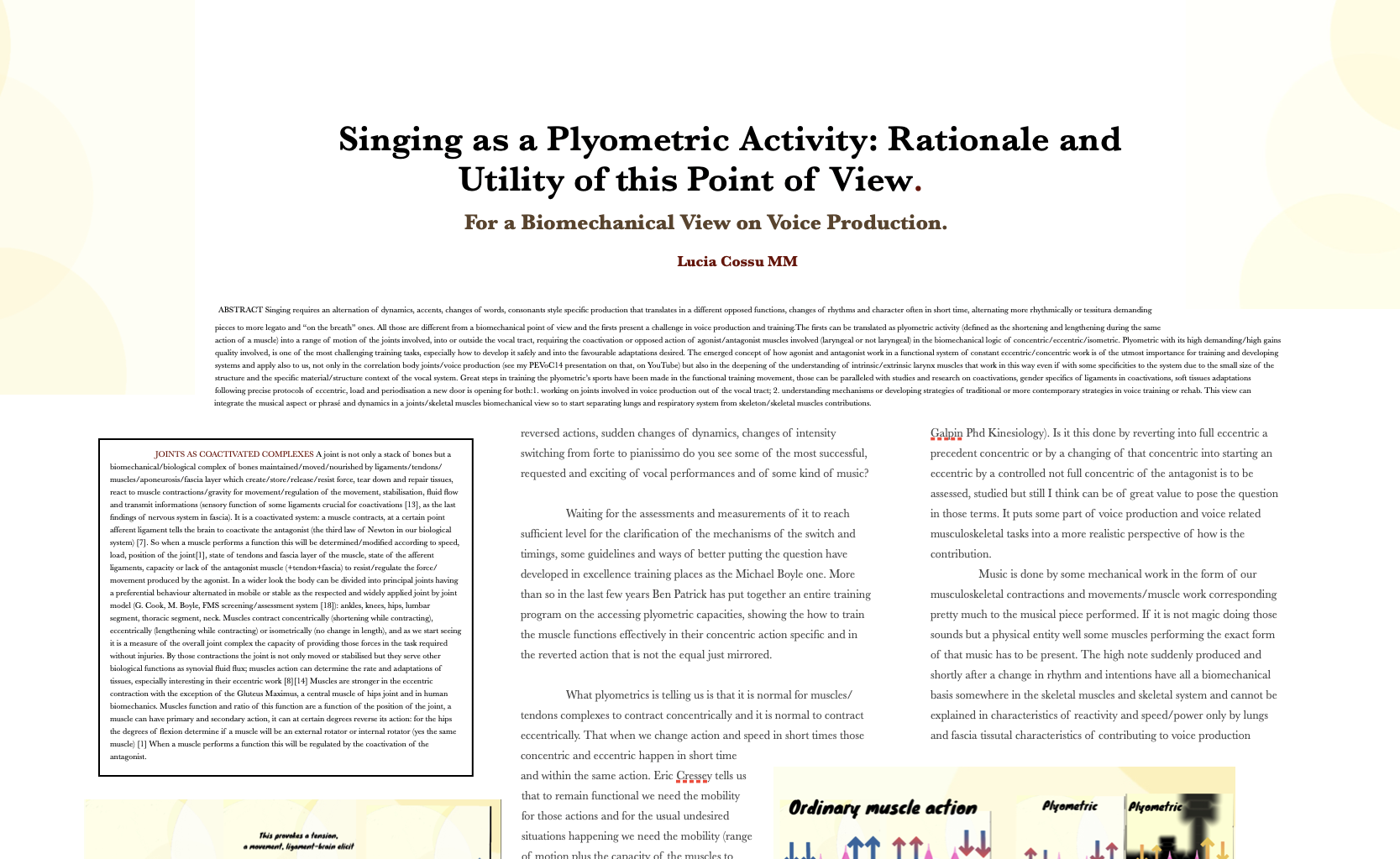
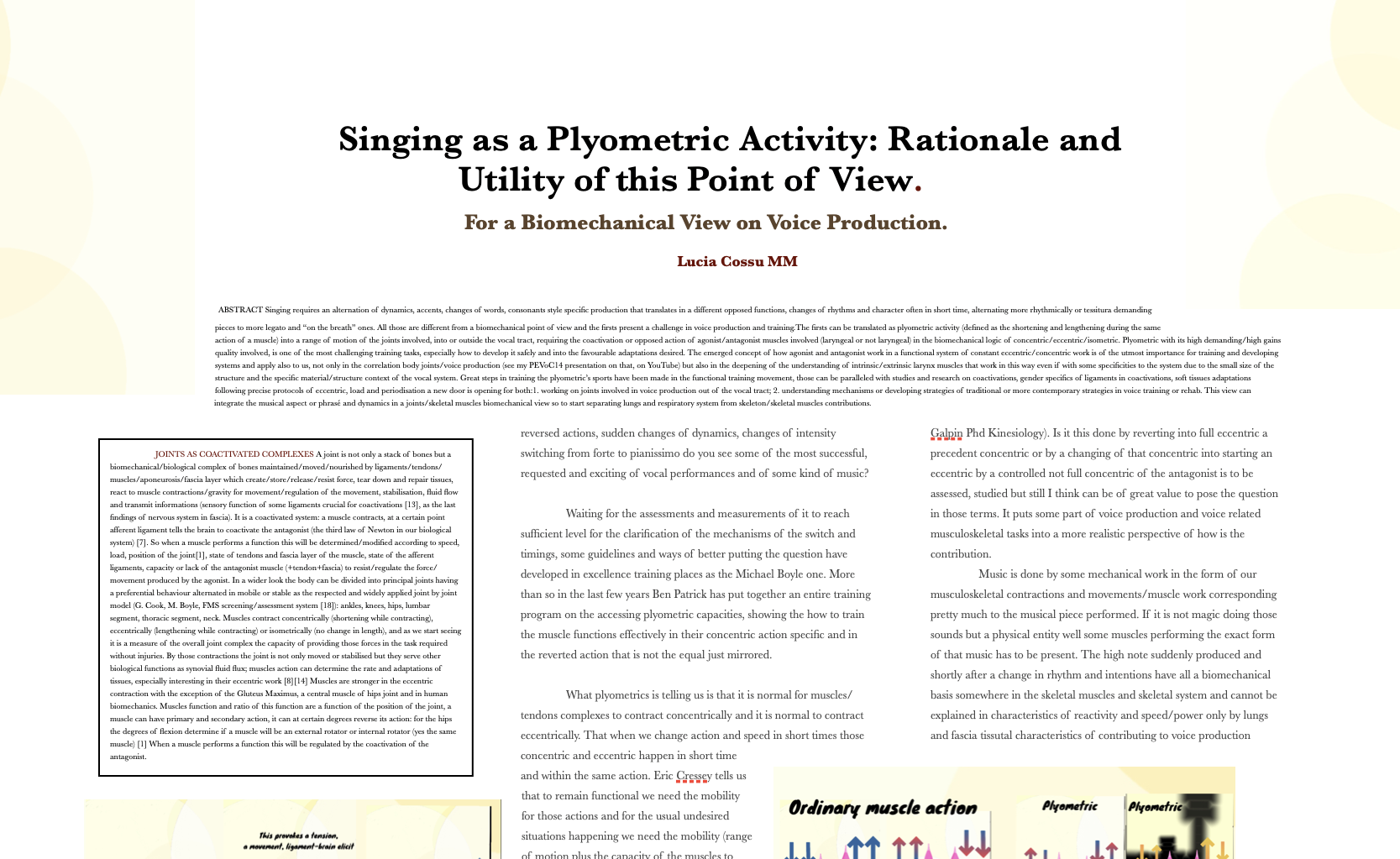
Singing as a Plyometric Activity: Rationale and Utility of this Point of View. For a Biomechanical View on Voice Production.
For a Biomechanical View on Voice Production.
Lucia Cossu MM
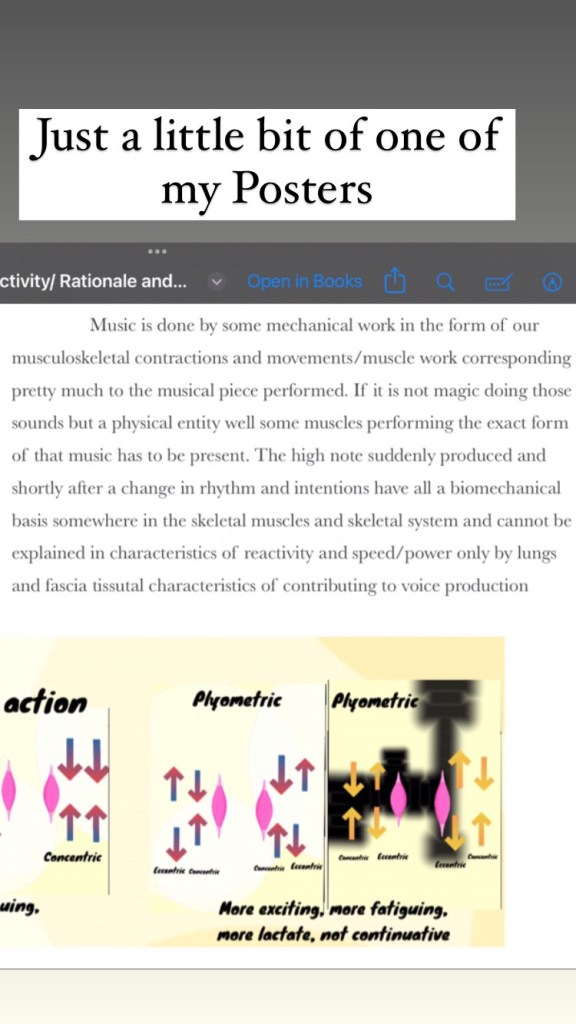
ABSTRACT Singing requires an alternation of dynamics, accents, changes of words, consonants style specific production that translates in a different opposed functions, changes of rhythms and character often in short time, alternating more rhythmically or tessitura demanding pieces to more legato and “on the breath” ones. All those are different from a biomechanical point of view and the firsts present a challenge in voice production and training.The firsts can be translated as plyometric activity (defined as the shortening and lengthening during the same action of a muscle) into a range of motion of the joints involved, into or outside the vocal tract, requiring the coactivation or opposed action of agonist/antagonist muscles involved (laryngeal or not laryngeal) in the biomechanical logic of concentric/eccentric/isometric. Plyometric with its high demanding/high gains quality involved, is one of the most challenging training tasks, especially how to develop it safely and into the favourable adaptations desired. The emerged concept of how agonist and antagonist work in a functional system of constant eccentric/concentric work is of the utmost importance for training and developing systems and apply also to us, not only in the correlation body joints/voice production (see my PEVoC14 presentation on that, on YouTube) but also in the deepening of the understanding of intrinsic/extrinsic larynx muscles that work in this way even if with some specificities to the system due to the small size of the structure and the specific material/structure context of the vocal system. Great steps in training the plyometric’s sports have been made in the functional training movement, those can be paralleled with studies and research on coactivations, gender specifics of ligaments in coactivations, soft tissues adaptations following precise protocols of eccentric, load and periodisation a new door is opening for both:1. working on joints involved in voice production out of the vocal tract; 2. understanding mechanisms or developing strategies of traditional or more contemporary strategies in voice training or rehab. This view can integrate the musical aspect or phrasé and dynamics in a joints/skeletal muscles biomechanical view so to start separating lungs and respiratory system from skeleton/skeletal muscles contributions.
My students: 16 years old, winner of many competitions here live on SKYTV
Italian Pop Teen voice
.
A 16 years old singer covering Almeno tu nell’universo in a SkyTV show, she won competitions, sung in local tv shows, opening concerts. We worked also international repertoire but her focus was mostly in the Italian one.
.
Short version on Instagram, entire the YouTube
vocalcoaching #voiceteacher #teensingers #coversong #almenotunelluniverso #cossumethod #singingisbeautiful
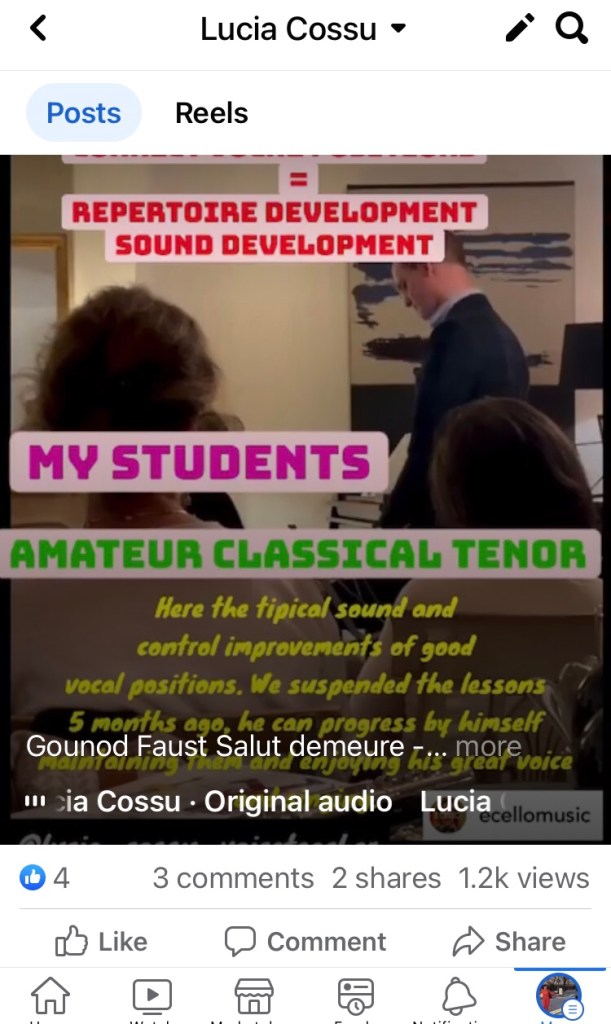
You are loving him so much, and you are right!
You are still listening to Ecello, a great amateur tenor and his artistry and love of those Arias; and you are absolutely right in doing so!
https://www.facebook.com/reel/144740914899084?fs=e&s=TIeQ9V
If you could have something named after you, what would it be?
A Voice practicing room, to remember and cherish this pioneering of voice practice and model integrating precise joints biomechanics that is mine and cossumethod
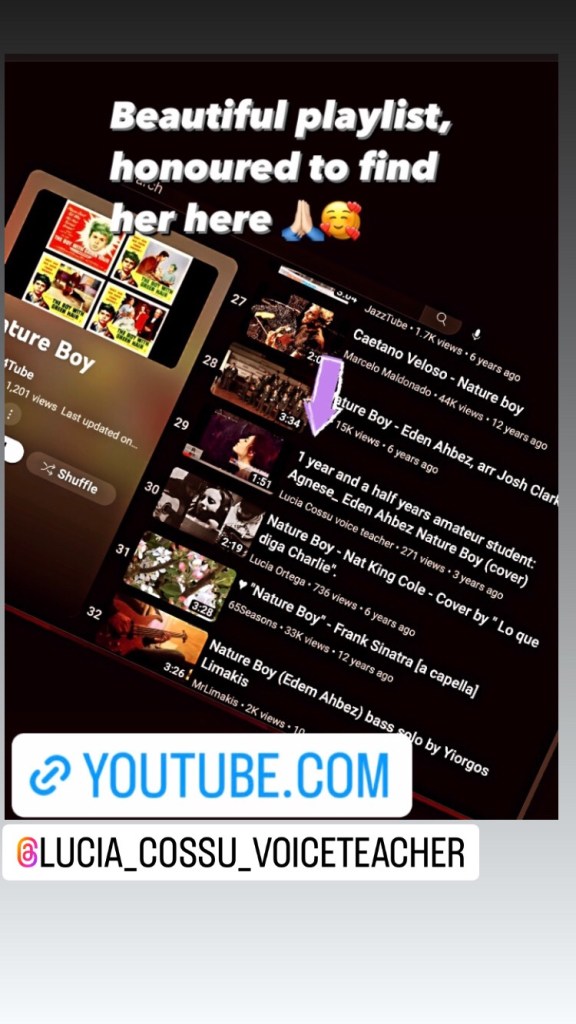
Nature Boy
Beautiful playlist and honoured to find my student’s version of it – my arrangement- on there 🙏🏻🙏🏻🥰🥰
https://youtube.com/playlist?list=PLUpMRgoYQCdtN8e2oTXcVikBR1QGT9T0D
.
#natureboy #playlists #edemahbez #cover #mystudents #voiceteacher
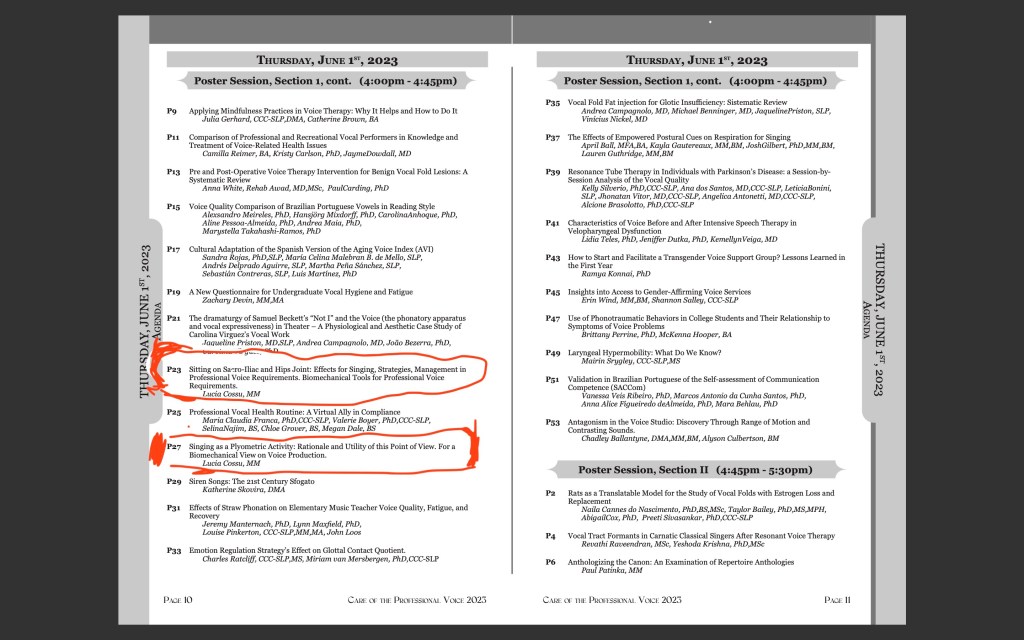
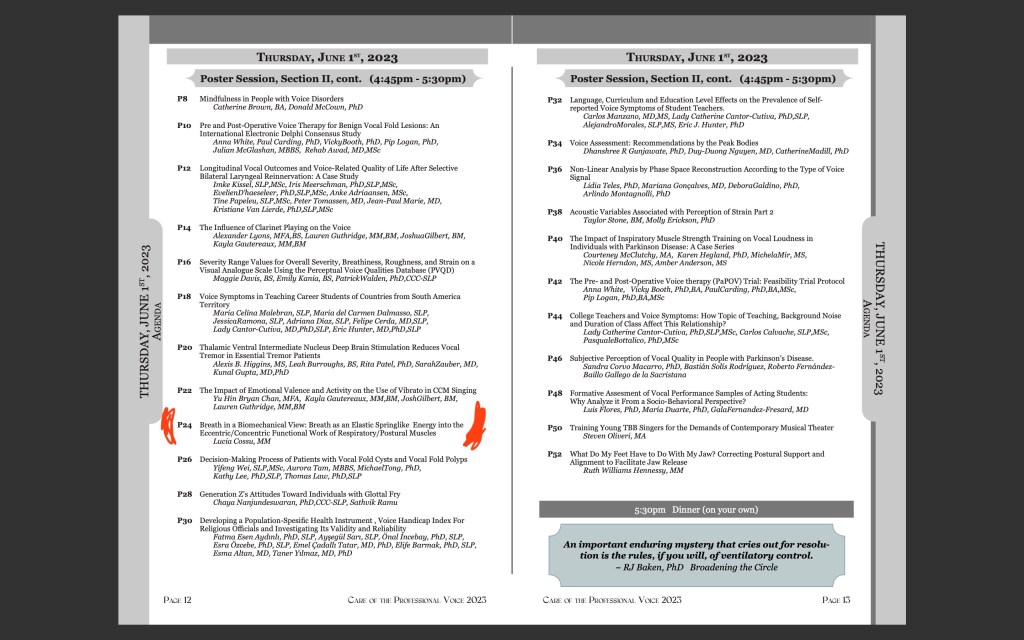
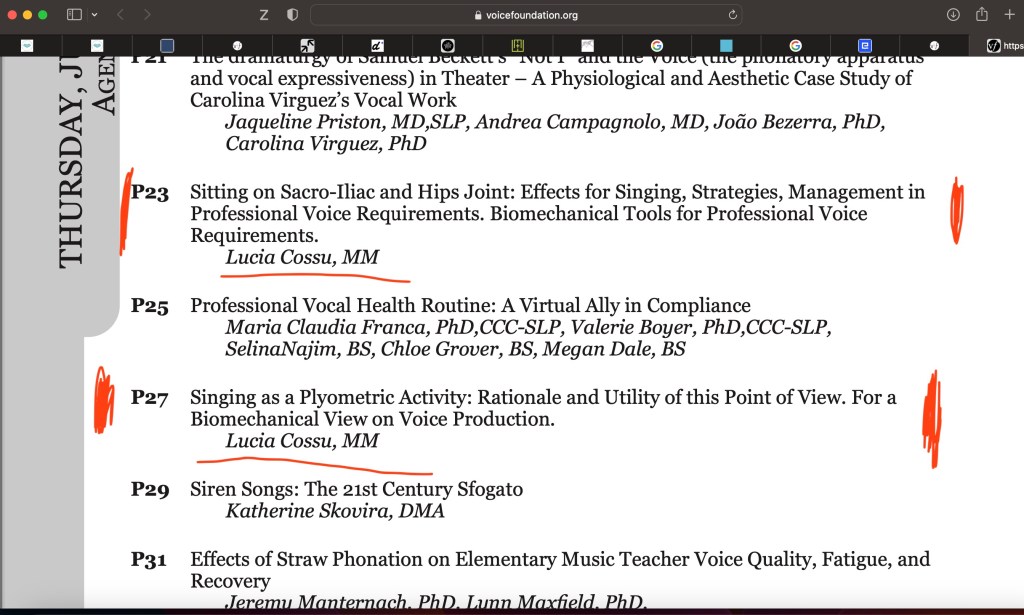
23, 24 and 27 my Posters at Voice Foundation Symposium.
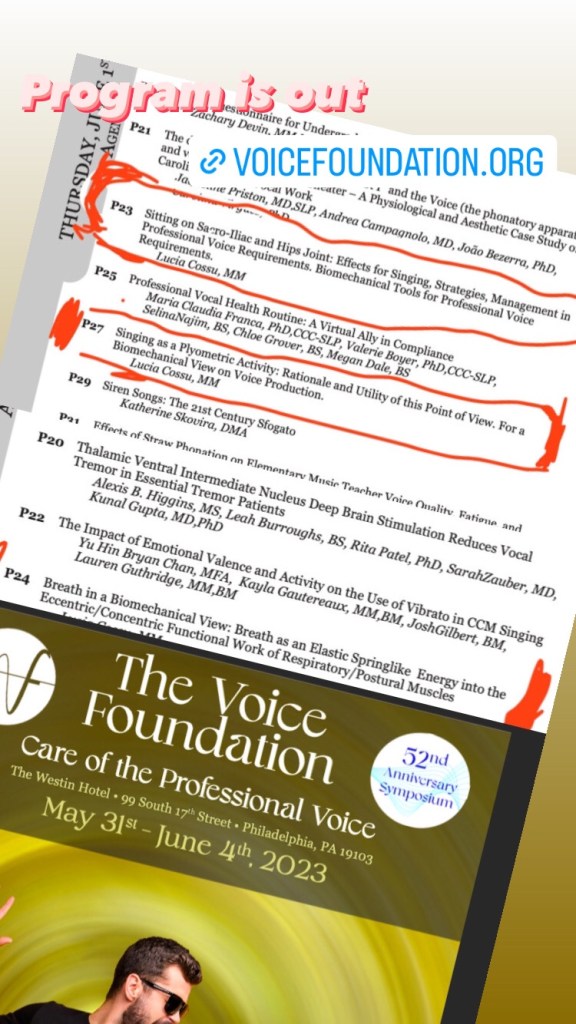
23, 24 & 27: my three Posters for Voice Foundation Symposium, program is out. https://voicefoundation.org/wp-content/uploads/2023/03/2023-SYMP-Program.pdf And here the specifics of my view in integrating directly biomechanics into voice production/training for this Symposium. Come say hello or come to the presentation Thursday 1st of June 2023.
.
voicescience #thevoicefoundation #thevoicefoundationsymposium #voiceandjoints
What’s a secret skill or ability you have or wish you had?
Seeing the singing as body segments and ligaments and tendons activated by sympathetic or parasympathetic with infinite nuances.
Three abstracts accepted at The Voice Foundation 52nd Annual Symposium
Very Happy to announce: three abstracts on three I have submitted have been accepted at next The Voice Foundation 52nd Annual Symposium in Philadelphia May 31- June 4 2023 https://voicefoundation.org/symp/
It will be a great 12 months as first time presenting my work both at PEVoC14 and at the Voice Foundation. Very grateful, honoured, profoundly happy and I cherish to get to Philadelphia and meet all the amazing authors and researchers in there.
Thank you all who have supported me in this time of developing and researching, to all my students amateurs or professionals who have inspired me with our proficuous work, it is an amazing news for voice innovation and biomechanics at artistic service to be present in the major Symposium on Voice and at a prestigious international Conference as PEVoC during the same 12 months; and I am honoured to be the bridge to implement it into artistic voice and singing.
.
.
#cossumethod#voiceteacher#ingredientsofvoice#voiceandjoints#voicebiomechanics#thevoicefoundationsymposium#thevoicefoundation#work#voiceteacher#voiceteacherlife#knowledge
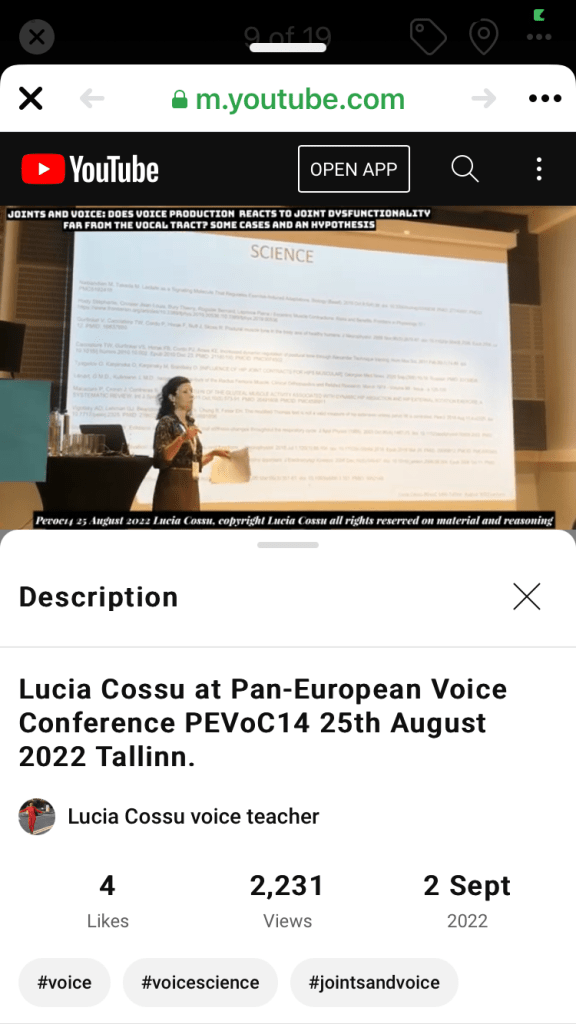
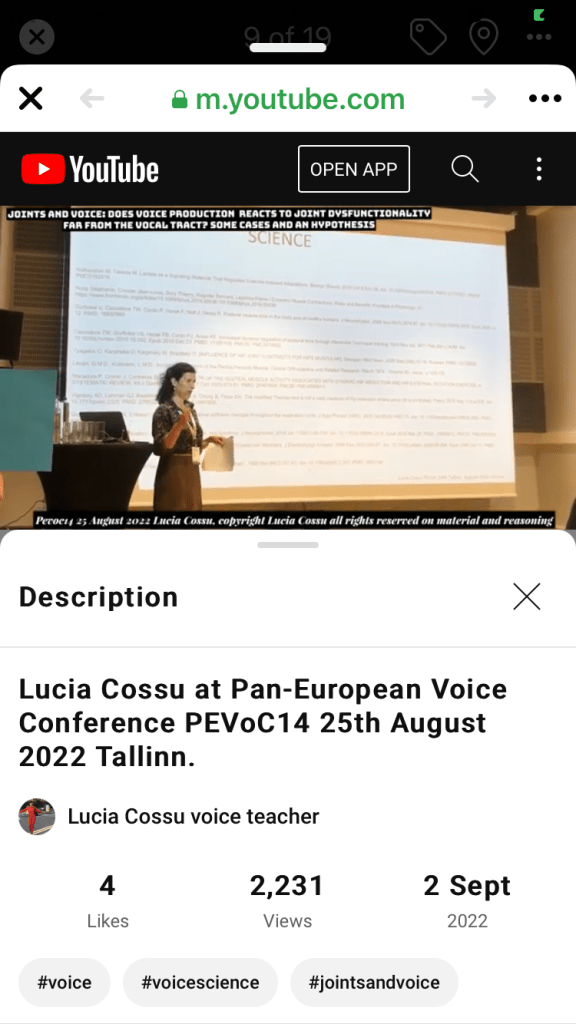
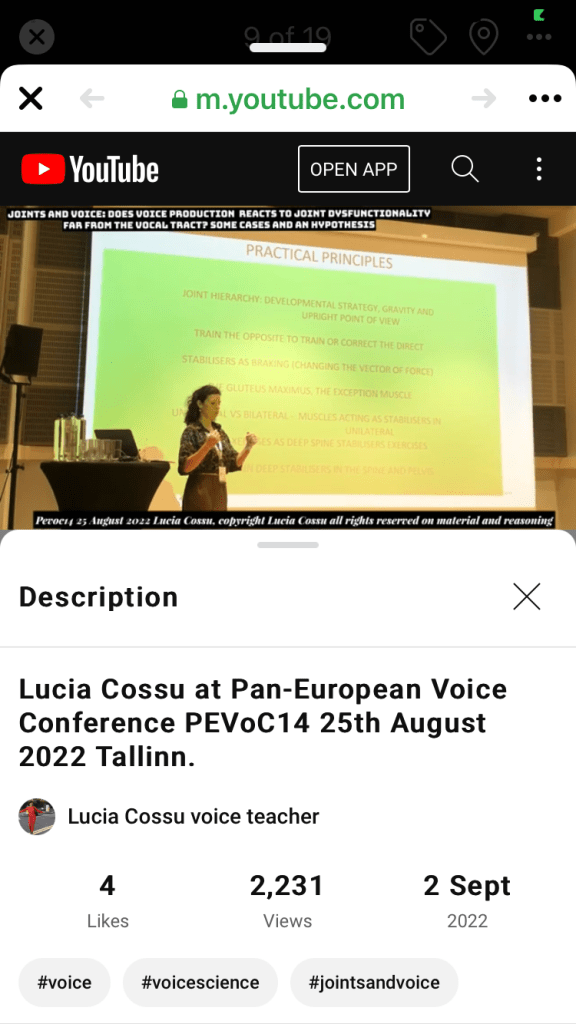
My presentation (and workshops) at Pan-European Voice Conference PEVoC14 25th August 2022
Here the presentation (the two workshops will not be published) at Pan-European Voice Conference PEVoC14 on the central topic of how body’s joints far from vocal tract are directly implied into voice production and development. Does posture relate to voice? Yes but the how is the conundrum and I am opening since some years a path toward a rationale unifying all the practices with what science and research says about the subject and how to implement it in vocal practices for vocal health, voice development and training, career and artistic research and achievements, for amateurs. For confidentiality reasons the two one hour long workshops will not be published but I will publish some practices and exercises. At the end in the video you find my notes, this is just a path toward a model of voice including the interrelations of overall body (big box) on vocal system (small box into the big box). It does not pretend to be complete or correct in all its sides, just a useful work model that has helped in more than ten years my practice and students and general population and voice teachers and singers and that has a solid scientific background and confirmation. Enjoy.
JOINTS AND VOICE: DOES VOICE PRODUCTION REACTS TO JOINTS DYSFUNCTIONALITY FAR FROM VOCAL TRACT? SOME CASES AND AN HYPOTHESIS
Copyright all rights reserved Lucia Cossu
Vocal system is into the body and into specific segments of the body, it uses muscles and structures having multiple functions, you know better than me probably on those, today we focus on the respiratory and vocal and postural functions with a joint to joint approach, and the questions are HOW THEY correlate in PRECISE terms? In here I would open a path, I hope, to more sophisticated thoughts and directions of researching and getting specific in WHAT HOW WHY WHEN of those correlations, and IF as an effect on the vocal system or a direct contribution SO to be the vocal system thought in a less narrow way (I know it is more precise the more restricted a system is, but if we get specific we can expand). I think of it as a big box and a smaller box, being the smaller the vocal one, the smaller is into the bigger, they are independent in some ways, share some parts and even something more tricky as the cervical segment, as we will see what this can mean in the joint by joint approach.
(I anticipate that I look at posture and overall all body as the environment in which the vocal system can operate and develop, we know it happens also the other way around, but I remain focused on this direction in here).
From static alignment and managing the breath air to compensate for a not naturally gifted voice to a dynamic alignment and an hypothesis on how asymmetries, defensive stiffnesses and joints dysfunctionality or underdevelopement can be directly worked and change directly voice production. Many methods exist to help body connection, relaxation of defensive veto, help alignement. They are useful and sometimes fundamental, what lacks is a systematic and rationale on the precise mechanism related to voice production, and if there is one. This is a presentation with some examples of work on Sacroiliac joint and transversus abdominis, examples that present a discontinuity in voice production, some with medical control of it and a couple with the level of performance achieved. I make an hypothesis of this specific relation using the joint by joint approach of M. Boyle and G. Cook, the functional findings on SI joint of G. Cook and B. Contreras, some insights from C. Weingroff and the fascia system as a suggestion of a worth field to research. I use their work because in physical therapies and athletes training the literature and research is vast and rich; the body is one and the biological rules and muscles kinetics do not change, then the joint by joint approach can give insight on how joints are reciprocally related. The defensive system will be presented as a blocking and braking system, sometimes a veto system and sometimes a decelarating and expressive system, and it is presented with an hypothesis of its muscular structure and gestures with strategies to manage it with positions and exercises. C. Weingroff says citing Dostal, Soderberg and Andrews ‘the hip musculature changes dramatically through various range of motion and some muscles can reverse their function depending on the positioning’, so no surprise that if a muscle reverse role in the SI tract the expiratories will be affected and they will affect the diaphagm etc.
Here some links for a general view of the examples, in the presentation clips not publicly disclosed of the exercises will be presented.
https://youtube.be/CLcL_buf9tc
https://atomic-temporary-42869468.wpcomstaging.com/2016/09/13/cos…
https:/youtu.be/OUH9sXqKjRw
Lucia Cossu Voice teacher online/in person
Rue Charles Morren 9 – 4000 Liège BELGIUM
TVA: BE0723776188
Mail: cossuvoiceteacher@gmail.com

Breath exercise: unblock lungs and vocal tract
Thoracic segment and vocal tract can present some blocks into a fundamental function for singers.
This is an exercise that can unblock a physiological movement, used more consistently it helps developing the high sternum preaching of many (from Tetrazzini to Seth Riggs and many others).
You can do it then forget about while singing or use it and sing with it.
Try it and if you want you can ask about in my Thursday ask me session in my stories.
.
The Cossu method is a way to manipulate directly voice production from the body and not just from vocal tract and air. It is an amazing and at today new tool to obtain a voice in difficult objectives situations and conditions. It has had results confirmed by voice production and abilities, careers with a clear discontinuity from before it, confirmed in medical objectives exams and cases.
.
.
. I am a voice teacher specialised in technique and solutions for professional singers and future professionals. I use italian Belcanto and Cossu method, a way to manipulate directly voice production from the body and not just from vocal tract and air. It is an amazing and at today new tool to obtain a voice in difficult objectives situations and conditions. It has had results confirmed by voice production and abilities, careers with a clear discontinuity from before it, confirmed in medical objectives exams and cases. I come from a soloist career in classical music interrupted by a long septicaemia.
I had results also in vocal issues of organic and functional origin under medical control, called by their doctors or speech therapists, here some of them https://atomic-temporary-42869468.wpcomstaging.com/cossu-method-program
.
.
.
.
.
healthyvoice #vocalcoaching #breathforsingers #voicetools #functionalvoice #functionalbelcanto #functionalitalianbelcanto #cossumethod #improveyourvoice #vocalfolds #breathexercises #breathexercise #voicecoach #breathmanagement #breath #vocaltips #voiceteacher #voiceproduction #onlinecoaching #voiceonline #freeyourvoice #vocalcoach #voicecoaching #voicecoaches
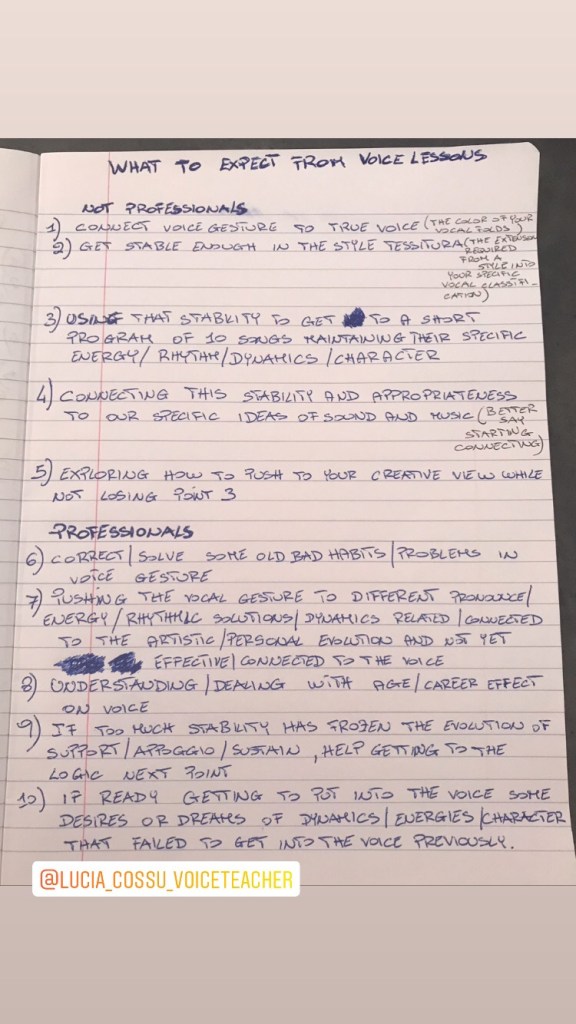
What to expect from voice lessons: a list.
WHAT TO EXPECT FROM VOICE LESSONS
I made a little list, since some frustration or effort or good satisfaction is the way of moving between some points.
I did not made 5 points for not professionals and 5 for professionals since the points go in the order I made the list. What happens in my practice is that some amateur want to just use lessons to be happy into point 10 jumping or with no appreciation of the previous and the joy of accomplish points 3 and 5. Sometimes professionals get scared of exploring points 6 and 10 and remain safely (but internally dissatisfied) into point 2 and 3. Other times some think of lessons and teachers as a substitute from moving from one point to the other. Sometimes they just use the lessons and teacher for what they are: tools to move from one point to the other while singing and enjoying and giving often better and with a great deal of satisfaction.
We can use technique and some tricks of experience and creativity to start the moving and progress, when we will get to each point is to no one to really say and control; certainly reality and sound and music will just tell us and can be surprisingly fast as pretty slow according to us and many factors that are not to be solved during or with the lessons.
The list can help to put in perspective some bad strategies and also relax in enjoying the actual point without stressing in doubt of not having yet a three steps after.
Good music and Friday all everywhere you are.
Is our voice really like a horse?
https://www.instagram.com/p/CLe35YoH5oI/?igshid=3ji3uitlmeep
Last week a voice teacher in a group of professional teachers I follow wrote a witty and brilliant post with a list of points he follows in its lessons. I wrote that all the ones from his point 2 are mine and this takes away all the other points but the last. The last was on having a perfectly clean bathroom, yeah everybody still in lockdown and online lessons.
What was his second point to take away every other one? He does not accept students who do not sing in pitch: and as him many others do, as those who not have yet a voice. He asked me about my answer and I told him that basically I have all the students out of pitch the others did not want, the singers who start losing their pitch or never solved it really and have by that some career problems and I have had also many teachers when they start losing something and they do not know what to do about. In my concept they have to be treated in the same way, because they have something in common and it is the main reason teachers historically do not accept them.
To explain that I do a little diversion: some decades ago, as teen, it was discovered I could bring back into balance horses got dangerous. I am a pretty serious soul and I spent then summers in Uk to perfect my training skills and also there they gave me school horses not happy with kids anymore, or with various stiffnesses inexplicable or after surgeries while I did refine the technique. What I thought was that I could use some movements that were typical of a happy and joyful situation to change the emotional state of the horse, so to destress him and take away the preventive fear, and open back to what they mostly love: playing and collaborate with us. Also the joyful and happy gesture will improve and condition muscles and muscular chains and patterns so to have them present in every moment more than before. The origin being a physical trauma or not skilled kids moving heavy on their back or a not respectful or violent or inappropriate trainer? If repeated with no other input they would go in burnout as we do. So I was just putting back functionality and reopening the thing horses love most doing with us.
Why do I talk about horses? The voice is a horse and reacts as a horse. So is the student the horse? Not exactly. The student or the singer is both the horse and me, meaning by that the one the horse live playing with. Why teachers do not want the kind of singers we said previously? Because they have a bad horse? Not exactly, they do not refuse the horse but something the person clearly have shown of not being able to do: they have a burnout horse. So again: is the horse?
Do you remember bullies at school? Were they fragile or strong kids? We well see they are kids with a huge energy that has taken a bad flip, we see and experiment them as fragile as violent. Violent, not aggressive; their energy is not well expressed and it becomes the frustration of it in burst of violence. When do they save themselves, they discover that this fantastic energy they have inside is a hell of a gift. Taking care of their burnout horse is easy and will give some fresh air and good vibe to the other part, the smell of what they can really be and have inside. They will then have to learn not to always escalate but reopening easiness for their horse and by that the dialogue and playing with the other players. They have to learn to restrain themselves not to act the bully actions, suspending them for a certain time and thus letting the place for other things.
If they do then they will be the singers ev’ry teacher and musician want, as many of my students or professional have become. It is not easy and sometimes really annoying, and as teacher you must not have a problem in being profoundly straight as profoundly respectful of the human inside and fond of his qualities, with the vibe of the admiration of the true soul you have in front, acting protecting the horse but not loving less the non horse of that person. How this: not teaching the person but teaching on focusing and freeing and respecting the horse, that at the end is what we call in music listening and playing. Because a happy horse is sign of a hell of a rider ;).
In the group I will only write of how to free technically the horse. Have a good weekend everybody.

